Geopolitics Weekly contextualizes emerging geopolitical trends around the world, distilling the cacophony of global events into one easy reader. It lands in the inbox of Geopolitical Monitor subscribers every week.
Asia
Ruling Liberal Democratic Party (LDP) Suffers Another Electoral Blow in Japan
What Happened
Prime Minister Shigeru Ishiba’s ruling coalition suffered a blow in Japan’s upper house elections over the weekend, securing just 47 of the 50 seats it needed to retain its majority. This latest setback comes after the Ishiba gambled and lost on a snap lower house election in October, forcing the LDP into a rare coalition with Komeito.
Why It Matters
- Prime Minister Ishiba on the Clock? The two losses could be impactful for the LDP, a party that has dominated Japan’s post-war politics. More specifically, it could mean the end of the Ishiba era, since pushback from the Japanese electorate typically prompts change within the LDP rather than a transfer of power to opposition parties. Ishiba’s approval ratings had recovered somewhat leading into the elections, but they were still hovering at an abysmal 39%. The decision could also come from outside the LDP if Komeito – which was also punished by voters – decides to pull support for government. Ishiba himself has vowed to stay on, but the final decision won’t be his to make.
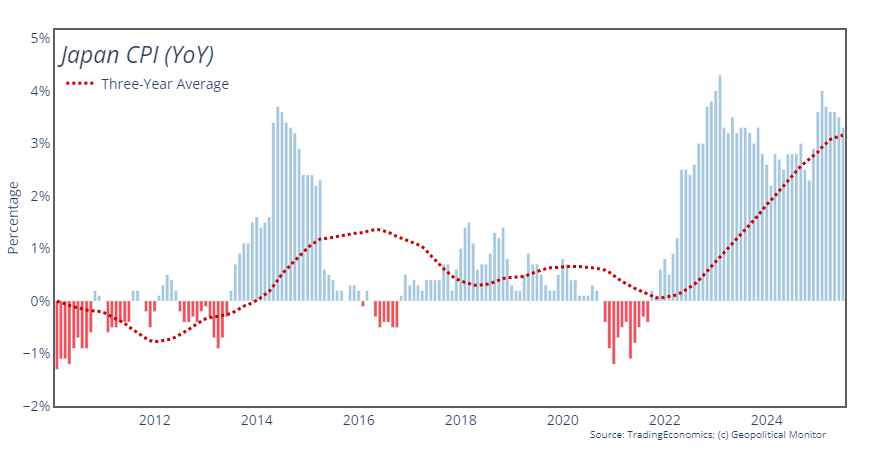
- Tremors in Japanese Domestic Politics. A broad-based and strong anti-establishment wave was evident in the results, with the LDP struggling to carry rural districts that would have typically been considered safe. There was certainly a macroeconomic subtext in looming uncertainty surrounding the ongoing US-Japan trade talks, yet it was mostly domestic issues motivating voters to turn out in high numbers. Inflation was at the forefront of voter concerns. Japan’s inflation rate has hovered in the 3-4.5% range since the Bank of Japan began to pivot from its zero-interest posture in 2023. Yet the number obscures the fact that price increases have been uneven across the economy. Rice prices in particular have doubled over the past year, impacting the bottom lines of nearly all Japanese households. An anti-immigrant trend was also evident in the contest, with the upstart right-wing Sanseito party increasing its seat count from one to 14. Sanseito campaigns on a ‘Japanese first’ message that rejects globalization and seeks to cap immigration into Japan.
- All Eyes on the Japanese Bond Market. The election could bring sweeping economic consequences. For one, Japan has pivoted toward a more accommodating immigration stance in order to compensate for shortfalls in its domestic labor market. There was always a question of how accommodating a largely homogenous Japanese society would be toward this influx. Evidently, the combination of economic downturn and over-tourism was enough to trigger a political reaction like Sanseito, and this will in turn constrain the government’s ability to adjust to Japan’s rapidly shrinking working-age population. Two, with a debt-to-GDP ratio north of 260%, Japan has to walk a fine line with its fiscal policy in order to keep the faith of creditors. The LDP had been preaching fiscal constraint in an attempt to maintain tranquility in bond markets. This could change if the administration is either replaced or submits to the will of the people with new welfare spending. Bonds yields are already higher than they’ve been in decades. Interest hikes by the Bank of Japan, which is holding the line at a relatively low 0.5%, would help alleviate inflation but also risk increasing the price of borrowing and in extremis risk precipitating a sovereign debt crisis. Add to this the macro effects of US-Japan trade relations and you have a very volatile short-term outlook.