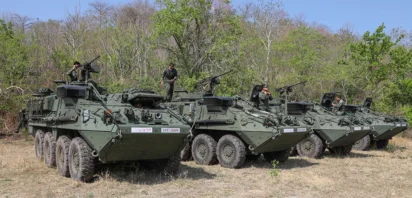
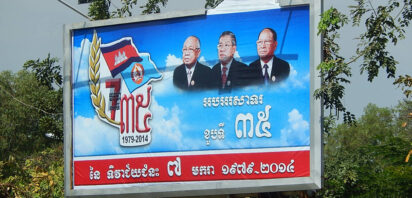
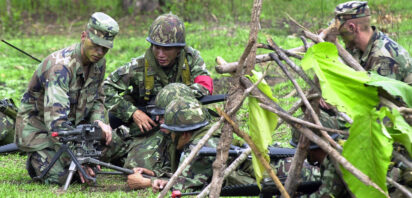
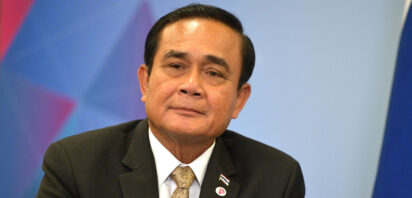
Cambodia and Thailand are Buddhist-majority neighboring kingdoms that share rich histories and cultures. The Franco-Siamese treaties of 1904 and 1907 initially established their land boundaries, which span over 817 km. Although they share similarities, bilateral tensions have frequently emerged, notably in relation to claims to cultural heritage and religious sites. Disputes regarding border demarcation and territory have been among the most sensitive issues, frequently inciting ultranationalist sentiments. Thailand maintains 17 official border crossings with Cambodia, which encompass seven provinces along their shared frontier. Tensions have been rising between the Thai and Cambodian militaries over the past few months, which risks a kinetic confrontation over the Ta Moan Thom Temple, which both sides claim. Any increase in tensions could potentially impact the intra-ASEAN solidarity as well, which is already facing challenges stemming from the Myanmar civil war.
In February, a brief altercation broke out between Thai forces after Cambodian personnel and their family members entered an ancient temple along the border and sang the Cambodian national anthem. This was documented on video and subsequently went viral on social media. On February 18, the Royal Thai Army sent an official complaint letter to the commander of Military Region 4 in Cambodia, describing the event as “inappropriate behavior.” In response to visits from Cambodian nationalists, Thai nationalist organizations began implementing unofficial ceremonies which included singing the Thai national anthem. Both Thai and Cambodian soldiers entered the temple, leading to standoffs. The Thai authorities directed citizens to cancel scheduled meetings at the temple to prevent any further escalation. In March, Hun Manet, the prime minister of Cambodia, declared that Cambodia would initiate military measures if Thai troops entered the region again. Consequently, during the General Border Committee’s (GBC) meeting in Bangkok on May 1, officials authorized the stationing of five soldiers from Thailand and five from Cambodia at the temple.
In response to the skirmish, Hun Sen, the Senate President, who remains the country’s effective leader, indicated that he supports the “decision to send troops and heavy weapons to the border to prepare for a counterattack in the event of a further invasion.” The National Security Council of Thailand convened an urgent meeting on June 6 to evaluate the potential consequences of Cambodia’s decision to impose a prohibition on Thai films and television shows, as well as a boycott of Thailand’s internet and electricity services.
Cambodian Prime Minister Hun Manet subsequently escalated measures in response to calls from Thai nationalists to cut electricity and internet connectivity to Cambodia, proclaiming on social media that the country would move toward self-reliance. On June 1, Hun Manet declared on social media that Cambodia would submit the border dispute surrounding the Ta Moan Thom, Ta Moan Toch, and Ta Kra Bei temples to the International Court of Justice (ICJ) in the Hague, where they had secured a favorable decision in the Preah Vihear case.
Historical Origins of the Thailand-Cambodia Border Dispute
The two nations have been in dispute over sovereignty at un-demarcated points along their shared border, which was mapped by France in 1907 while Cambodia was still a colony. Preah Vihear is known in Thailand as Phra Viharn, a name that existed before the creation of contemporary Southeast Asian nations. Most of the temple’s remaining elements were built in the 11th and 12th centuries, during the height of the Khmer Empire’s power. Following a survey, French authorities produced a topographical map in 1907 that showed the entire Preah Vihear region on Cambodia’s side. The Siamese members of the mixed commission did not approve the French map, but they also did not clearly object or carry out a competing survey.
The International Court of Justice (ICJ) in 1962 awarded Cambodia the Preah Vihear temple, located on a cliff in the Dangrek Mountains. The judgement, however, did not take into account the 4.6 square km tract of land that encircles the 1,000-year-old Hindu temple. In 1941, Thailand seized Preah Vihear and adjacent areas as part of a wartime collaboration with Japan. As Cambodia gained independence, Thai forces moved to Preah Vihear in 1954 to replace the French troops who had left. Cambodia filed a complaint with the ICJ in protest. Thailand argued before the ICJ that the 1907 French survey, never approved by the commission, was not legally binding. As further proof, they pointed to their de facto control of the temple, which is far easier to reach from the Thai side of the border.
The disputed territory currently in the news, Ta Moan Thom, is located in the border area between the provinces of Oddar Meanchey in Cambodia and Surin in Thailand, around 140 km west of the Preah Vihear temple. Both the Thai and Cambodian armies claim that they were acting in self-defense in the exchange of fire on May 28, which killed a Cambodian soldier. They mutually agreed to reposition their forces to prevent future confrontations. Despite the commitment of both countries to dialogue and the suppression of nationalist fervor, Bangkok has threatened to close the border and interrupt electricity supply to its neighbor.
Thailand issued a warning that the situation could further escalate due to Cambodia’s refusal to withdraw troops, based on a 2000 Memorandum of Understanding, which contains a critical clause that prohibits either party from modifying the terrain along the border. Thailand and Cambodia established a Joint Border Commission in 2000 to peacefully resolve overlapping claims. Nevertheless, there has been minimal progress in resolving the disputes. In 2008, tensions soared when Cambodia attempted to designate the Preah Vihear temple as a UNESCO World Heritage site. This action resulted in clashes that lasted for several years and resulted in at least a dozen fatalities, including a week-long exchange of artillery in 2011.
Disputes over Maritime Claims
Koh Kood is in a 27,000 square km overlapping claim area that spans the border between Thailand and Cambodia. Koh Kood was transferred from France to Thailand, or what was then known as Siam, in 1904. Subsequently, the Franco-Siamese Treaty of 1907 resolved the boundary disputes between Thailand and French-ruled Indochina. However, the maritime borders were not explicitly defined. Cambodia claimed in 1972 that the southern portion of Koh Kood was included in their maritime boundaries stated in the treaty. In 1973, Thailand submitted its counterclaims. Koh Kood is currently legally part of Thailand, which is internationally recognized under the Geneva Convention of 1958 and the UN Convention on the Law of the Sea of 1982.
MOU 44, or the Thailand-Cambodia Memorandum of Understanding, was executed in 2001 and serves as a framework for negotiations and discussions between the two nations regarding resources and boundaries, as per the Thai government. However, nationalist sentiment has increased in Thailand as a result of concerns in the conservative camp regarding the government’s intention to negotiate with Cambodia to jointly investigate energy resources in un-demarcated maritime areas last year. They caution that such a move could result in the loss of the island of Koh Kood in the Gulf of Thailand. Cambodian Prime Minister Hun Manet pledged to submit the cases regarding the four currently disputed areas to the court for a determination of ownership, even if Thailand did not participate in the appeal.
The Ministry of Foreign Affairs of Thailand released a statement following the conclusion of the 6th Joint Boundary Commission (JBC) meeting on June 15, denying Cambodian media claims that contested border regions were included in recent meetings of the bilateral boundary commission in Phnom Penh. The declaration indicates that both parties will comply with the legal documentation and the 1:200,000 scale map established in the 2000 Memorandum of Understanding, in accordance with the 1904 and 1907 Franco-Siamese treaties for border delineation. Thailand will be hosting the forthcoming special JBC meeting in September of this year.
The three-tier cooperation mechanism between Thailand and Cambodia includes:
- Joint Boundary Commission (JBC) – a bilateral framework to discuss technical and international law issues.
- General Border Committee (GBC) – maintaining peace and security in the border areas of both countries.
- Regional Border Committee (RBC) – for local military coordination.
According to the ASEAN charter, Cambodia and Thailand are expected to settle disagreements amicably as members of the regional organization. Although both nations initially increased their military presence on respective sides of the border, on June 8 they seemed to try to defuse the situation by returning their forces to the agreed-upon military locations from the previous year. The nations decided “to jointly adjust military forces at points of conflict to reduce the atmosphere of confrontation,” according to a statement from Paetongtarn.
The fathers of the current prime ministers, Thaksin Shinawatra, the former Prime Minister of Thailand, and Hun Sen, the Prime Minister of Cambodia, have a well-documented friendship and continue to have significant influence in their respective countries’ politics. Following Thaksin’s 2006 ouster in a coup, Hun Sen granted Thaksin asylum in Cambodia and appointed him honorary economic adviser. Their close relationship has heightened concerns about the border conflict resolution, especially for Thailand. Human Rights Watch (HRW) has also accused them of collaborating to suppress political dissidents. Both governments have facilitated the forced return of individuals to their native countries, where their lives or freedom are at risk. Ultra-nationalist factions in both parties may perceive any concessions as handing away national sovereignty. The current ASEAN leadership headed by Malaysia has declined to offer any rapid conciliation that could resolve the matter and has remained silent.
The most recent controversy involves a leaked phone recording between Prime Minister Paetongtarn and Hun Sen, which was described by her as an effort by Cambodia to sow discord between her government and the military. The conservative Bhumjaithai Party, the largest ally of Pheu Thai, withdrew on June 18, citing that Ms. Paetongtarn’s behavior in the leaked call compromised the honor of the nation and the military. In her June 15 conversation with Hun Sen, whom she referred to as “uncle,” Paetongtarn appeared to defer to the seasoned Cambodian politician while simultaneously denigrating a high-ranking Thai military officer, a conduct deemed inappropriate by both her detractors and supporters. The Thai prime minister is also heard expressing regret for disclosing a Thai strategy to sever water and electrical supplies to the Cambodian side should the situation worsen. She emphasized to him that these were merely proposals and not intended for implementation. Paetongtarn stressed that she consistently seeks advice from military leadership before acting, indicating that she does not perceive any tensions between the administration and the military.
Looking Ahead
The coalition government, headed by the Pheu Thai party, is on the verge of dissolution, with renewed political upheaval as it seeks to revitalize its faltering economy and avert trade penalties imposed by President Donald Trump. Thailand has experienced twelve coups since the end of absolute monarchy in 1932, and the current crisis has unavoidably renewed speculation regarding the potential for another coup. Prime Minister Paetongtarn would become the third member of her family to be expelled from government by the military, following her aunt Yingluck and father Thaksin Shinawatra, if she is removed in a coup. Confronted with extraordinary circumstances, the prime minister issued a public apology on June 19. Following Bhumjaithai’s departure, the government comprises 261 MPs, while the opposition holds 234. The loss of an additional party would result in Paetongtarn governing with a minority, possibly compelling her to resign or initiate an election. Similar to 2006 and 2014, militarily aligned elites seem to be inciting nationalist fervor and subverting the government, perhaps using the recent border shootings as a pretext for destabilization. With the escalation of protests, the intensification of court pressure, and the emergence of divisions within the military, Paetongtarn’s careful maneuvers may not be sufficient to halt the momentum against her.
As Cambodia prepares to present the case to the ICJ, the circumstances in Thailand indicate another attempt to restore order at the expense of civilian governance. However, the Thai military is most likely to exert influence without formally seizing power, which would otherwise put it at risk of international isolation. Given Washington’s focus on the Israel-Iran conflict, direct US engagement seems improbable. Mutual mistrust and internal instability have only made the impasse worse, despite each side’s claims of historical and legal legitimacy. In this context, a “frozen conflict” may emerge as the only viable path, with analysts predicting Beijing to opt for a behind-the-scenes role over direct intervention to prevent renewed violence. An uneasy compromise has to be reached that avoids resolution for the moment but ensures peace.