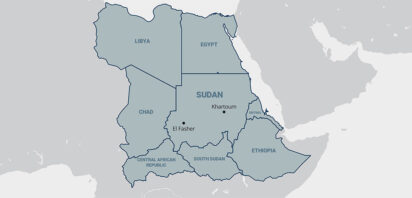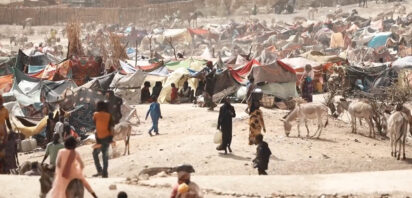
The world’s newest country is once again facing the prospect of civil war. Five years after the end of the first conflict, Nicholas Haysom, the UN’s special envoy to South Sudan, issued a dire warning to the Security Council on Thursday, raising the spectre of political and economic collapse. Should Haysom’s concerns be realized, there’s an acute risk of renewed civil conflict and potentially a new proxy conflict in the East-Central Africa region. The outlook is further complicated by the ongoing civil war to the north in Sudan, which could be expected to spill its borders in the event of state collapse in South Sudan.
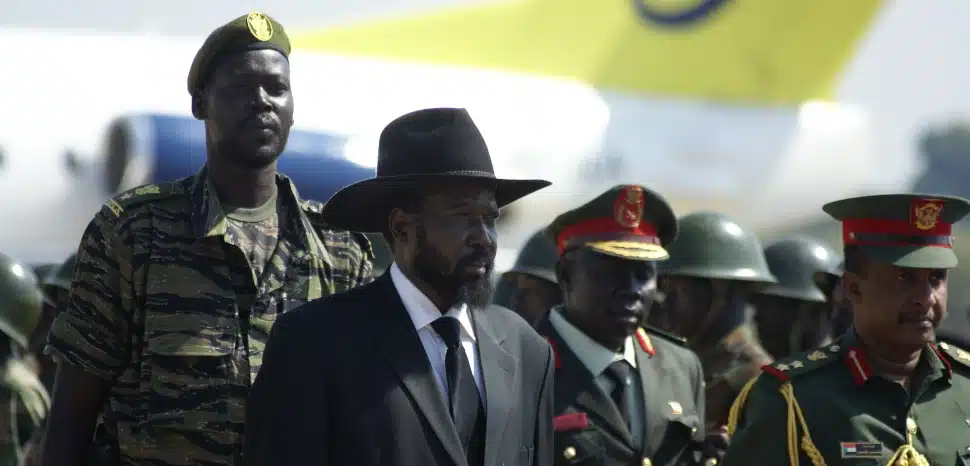
The instability emanates from the South’s fraught domestic politics. The transitional parliament, constituted after the end of the 2013 war, is presently made up of three major groups. The Sudan People’s Liberation Movement (SPLM), led by Salva-Kiir, holds the lion’s share of seats at 322 in the 550-seat parliament. The SPLM-IO, a splinter group from the SPLM and led by First Vice President Riek Machar, holds 128 seats. Another 50 additional seats are held by the South Sudanese Opposition Alliance, a group of smaller ethnic parties that, like the SPLM-IO, also oppose Kiir’s government.
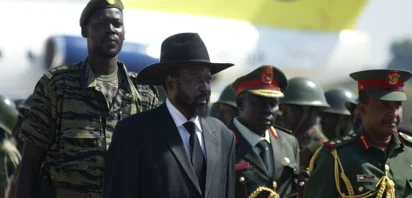
Riek Machar was formally arrested in late March of 2025, a move that drew immediate warnings from the UN. Though the exact reason for the arrest was not clear at the time, it’s believed to stem from an outbreak of violence in South Sudan’s Upper Nile State in late February. Alternately, the arrest could simply be an attempt on the part of the Kiir government to consolidate power on behalf of the incumbent president. Whatever the reason, the stakes are clear given that both Machar and Kiir were on opposite sides of the civil war that ended in 2020. The rivalry between these two figures has been the main driver of recent hostilities between their respective factions, fueling the intermittent political crises that have punctuated South Sudan’s short history as a state.
War has been a near constant for the people of South Sudan. Between the nearly 50 years spanning the independence of the Republic of the Sudan in 1956 and the end of the South Sudanese war of independence, the territory now comprising South Sudan was at war for thirty-nine of them. Though the main conflict of the 2013-2020 civil war was between Machar and Kiir, like many other African conflicts, it was characterized by added complexity through the existence of various militia groups opposing Kiir that were often in conflict with each other. The diverse and fractured makeup of the current transitional parliament owes itself to the complexities of the first civil war.
The cycle of trauma and conflict has not only fueled intense grievances between South Sudan’s main ethnic groups, but has made it virtually impossible for the past 15 years or to hold open and fair elections.
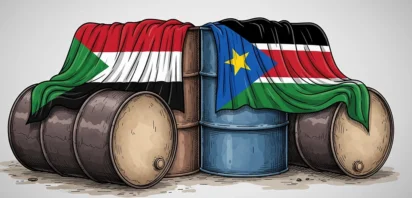
Should South Sudan return to civil war, the ensuing conflict would have severe consequences for regional stability. Chief states affected by the first civil war were Uganda and Sudan, which backed opposing sides in the conflict. Sudan however is embroiled in its own civil war while Uganda is at peace and growing its economy. Ugandan influence over South Sudanese politics, meanwhile, is on the upswing. Together with Uganda’ s involvement in Somalia as part of AUSSOM, Uganda’s historic and continuing support for the Kiir administration makes for a shifting geopolitical power dynamic in the wider East African region, one that favors Kampala’s security and foreign policy interests.
As for peace prospects, any chance at returning to the peace deal signed in 2018 will require the intervention of the international community, which is precisely what Haysom has been pushing for. Coordinated pressure from the UN Security Council, if a consensus emerges, and targeted sanctions against the warring parties are among the likeliest outcomes, granted that South Sudan is already under an arms embargo. Mediation, an increased peacekeeping presence, and trust-building measures will also likely be considered by the UN and its partners.
Given the history of the region and the ensuing conflict, this will be a tall order. Even if a full-blown conflict can be avoided, it will take much more effort to transcend the scars of war and bring about the dream of democracy in South Sudan.