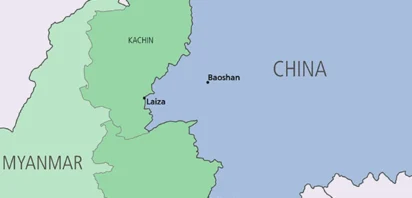
The ground-level situation in the Myanmar civil war has been one of constant flux. Where the junta, formally known as the State Administration Council (SAC), appeared to have the upper hand at the onset of the war, this changed in the wake of Operation 1027. The coordinated and unprecedented attack by three major ethnic armed organizations (EAOs), collectively known as the Three Brotherhood Alliance (3BA), in October last year precipitated a major escalation by other pro-democratic and ethnic forces across the country. Since then, the junta has lost control over dozens of towns, as well as important highways and transportation routes, and it has little control over key townships near the country’s international borders.
The Special Advisory Council for Myanmar (SAC-M) reported in 2024 that the junta’s power over most of the country has substantially weakened, and the situation strongly favors resistance forces. According to the BBC, the junta retains full control of only 21% of Myanmar’s territory. Different sources offer estimations that are either higher or lower.
As the junta appears to be on the brink of total collapse, China, the regime’s closest ally, has intervened more directly in the ongoing internal conflict. Beijing initially supported the 3BA offensive involving two pro-China EAOs, the Ta’ang National Liberation Army (TNLA) and the Myanmar National Democratic Alliance Army (MNDAA), but is now pivoting to help save the regime of Min Aung Hlaing.
Since Beijing may not have anticipated the current level of rebel success, its original strategy of pitting the rebels against the junta to further its deepening objectives has backfired. And as China’s interests are being undermined by the present scenario, Beijing must strike a careful balance and adopt a pragmatic approach.
The revised Chinese policy or ‘multi-stakeholder strategy,’ is a hybrid of military and diplomatic actions that involves increasing intervention and support. Among the several steps that Beijing has taken in response to the situation are: pressuring the EAOs for an immediate cessation of hostilities; enhancing security and military cooperation with the junta; warning the rebels; and facilitating dialogue between various internal Burmese actors and the junta. Internationally, Beijing has started to reinstate top Burmese officials from the current pariah regime of the junta. At the Greater Mekong Subregion Summit, Chinese Premier Li Qiang reaffirmed Beijing’s full backing for Myanmar’s political situation and expressed readiness to collaborate on the development of the China-Myanmar Economic Corridor (CMEC) as part of the Belt and Road Initiative.
China has also pledged to support a so-called national election hosted by the junta that other stakeholders have rejected. Since the 2021 coup, Beijing has continued to support the junta due to strategic and pragmatic considerations and interests. Foremost is Beijing’s interest in gaining access to the Indian Ocean via Myanmar ports, which in turn depends on the junta’s ability to maintain control and stability in the country. All of this sharply clashes with Beijing’s previously affirmed non-interference policy in Myanmar. However, Beijing’s policy shift is not new; it is not without its calculated interest. Already, China has received economic and strategic concessions from the SAC chief regarding implementing the ambitious CMEC project.
Yet Beijing’s increasingly pro-junta stance is also adversely affecting its popular image in Myanmar, especially in light of repeated threats against the EAOs and plans to close border crossings, which could cut off essential medical supplies, food, and other commodities. Anti-Chinese sentiment has thus skyrocketed, and even pro-China EAOs are reluctant to heed Beijing’s warnings. Even as one of Beijing’s consulates in Mandalay was the target of a bomb attack in October 2024, Beijing has only solidified its coercive measures against rebels via rhetorical warnings.
Beijing’s Interests-based Approach to the Myanmar Civil War
Despite the rapidly shifting events and changes in power trajectories in Myanmar, Beijing’s approach to the country since the Tatmadaw (Sit-Tat) orchestrated the February 2021 coup that toppled the democratically elected government just days before starting office has remained pragmatic.
Beijing has carefully backed both the State Administration Council (SAC) and pro-China forces, with three main objectives driving this support:
- Keeping the pro-democracy National Unity Government (NUG) and its armed group, the Peoples Defence Forces (PDF), from gaining power;
- Maintaining important connections through Myanmar via the China-Myanmar Economic Corridor (CMEC);
- Limiting India’s growing influence over the junta leaders.
In contrast, Beijing supports the EAOs to:
- Pressure the SAC if it goes against Beijing’s interests;
- Protect its economic projects in Myanmar, especially where the SAC lacks presence.
Given these circumstances and concerns, China has, on the one hand, provided arms, diplomatic support, and economic assistance to the internationally isolated SAC to maintain its grip over Myanmar while attempting to maintain its control over rebel forces, most of which border China and are entirely dependent on Beijing for their material survival. China’s double standard policy in Myanmar is far more pragmatic and economically driven than ideological and stems exclusively from its geopolitical interests.
Beijing was likely aware of the coalition’s intentions to launch Operation 1027, given the friendly relationship between Beijing and the 3BA. However, Beijing did not warn the SAC because of the junta’s inability to deal with scam centres based in eastern and north-eastern Myanmar. During the offensive, pro-China EAOs cracked down on the centers and their related key figures linked with the SAC. Such actions effectively materialized Beijing’s interests—something the junta could not achieve. Until September 2024, China did not press the EAOs to halt their advances, instead focusing on facilitating ceasefire negotiations between the junta and the rebels from mostly neutral positions; however, due to unprecedented success, the rebels declined such arrangements. The outcome established a power imbalance between the rebels and the junta, which contradicted Beijing’s strategic goals. Since then, Beijing has taken a junta-aligned stance, threatening the pro-China TNLA to cease hostilities with the SAC in northeastern Myanmar.
China is Forcing EAOs to Agree to Favorable Terms
Although the Beijing-backed Haigeng Agreement ceasefire deal agreed upon in January between the 3BA and the SAC brought operation 1027 to a halt, it broke down in June. While the Haigeng Agreement demonstrated Beijing’s influence over both the junta and the EAOs, its breakdown resulted in several problems for Beijing. Beijing initially supported the rebel offensive as a response to the threats posed by scam centres. Beijing’s economic, commercial, and security interests were once again at risk due to the renewed offensive. Beijing grew wary of the situation but took advantage of the SAC’s focus on curbing the 3BA.
In August 2024, pro-NUG forces seized control of the Alpha Cement factory in Mandalay; the Tagaung Taung nickel mine in Sagaing, a major Chinese-backed nickel mining project; and two Chinese-invested joint ventures in the Burmese heartland, despite the NUG having said in January earlier that year that it would protect China’s infrastructure and economic interests.
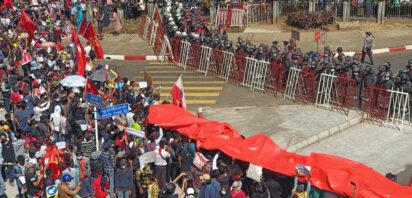
China has invested billions of dollars in oil and gas pipelines, mining, and countless other commercial ventures, making it Myanmar’s largest trading partner. Since the 2021 coup, one of Beijing’s major objectives has been safeguarding its Myanmar infrastructure and personnel. This concern arose after pro-democratic protestors attacked and set fire to several Chinese factories during the post-2021 unrest. After the August attack, Beijing realized that if the rebel offensive continued, its economic and strategic interests would be in jeopardy, and it might encourage pro-NUG militias to gain a stronghold in central Myanmar.
Since late July 2024, China has exerted tremendous pressure on the EAOs. A leaked document from a meeting between China’s Special Envoy to Myanmar, Deng Xijun, and the firmly pro-China United Wa State Army (UWSA), one of the strongest EAOs, disclosed a four-pronged plan to destabilise the TNLA and MNDAA in Beijing. The ‘four cuts’ strategy against the latter two groups targeted their access to ‘food, funds, information, and recruits,’ thereby weakening them and subduing them under Beijing’s control. The document also states that China intends to end the offensive against the SAC regime. Consequently, Beijing terminated its formal and informal trade routes and borders, which significantly diminished the availability of supplies to these militias.
The outcome was clear: the MNDAA reaffirmed its commitment to protecting Beijing’s interests, ceased communicating with NUG, and avoided participating in international dialogue. Beijing allegedly detained MNDAA commander Peng Daxun, and in early December 2024, the group declared a ceasefire with the junta.
Similarly, the authorities of the nearby Chinese city Ruili Security Committee (瑞丽安全委员会) advised the TNLA to discontinue hostilities against the junta. It said, ‘If it did not comply, China would teach them a lesson (如果它不遵守,中国将给他们一个教训)’. Under pressure, the TNLA expressed a willingness to engage in peace talks with the junta. The Kachin Independence Army (KIA), which acknowledged Chinese aid and ties in 2018, sent a delegation to China, where Beijing urged it to cease attacking junta forces. Previously, Beijing restricted the borders near KIA-controlled territories. It also conducted live-fire military drills in Northeastern Myanmar, citing Myanmar’s instability as a basis for reinforcing border security along Shan State. China has issued direct and indirect warnings to the EAOs, threatening them with consequences if they breach a boundary Beijing deems unacceptable.
The offensive in Shan State has come to a standstill as a result of Beijing’s coercive actions, even if the initial military goals of reclaiming different districts of Northeastern Myanmar by pro-China EAOs have largely come to fruition. The junta will have some time to regroup before recommitting its forces to the western and central regions of Myanmar, where they are taking heavy military casualties, owing to Beijing’s intervention.
Renewed Chinese Security and Diplomatic Support for the Junta
The SAC’s strengthened diplomatic and military backing has only served to amplify Beijing’s direct and indirect pressure. In light of the worsening situation in Myanmar’s internal security, Beijing has signed two memoranda of understanding with the junta, strengthening cooperation between the two countries’ police forces. One of the memoranda deals with the establishment of a centre for cooperation, while the other provides police with equipment and supplies worth RMB 5 million (approximately $700,000 USD). Reportedly, to guarantee the safety of Chinese projects and staff in Myanmar, Beijing has also suggested the formation of a joint security company with the SAC. This potential combined private military company (PMC) was mooted during the high-level visits of Chinese Foreign Minister Wang Yi to Naypyidaw and junta leader Min Aung Hlaing’s trip to China. There have been reports of four private Chinese security companies or private ‘armies’ operating in Myanmar, ostensibly providing static security.
The junta formed a working committee on October 22 to prepare a memorandum of understanding (MoU) to establish a security company in the country. Its responsibilities include scrutinizing the importation and regulation of weapons and special equipment and ensuring proper control and usage. The security firm will handle the imports of weapons, special equipment, communications devices, and prohibited tools.
A meeting was set up between former Burmese military intelligence officers Colonel Hla Min and Brigadier General Thein Swe by two Chinese think tanks, the Taihe Institute and the Charhar Institute. An investigation of the level of penetration into Myanmar by anti-Chinese intelligence agencies, such as the CIA and Taiwanese agencies, was assisted during this meeting in Beijing. Beijing has shown a strong desire to supply the junta with modern jets and drones, in addition to giving logistical support and manpower. The junta has allegedly committed war crimes by using these weapons to target civilians with impunity, according to legal experts. In August 2024, the Sit-Tat brought six FTC-2000G fighter aircraft, acquired from China, to Myanmar. General Tin Aung San, minister of defence for the junta, has lately advocated increased bilateral cooperation in the production of high-tech drones.
Alongside increased security assistance, China has also begun diplomatically mainstreaming the pariah regime of Myanmar. The Western sanctions and embargo prohibit junta officials from visiting most foreign states. Beijing helped to prevent such diplomatic isolation of the junta in a public display of support by extending invitations to junta chief Min Aung Hlaing and his deputy Soe Win for the first time since the 2021 coup. The invitation from Hlaing to the Mekong Summit held in Kunming highlights the fact that China disagrees with the ASEAN consensus, which bars the junta leader from being allowed to attend any conference or summit of the regional forum. Amid chaos on all fronts, being handed a seat at a high-profile summit with China and other neighboring countries feels like a diplomatic victory for the junta. Months before that, Beijing sent its foreign minister Wang Yi to visit top SAC officials in Myanmar. The trip was followed by a reciprocal visit by Burmese Home Affairs Minister Lieutenant-General Yar Pyae to Jiangsu Province at China’s Ministry of Public Security (MPS) invitation to attend the Global Public Security Cooperation Forum (Lianyungang). Beijing has reiterated its commitment to support the upcoming national elections announced by SAC, declaring an aid package of RMB 1 billion (approximately $137 million USD). It has also slammed any prosecution of General Hlaing for Rohingya atrocities by the International Criminal Court (ICC).
China’s Pro-junta Turn Risks Inflaming Anti-Chinese Sentiment
Support for the SAC’s rule could backfire on Beijing, particularly if it causes a schism with the EAOs. There have been claims that anti-China sentiment in Myanmar has dramatically increased. The bombing of the Chinese consulate in Mandalay is a vivid example of this phenomenon. The EAOs may not even respond to Beijing’s call or coercion, as is the case with Western Burmese rebels, where Chin EAOs and the Arakan Army (AA) have conducted operations to force the junta out of Chin and Rakhine states, respectively. Although they pledge no harm to Chinese infrastructure or personnel, their behaviour suggests that efforts to restore the junta may be ineffective. Beijing’s attempts to strengthen the SAC may even lead pro-China EAOs to create tools to resist Chinese coercion. They may coordinate pressure on Beijing’s assets in Myanmar as a deterrent to extended Chinese involvement. Despite strong vows of non-interference, Beijing has demonstrated by the end of 2024 that it has taken a firm position in the ongoing conflict. Beijing’s initiatives are based on strategic goals at the expense of Burmese lives, echoing an increase in anti-Chinese sentiment in Myanmar.
Khandakar Tahmid Rejwan, Bangladesh Peace Observatory (BPO), Centre for Alternatives (CA), Bangladesh
Scott N. Romaniuk, Centre for Contemporary Asia Studies, Corvinus Institute for Advanced Studies (CIAS), Corvinus University of Budapest, Hungary
The views expressed in this article belong to the author(s) alone and do not necessarily reflect those of Geopoliticalmonitor.com.