With the ‘Liberation Day’ Trump tariffs tanking equity markets around the world, a consensus is forming that Trump 2.0 protectionism will be more severe than assumed. Zero tariff deals can and will be hammered out, but they will be an exception to the rule of closed markets and a fractured global trade system.
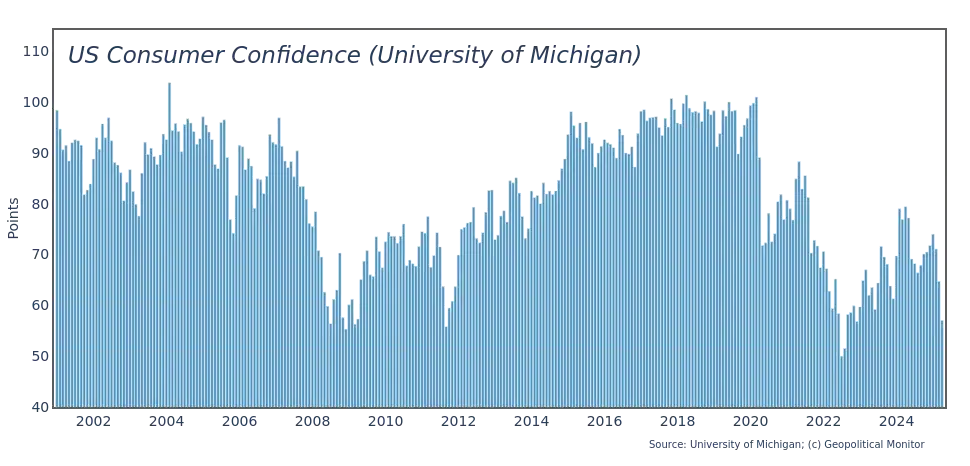
At least, that’s how it plays out in a vacuum. In reality, there are domestic economic and political forces underpinning the extent to which the Trump administration will be able to implement its aggressive trade policy. The US consumer is the key consideration here, specifically whether they are willing and able to absorb economic blowback from the tariffs; because even under the most optimistic scenarios, there will be an extended period of economic upheaval as global supply chains rebuild themselves around the new normal.
Yet even long before ‘Liberation Day,’ there was an evident erosion in spending power as COVID-era deleveraging gave way to new highs in consumer debt.