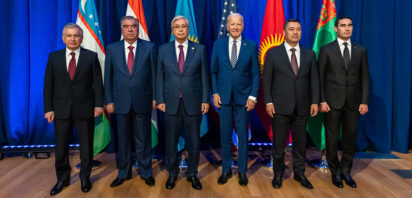
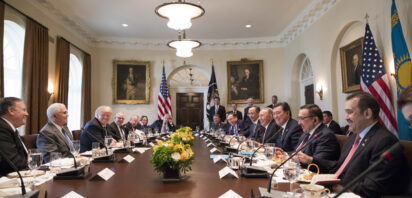
The Organization of Turkic States (OTS) is an international organization that brings together countries with Turkic linguistic and cultural ties to foster cooperation in various fields, including economics and security. Originally founded as the Turkic Council in 2009, the present-day OTS serves as a platform for its member states to enhance mutual relations and address regional challenges collectively.
The OTS has been taking on greater weight in Eurasian geopolitics of late, as the organization facilitates ever deeper economic and security collaboration among its members. The foregrounding of the Organization of Turkic States is no accident, having been largely spearheaded and shaped by the Turkish government under Recep Tayyip Erdogan. This backgrounder provides an overview of the OTS, delving into its historical development, organizational structure, and its collective geopolitical and economic heft.
Historical Context and Organizational Structure
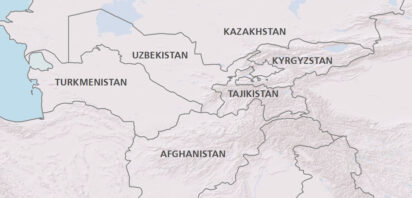
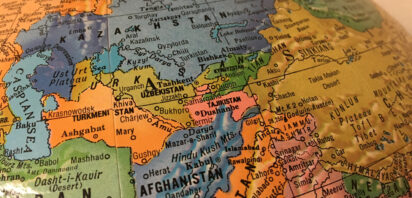
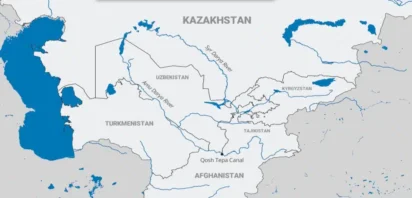
Founded in 2009, the Organization of Turkic States currently comprises of five member states: Azerbaijan, Kazakhstan, Kyrgyzstan, Türkiye, and Uzbekistan, along with three observer states: Turkmenistan, Hungary, and the Turkish Republic of Northern Cyprus. The governance of the OTS is structured around regular summits of heads of state. The Council of Foreign Ministers, senior officials’ committees, and various working groups support the implementation of these decisions, which follow a consensus-based approach.
The OTS operates through several core institutions designed to facilitate cooperation and implementation of projects and programs. The General Secretariat, based in Istanbul, oversees day-to-day operations and implements decisions made at summits. The Turkic Academy and the Turkic Cultural Foundation both emphasize the organization’s original mission on cultural preservation and academic collaboration.
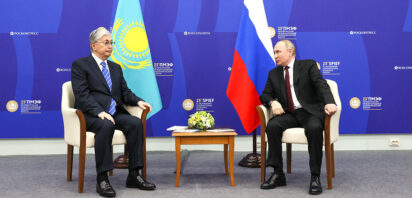
A sense of the OTS’ long-term strategic goals can be gleaned from “Turkic World Vision 2040,” a major policy document revealed at the 2021 summit in Istanbul. Economic cooperation is a central pillar, with initiatives and support for the Middle Corridor, a trade route connecting Europe and Asia via the South Caucasus and Central Asia. The organization’s interest in developing the Middle Corridor is driven by changes in global commerce and logistics, specifically the uptick in attacks in the Red Sea by Houthi rebels in Yemen and trade disruption from Western sanctions against Russia. Azerbaijan’s victory over Armenia during the Nagorno-Karabakh War has also shifted the calculus for the Zangezur corridor, which the OTS eagerly supports as a way for Azerbaijan to bypass Armenia checkpoints, creating a direct land route for trade with Türkiye.
Trade Cooperation and Economic Integration
The economic potential of the OTS is significant, given the combined resources and strategic positions of its member states. Collectively, OTS member states boast a population exceeding 170 million, with significant natural resources and recently upgraded industrial capacities.
Key economic initiatives under the OTS framework include the establishment of the Turkic Investment Fund (TIF) in 2023, which was launched with an initial capitalization of $500 million USD. The TIF aims to bolster economic cooperation, maintain financial stability, and support development projects across member states. Inspired by institutions like the European Bank for Reconstruction and Development, the TIF is expected to attract foreign investment and financial resources to the region, thereby promoting sustainable economic growth.
Trade volumes among OTS member states highlight both the potential and challenges of intra-regional economic integration. In 2022, the combined exports of member states reached $558 billion, with only $33 billion conducted between OTS members. This figure indicates significant room for improvement in intra-regional trade dynamics. To address this, the OTS has been focusing on the removal of non-tariff barriers, improving connectivity, and facilitating more support for regional transportation projects that would improve trade.
Defense and Security Cooperation
Key defense agreements and treaties among OTS members include bilateral and multilateral pacts aimed at fostering military collaboration and mutual defense. Examples include the Treaty on Allied Relations between Kazakhstan and Uzbekistan as well as the Shusha Declaration between Azerbaijan and Türkiye.
The role of the Turkish defense industry in the OTS is particularly noteworthy. Turkish defense companies like Aselsan and Roketsan have established a strong presence in other member states, providing advanced military technology and support. The production of Turkish unmanned aerial vehicles (UAVs) in Kazakhstan and the integration of Turkish defense systems in Azerbaijan are prime examples of this cooperation. Türkiye’s arms industry is closely aligned with the foreign policy doctrine of Türkiye President Recep Tayyip Erdogan, who has leveraged defense exports to expand Ankara’s influence in its immediate region and beyond in the Horn of Africa.
Joint military exercises and defense projects are central to the OTS’s defense cooperation efforts. Exercises like “Birlestik-2024,” which involved military contingents from Azerbaijan, Kazakhstan, Kyrgyzstan, Tajikistan, and Uzbekistan, focus on enhancing regional cooperation and interoperability among the participating countries’ military forces.
On the procurement side of defense, the integration of Turkish defense industry companies into the defense infrastructures of member states underscores the tangible benefits of OTS cooperation. As member states continue to pursue deeper integration, they must navigate the balance between enhancing military cooperation and managing relations with external powers such as Russia and China. As Türkiye’s industrial capacity in advanced weaponry grows, it is likely to seize additional market share from the likes of Russia among current OTS member states.
Geopolitical Impact
The OTS holds significant strategic importance in Eurasia, positioning itself as a formidable entity amid shifting geopolitical dynamics. Notably, the organization exerts influence over critical transit routes and energy corridors that connect East and West, thus being well situated to play a crucial role in global trade dynamics. The collective geopolitical clout of the OTS is amplified by the rich natural resources and strategic locations of its member states.
While the OTS countries maintain diplomatic and economic ties with Russia, China, and the United States, they also leverage their collective strength to navigate these relationships more effectively. For instance, Azerbaijan’s alignment with the OTS reflects its strategic decision to balance its foreign policy between Western alliances and regional cooperation. Similarly, Türkiye’s leadership within the OTS enhances its regional influence, providing a counterbalance to American, Russian, and Chinese ambitions in Central Asia.
Looking ahead, the future challenges for the OTS are manifold. Navigating the balance between deepening intra-regional cooperation and managing external relations with major powers will be crucial to maintaining the group’s momentum. Furthermore, the organization must address internal disparities in economic development and infrastructure among its members to foster more equitable growth.
Since its inception, the organization has transformed from a platform for dialogue to a robust entity capable of influencing regional and global geopolitics. The successful implementation of joint projects suggests the OTS is poised to play an increasingly influential role in shaping Eurasian trade and geopolitics amid mounting insecurity and conflict.