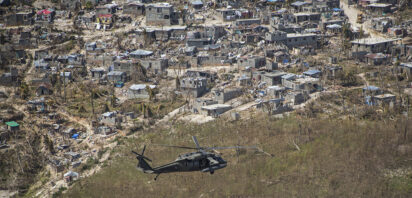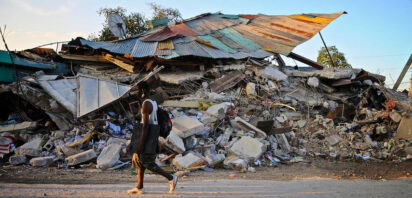
Since the beginning of 2024, 1,200 people have lost their lives due to gang violence in Haiti. The failing government is incapable of removing the bodies, and as a result of gang violence, the streets of Port-au-Prince, Haiti’s capital, are littered with dead, charred, and decomposing bodies.
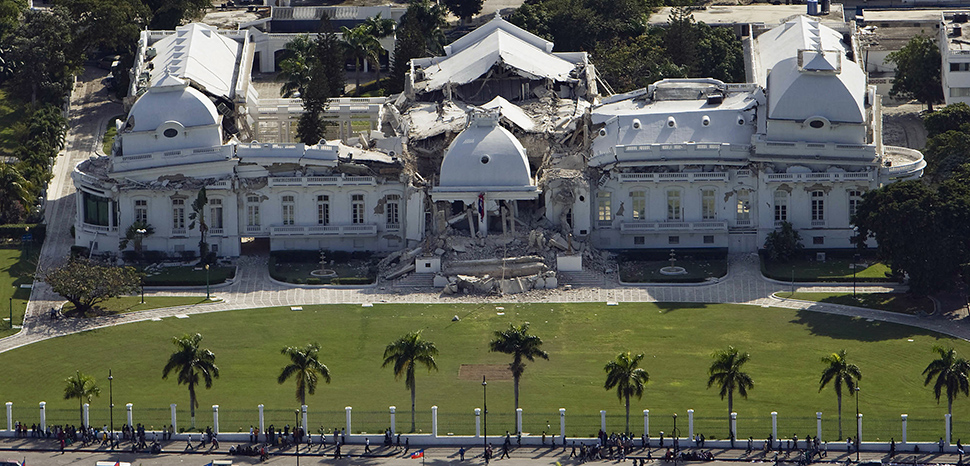
The country has long been considered a failed state, where the government holds only tenuous control and is unable to deliver even the most basic services to the public. Street gangs are believed to now control over 80% of the territory in the capital city. Last week, gangs attacked two prisons, freeing at least 3,000 inmates who have now undoubtedly become participants in the street violence. Other governmental institutions, such as police stations, the presidential palace, and the interior ministry have come under attack. At present, gangs are struggling to gain control of the country’s primary seaport and airport. Prime Minister Ariel Henry, who left the country seeking international law enforcement assistance, remains unable to return.
Jimmy “Barbecue” Chérizier, a former police officer who is now the country’s most powerful gang leader, has demanded the resignation of Prime Minister Henry. Chérizier was fired from the Haitian National Police in December 2018. He is now the head of a powerful gang federation called the G9 Family and Allies, also known as FRG9. Chérizier is linked to multiple large-scale massacres in Port-au-Prince, including the La Saline massacre in 2018, where over 70 people were killed.
A humanitarian crisis is growing as 300,000 Haitians have been forced to flee their homes, and neither the government nor international agencies are able to maintain order or provide aid to the displaced. The country is experiencing a cholera outbreak as citizens are forced to drink contaminated water. There is a shortage of doctors and nurses, and those in the country cannot reach hospitals for fear of being killed, kidnapped, or raped.
Haiti’s Decades of Political Instability
The current wave of violence was triggered in 2022, when it was announced that fuel subsidies would be cut. But in reality, the origin of this complete collapse of the rule of law was decades in the making. In 1957, François Duvalier, Papa Doc, was elected but quickly installed himself as “president for life.” The Tonton Macoutes, Duvalier’s private paramilitary enforcers, instituted a wave of repression, torture, extrajudicial killings, and arbitrary detention of regime enemies and opposition figures. He closed many schools while exercising tight control of the education system, hoping to keep the populace uneducated. Directly out of the playbooks of Mao Zedong, Ho Chi Minh, or Kim Il Sung, he indoctrinated Haitian children who were made to recite a political catechism based on The Lord’s Prayer: “Our Doc, who art in the National Palace for life.”
In 1971, when Papa Doc died, nearly 90 percent of the population was illiterate and plagued by diseases such as yaws, tuberculosis, as well as malnutrition. Per capita income for Haiti was about $75 a year, while in the rest of Latin America, it was about $400. He was succeeded by his son, Jean-Claude Duvalier, “Baby Doc.” Although the younger Doc made more of an effort to throw a thin veneer of legitimacy on his oppression, Baby Doc’s regime was ultimately very similar to his father’s, with rampant human rights abuses and murders. He was ousted in a coup in 1986.