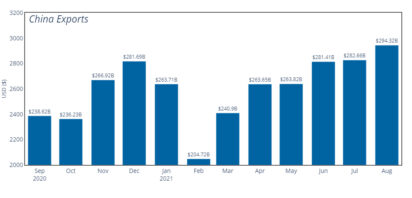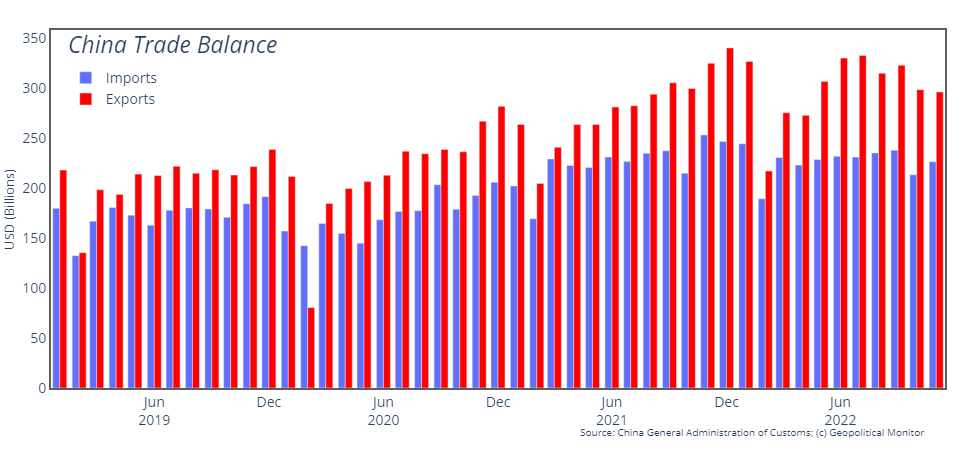
China’s trade data surprised on the downside in November, recording an 8.7% year-on-year drop. The number represents a steep acceleration from the 0.3% contraction in October, and altogether marks the worse performance on the trade front since February 2020, when the national economy was being wracked by the first waves of the COVID-19 pandemic.
The numbers are notable in that they reflect a sharp downturn on the demand side, and particularly in some of China’s most important markets. The United States is the case-in-point; exports there dropped by just over a quarter year-on-year in November. Exports to the European Union also dipped by 10%. Unsurprisingly, container rates have fallen in tow, plummeting over 90% from last year – a much faster rate than many had been predicting. In fact, logistics managers are now expecting 2023 to bring bottom-of-the-barrel container prices as newly-created shipping capacity runs aground on collapsing global demand.
The cause is a confluence of negative economic trends, foremost of which is a downturn in consumer spending in the West, fueled in large part by protracted inflation that is eating into household budgets. There is also the longer-term trend of geopolitical-related trade diversion from China to safer low-cost manufacturers such as Vietnam (Apple, for example, has become the latest major US company to start looking for the exits). Finally, there’s the supply-side challenges inherent to China’s zero-Covid policy, which have forced exporters to adapt to everything from sudden lockdowns to worker exodus to protests and localized industrial actions.