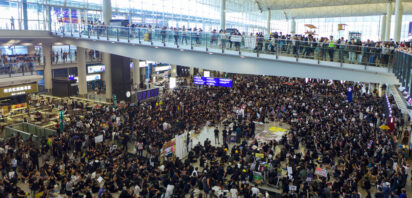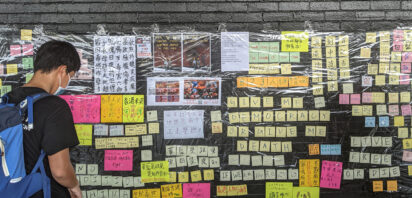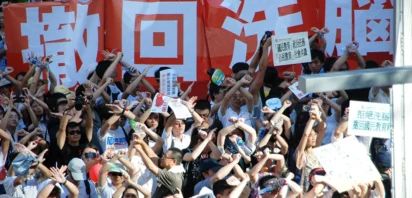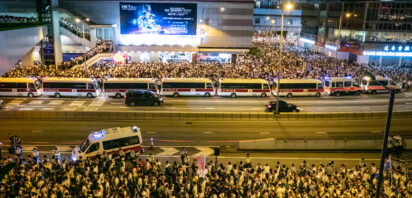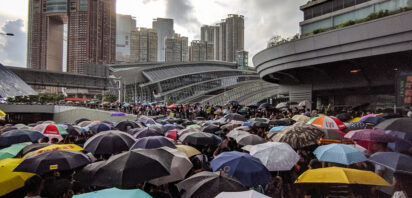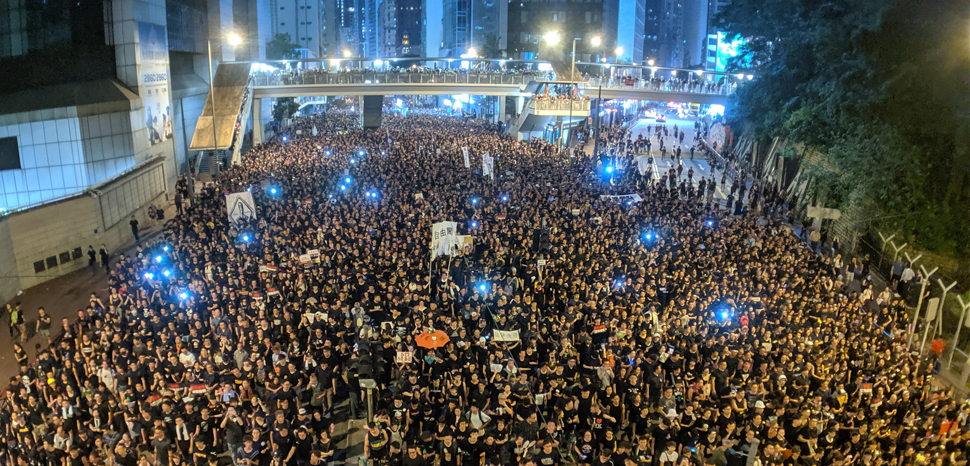
Now five months in, the Hong Kong protests are signaling a new phase, one where frustration and exhaustion on both sides fuels an escalating cycle of violence.
Monday saw a string of disturbing incidents, including the point-blank shooting of a protester using live rounds, the apparent immolation of a pro-Beijing individual who was arguing with protesters, tear gas being used to disperse crowds during daylight in the downtown business district, and a motorcycle officer ramming into groups of protesters, seemingly on purpose. Tuesday brought campus-wide clashes between police and students at CUHK, more tear gas in Central, and a series of flash mobs that paralyzed transport through the territory.
Escalating aggression has become ‘business as usual’ as protesters and police clash day in, day out with no end to the crisis in sight.
Analysis
As argued in an earlier report, the situation on the streets of Hong Kong can be expected to worsen over the short-term due to the intractable position that the special administrative region’s political establishment inhabits. The protests are viewed as an existential fight-to-the-death for all those involved – circumstances that generally don’t lend themselves to a viable compromise.
For the government, the credibility of ‘one country, two systems’ is at stake; at least, the conception advanced by Beijing, whereby Hong Kong’s autonomy slowly gives way to its ‘normalization’ into the patriotic mainstream of PRC society (this is not an opinion; it’s baked into the text of the handover agreement). Even if the desire existed on the part of the Lam government to engage in some good-faith measures to address some of the protest movement’s ‘five demands,’ it would encounter pushback from its patrons in Beijing. This dynamic was on display last week when Lam seemed to open the door to some kind of investigatory oversight of the police services, only to have PRC state media double down on unconditional support in the face of the menace of ‘black-clad rioters.’