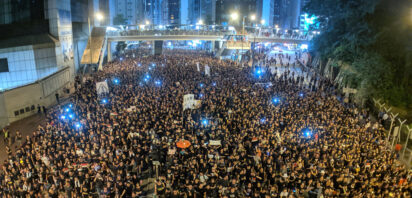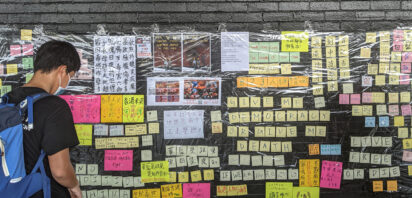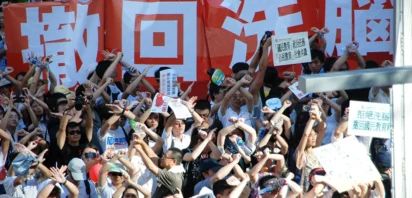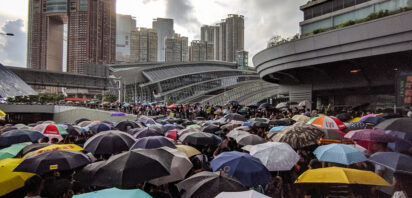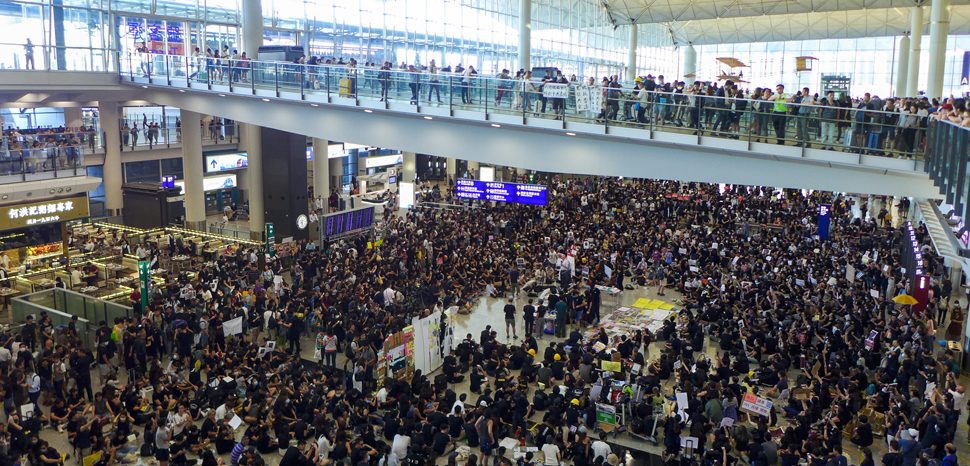
Flights were suspended for a second day at Hong Kong’s international airport on Tuesday, as protesters came out in droves to shut down the regional transport hub.
Now two months after the first mass protests on June 9 and the political situation appears intractable as ever. Carrie Lam has suspended the controversial extradition bill that initially triggered the protests, but has not withdrawn it entirely. And there’s even a question whether the bill’s withdrawal would calm the situation given that the protest movement has unleashed other questions regarding the viability of Hong Kong’s democratic autonomy within China’s one-party system. On the other side of the border, Beijing has been signaling that it won’t remain a passive player for much longer.
The Hong Kong crisis appears headed toward the endgame, and it’s one that doesn’t look entirely favorable to the protesters.
Analysis
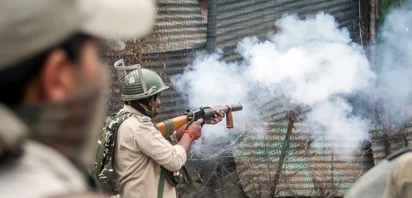
The best-case scenario here is that, somehow, Hong Kong’s institutions manage to de-escalate the current crisis. What would this look like? For one, the extradition bill would be scrapped, and the protest leaders would suspend their disbelief of its inevitable return one day in order to stabilize the situation in the short-term. This scenario would also require a level of goodwill between the police forces and the protesters that is becoming less and less likely with every report of tear gas and brutality against the largely non-violent demonstrators.
Such a result is unlikely for two reasons. One, Carrie Lam probably won’t withdraw the bill with finality. There’s a question of whether she even has the power to do so given that she owes her position to the Beijing brass, which is clearly intent on drawing a line in the sand and demonstrating that its inflexibility in the face of public opinion also applies to the special administrative region. Second, the protest leaders themselves will want to push their advantage and continue to use the extradition bill as a rallying cry to mobilize residents against Beijing’s authoritarian creep in a more general sense – changing textbooks, barring journalists, kidnapping booksellers, etc.
Thus the current stalemate is likely to endure; that is, unless Beijing decides to get more actively involved.