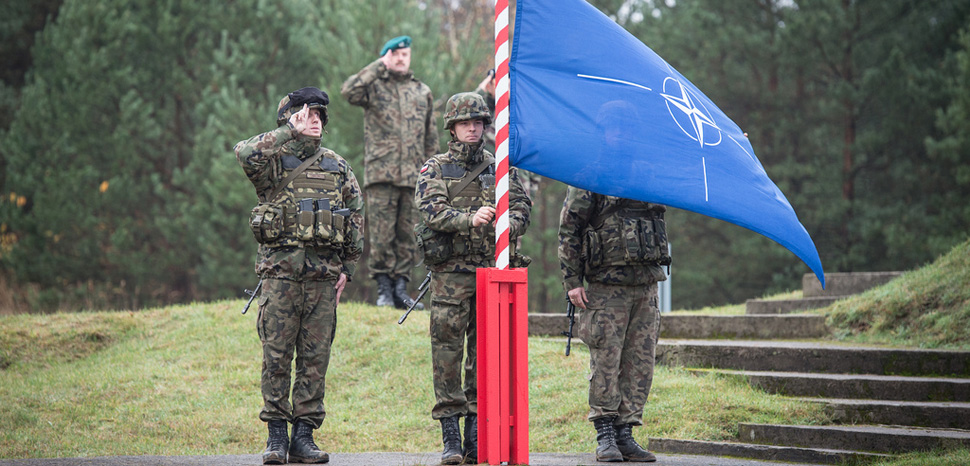
Following the collapse of the Soviet Bloc, NATO experienced a period of uncertainty during which its role and its very existence were put under scrutiny. Yet the Alliance survived and even expanded to the east by admitting states that once belonged to the Warsaw Pact or the Soviet Union itself. The latter is the case of the three so-called Baltic Republics (Lithuania, Latvia and Estonia). They are full members of the Organization since 2004, something that continues to generate deep concern in Moscow’s foreign policy circles.
Today, amid heightened tensions with Russia, NATO seems to have come back to its Cold War-era mission of protecting Europe from a hypothetical attack from the East. This puts the Baltic states at the forefront of defense calculations, but also raises a major strategic dilemma for the Alliance: Defending the three countries from a Russian invasion would mean risking a war with Moscow, but not doing so would undermine NATO’s (and therefore America’s) credibility as a collective security provider. So, some legitimate questions arise: Are the Baltic Republics a strategic asset or a burden? And: Was it sound policy to admit them into the Alliance in the first place?
Background
NATO is a military alliance tasked with ensuring the collective defense of Europe and North America. Therefore, what role do the Baltic Republics play in fulfilling the Organization’s mission? Examining their military strength makes it immediately clear that their contribution is negligible. The total active personnel amounts to just 25,500 for Lithuania, 13,300 for Latvia and 18,500 for Estonia. None of them deploys main battle tanks, fighter aircrafts, large warships or submarines. While they could mount some resistance using regular infantry, artillery, and special operation units, they would not be able to stop a Russian advance on their own. A series of war games performed by the RAND Corporation in 2016 estimated that Russian forces would be able to reach Tallinn and Riga in no more than 60 hours – less than three days. This means that the Baltic states must rely on NATO to ensure their own defense.