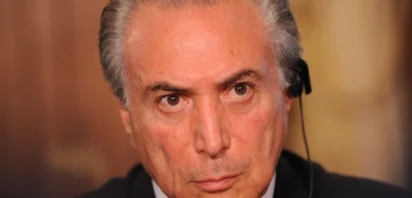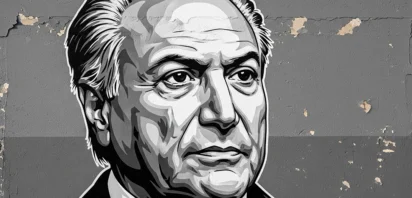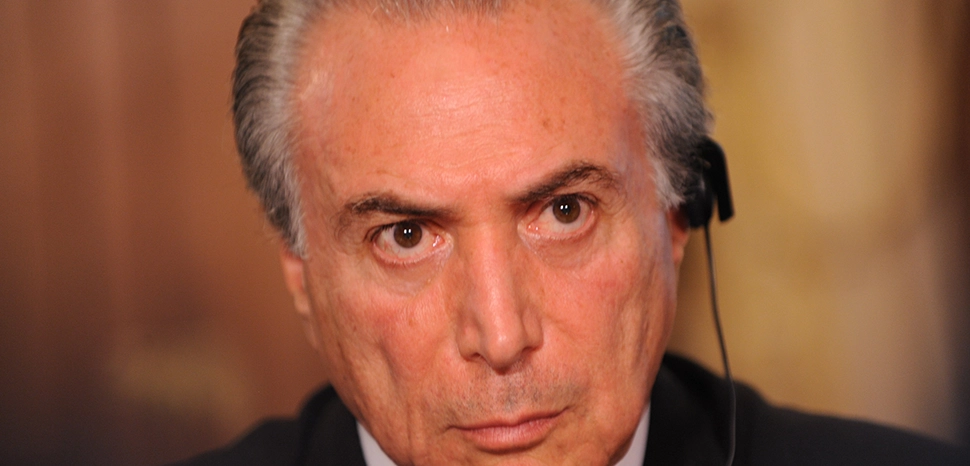
Brazil President Michel Temer has been charged with obstruction of justice. The charges stem from his allegedly leading a criminal organization made up of corrupt politicians from various political parties, including the Progressive Party (PP), Brazilian Democratic Movement Party (PMDB), and the Workers’ Party (PT). Members of the organization are said to have received at least R$ 587 million (US$ 187 million) in graft payments during the Lavo Jato [Car Wash] scandal. It is the second criminal charge against Temer in less than three months.
Now it appears the fate of Brazilian politics and the future of its economy hinge on Temer’s ability to stay in power. However, it appears that, much like the first time, the indictments against him are likely to be blocked by Congress. Temer’s defense appealed to the Supreme Court, arguing that both the initial and this latest round of corruption charges are invalid because they are based on a plea bargain deal made with Joesley Batista, the former chairman of meatpacking company JBS.
Background
Batista and his brother Wesley testified that Temer and several other politicians had accepted bribes. Two recordings surfaced: one in which Batista had secretly recorded a meeting with Temer, which appeared to call into question the reliability of the witnesses. On August 2, 2017, Temer survived a vote to suspend him over his initial corruption charges. It just so happens that Temer has a strong backing in the lower house because he freed up copious amounts of federal funding for lower house members’ projects, thus securing far more than the one-third of Congress (or 157 votes) needed to reject the initial indictment against him.
Another recording came to light last week. This one suggested that Batista had improper contact with a former prosecutor from the attorney general’s office while he was seeking a plea deal. After the newest recording emerged, both Batista and Ricardo Saud (the other person implicated in the audio) proceeded to turn themselves into the police.
Impact
Corruption: the stain that just won’t wash off. Corruption remains a key driver of political and socio-economic instability in Brazil. The wave of corruption probes over the past three years has affected all major parties, fuelling unrest and political uncertainty among the Brazilian populace, all while the country tries to recover from its worst recession in memory. During his final days on the job, Brazilian Attorney General Rodrigo Janot also filed charges against a number of leading members of the Workers’ Party (PT), including former Presidents Inácio Lula da Silva (2003-10) and Dilma Rousseff (2011-16). In fact, there is a credible chance that lawsuits will block Lula’s presidential candidacy for 2018, despite the fact that he is a popular figure and is leading in the polls. While Temer scored initial successes as a reformer despite his single digit approval ratings, it seems he is also seen as a tainted figure; but then again, so is virtually every other member of Brazil’s political class.
Forecast
On September 20, 2017, the Supreme Court will hold a vote to decide whether to move forward with the charges, which would require at least two-thirds support in the lower house. If the vote passes, the President of the Chamber of Deputies of Brazil Rodrigo Maia, an ally of Temer, would have to set a date to vote on the matter. However, Maia is unlikely to schedule the vote this month, because it could limit the pace and scope of economic reforms, most notably a major pension alteration initiative. Also, in the unlikely event that Brazil’s lower house authorizes a trial, Temer would have to step down and Maia would assume the presidency temporarily for 180 days. Congress would then have to choose a new President, who would then lead the republic until 2018 elections. However, it should also be noted that Maia himself is under investigation as well.
Many analysts believe that Temer will avoid prosecution given Brazilians’ weariness of political upheaval. However, the recent allegations are likely to cause a delay on making headway on much-needed fiscal reform. According to João Augusto de Castro Neves, the Latin America director at the Eurasia Group, the newest recording appears to reduce the “political punch” of the new charges against Temer, and suggests that the president should thus have an easier time defeating the second motion against him. It appears that Temer and members of Congress, a third of whom have already been implicated in the Car Wash scandal, will continue to make efforts to shield themselves from the wide-ranging anti-corruption probe by attempting to secure their parties’ control of the executive branch. “Whether or not the charges stick, it is likely that “systemic corruption” will continue to reign in Brazil, at least in the short term.”