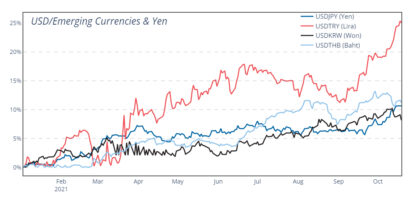
The People’s Bank of China (PBC) took many by surprise yesterday by inducing a 1.9% drop in the value of the yuan. It was the biggest one-day drop in over a decade, and though it was described as a “one-off” by the authorities, the depreciation has some worried that there might be more to come.
A weaker yuan makes Chinese exports more competitive on global markets at the expense of competitors. There is a worry that devaluations will trigger an in-kind response from other exporting countries, leading to a ‘race to the bottom’ of monetary interventions – a currency war.
The Chinese economy has been struggling of late with a well-publicized stock crash and flagging exports. July export numbers from a few days ago brought the latest bout of bad news: down about 8% year-on-year. Other problems like flagging return on investment, debt-saddled banks, and a property bubble are restricting the room for maneuver of a Chinese government that is extremely sensitive to matters of economic stability.
In this environment, Beijing decided to make a sweeping change to the yuan reference rate (its peg to the USD) and devalue the yuan in the hope of stimulating Chinese exports and reversing a downward trend in economic growth.
The optics of the move are bad, and Beijing is well aware of it. Currency manipulation for immediate economic gain is taboo in the wider global economy, in large part because any gains for the currency manipulator inevitably come at the expense of some other exporter, which now will feel inclined to respond in turn and even the playing field.