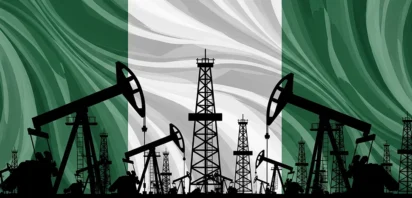
Greater competition in global oil markets and other geopolitical factors have led to a free fall in the price of oil over the last 14 months. Oil prices hit a six-year low in early January 2015, and Crude Oil WTI closed at $44.35 by the end of trading on March 13, 2015. Although the falling price of oil could lead to economic growth, it will also create destabilizing political effects in countries with oil-dependent economies.
The fifth and final part of Geopoliticalmonitor.com’s series Cheap Oil and Political Risk will examine Islamic State’s (ISIS) relationship with oil and how the group’s seizure of oil and gas fields, pipelines, and refineries has contributed to making it the wealthiest terrorist organization in history. We will also examine how the slide in oil prices is hindering the ability of the Iraqi government to combat ISIS, and how ISIS is struggling to maintain its oil production amid increasing military and economic pressure.
Background
Islamic State
ISIS has secured a substantial revenue stream from the oilfields and refineries under its control in Iraq and Syria. According to a Dubai-based energy analyst, before airstrikes started, ISIS was making anywhere between $1 and $3 million per day by selling oil on the black market. At its height, the group was producing approximately 172,000 barrels per day from roughly half a dozen oilfields. This illicit oil has been sold on the black market through Kurdish and Syrian traders and smugglers to the Assad regime and to other traders in Turkey, Iran, and Jordan for well below market prices. Given the current low price of legal crude it is now estimated that ISIS is only able to sell its oil at around $20 per barrel, down from $40-60 in mid-2014.
The Iraqi Government
Iraq is the 2nd largest exporter of crude in OPEC and the world’s 8th largest oil producer. The United Nations (UN) estimates that 99% of the government’s revenues come from the oil and petroleum sector. The fall in the price of crude in 2014 caused the Iraqi government to lose 27% of its 2014 projected revenues. In December 2014, the new government of Prime Minister Haider al-Abadi accepted a 2015 National Budget of $100 billion. This budget used the benchmark oil price of $56 per barrel. The 2015 budget also included a $20 billion deficit due to the fall in global oil prices. Some estimates put the cost of falling oil prices at a 40% drop in oil revenues in 2015. In an attempt to raise capital by boosting supply, Iraq exported 91.1 million barrels of oil in December 2014. This is the most the country has ever exported in a single month since 1980.
The UN estimates that 23% of Iraqis live on less than $2 per day. According to the UN World Food Programme, 1.8 million people in the country have been displaced since the conflict began. The international community is currently providing food and humanitarian aid to over a million people inside Iraq.
Impact
Islamic State
On March 9th, 2015, coalition air strikes targeted an ISIS-operated oil refinery in the Syrian municipality of Grespi. The attack was reported to have killed 30 militants and destroyed the facility. Since September 2014, the US-led coalition has focused its air war on Islamic State’s oil production infrastructure in order to limit the group’s ability to fund its military operations. This strategy appears to be working and the group’s estimated production is currently closer to 28,000 barrels per month (as of October 2014). Based on current estimates, the group is now only earning $300,000 a day or less from the sale of oil. Before the airstrikes, Islamic State controlled the entire oil supply chain all the way from extraction to refining to distribution to point of sale. Now, with coalition airstrikes and increased military pressure from the Peshmerga, ISIS is limited to sales to third-party traders.
Aside from the major disruption in production caused by gains from Iraqi and Kurdish forces and the airstrikes, the group also lacks the technical capabilities to maximise its production efforts. It was reported that a few Syrian engineers were unable to manage all points of extraction for the whole of the ‘Islamic State.’ In a recent propaganda message, the group put out a call for ideologically-driven refinery managers and engineers. It was reported that the group was willing to pay the “right candidates” $225,000 a year.
The German Intelligence Service, the Bundesnachrichtendienst or BND, estimates that the vast majority of the 28,000 barrels ISIS currently produces per month is being consumed inside the ‘Islamic State.’ According to these estimates, only approximately 10,000 barrels per month are being exported.
The recent fall in oil revenues will hinder the group’s ability to take new territory and defend existing gains. It may also limit its ability to pay its jihadists. ISIS has approximately 30,000 fighters (including about 19,000 foreign fighters from 80+ countries). Each fighter receives approximately $300-500 per month. According to the New York Times, these payments come to a total monthly Human Resources (HR) cost of over $10 million. Islamic State also pays a death benefit to the families of ‘suicide bombers and other martyrs’ of approximately $4,000. In addition to these costs, the group oversees the provision of water, power, fuel, and health and social services in a territory about the same size as Belgium. These costs combined make up a significant amount of the ‘Caliphate’s’ expenditures.
In mid-2014, Geopoliticalmonitor.com estimated that the group’s net worth was approximately $2 billion, making it the wealthiest terrorist or jihadist organization in modern history. Notwithstanding its relative wealth, it is important to maintain a perspective: if Islamic State were an actual state, it would be among the world’s poorest. Based on the latest reports coming out of ISIS-held territory, times are tough. The Financial Times reported that the group has cut salaries and limited food subsidies and that is was attempting to sell captured assets. It has also upped fines and ramped up extortion and kidnapping operations.
Since late 2014, ISIS has faced increased pressure on the battlefield. The group has lost territory as a result of airstrikes and successful operations by Peshmerga and Iraqi forces, supported by Iranian Shia militias (read more in our recent piece on the army’s advance towards Tikrit). Such anti-ISIS operations have been successful in retaking the Baiji refinery and oilfields in Kirkuk province. Along with a costly defeat in Kobane and targeted airstrikes against Islamic State’s oil infrastructure in Syria, this has hindered the group’s ability to sell oil and raise funds.
Iraqi Government
In January 2015, the Iraqi Prime Minister was quoted as saying that the fall in the oil prices would have ‘disastrous’ implications in the fight against Islamic State. To date, all the macroeconomic, fiscal, humanitarian and oil revenue numbers that are coming out of Iraq paint a negative picture. According to estimates from Emerging Frontiers, “GDP was likely to have contracted by 2.3% in 2014 and is expected to witness a sharper decline of 3.7% in 2015.” The decline in oil revenues due to the low global price of crude will further limit Baghdad’s ability to fight Islamic State. In its 2015 budget, the government has earmarked $20 billion for security and defense, up from $17 billion the year before. These funds will go to funding operations against IS and to buying new weapons. The $20 billion deficit in the 2015 budget will also limit the ability of the government to make necessary investments in infrastructure, which will be required to keep oil flowing at the current high levels.
Baghdad desperately needs the price of oil to rise in 2015 in order to defeat Islamic State. The Iraqi government needs oil revenue to assert control over its territory, purchase weapons, respond to the humanitarian situation, and buy local allegiances (such as the ‘Sons of Anbar’ re-imagined as local militias in Sunni-dominant areas). Without adequate revenues, the central government will struggle to hold a unified Iraq together.
[/RegUserOnly]