Progress in quantum technologies is poised to have a considerable impact on future warfare. Apart from quantum radars – which have the potential to make stealth vectors and jamming techniques obsolete – the application of quantum physics may also have deeply disruptive effects in other fields. Quantum-based encryption, communications and computing are expected to revolutionize how information is elaborated and exchanged by drastically increasing calculating power and security. This would complicate intelligence-gathering activities, but would also turn the material infrastructure supporting these technologies into a primary target for enemy strikes. China seems to be leading the way in this emerging technology that involves cutting-edge research programs and sophisticated satellites orbiting around Earth, but other powers are also involved and the outcome of this competition, which will have serious consequences in the decades to come.
Background
Securing information: The physics behind quantum encryption
Normally, information security is ensured by using complex algorithms to encrypt data and make them unintelligible to eavesdroppers. But with enough time and computational power, these cyphers can be cracked, thus allowing intercepted messages to be read. Technological progress (notably in quantum computers) will bring ever greater calculation power, which will have the effects of making it easier to break cyphering codes and reducing the effectiveness of traditional encryption.
A potential answer to this challenge comes from quantum physics itself. The fundamental point is that sub-atomic particles can be influenced so that they take on one of two different states. When the particle is observed, it takes only one of them. But when it is not observed, it exists in a particular condition called ‘superposition,’ meaning that its status is a combination of the two. Or in other words: it holds both statuses at once. The simple acts of observing it will end the superposition and force the particle into taking on one of its two possible states. Another peculiar and counter-intuitive property of quantum physics is that two particles can be ‘linked’ so that they take on and preserve the same state, even if they are considerably distant from one from the other. This is a phenomenon known as ‘entanglement.’
These innate properties can be exploited to store, carry, and deliver information – all in a perfectly secure manner, thanks to a process called quantum key distribution (QKD). Everything starts with the generation of a pair of ‘keys’ encrypted using entangled photons. These keys are employed to cypher the transmitted message and then convert it back into a readable form. In practice, this is achieved by transmitting the photons (and the information they carry) in the form of a laser beam. The first experiments did this via optical fibers, but it was soon discovered that they were not an adequate vector because they absorbed the signal, thus causing the entanglement to break at a relatively short distance, resulting in a loss of information. To solve the problem, a chain of quantum repeaters was created to receive and retransmit the message. Another alternative would be to use satellites, a process that requires great precision though it’s more effective since the signal can be transmitted unaltered to and from Earth across the vacuum of space (even though it could be affected when traversing the atmosphere). In any case, the superposition of the photons guarantees the transmission’s security: if a third party attempts to intercept (and therefore observe) the message, the quantum status will immediately change. This will not only modify the ciphering keys, thus making the message impossible to decrypt, but will also be noticed by the users who will then abort the communication attempt or alter the message.
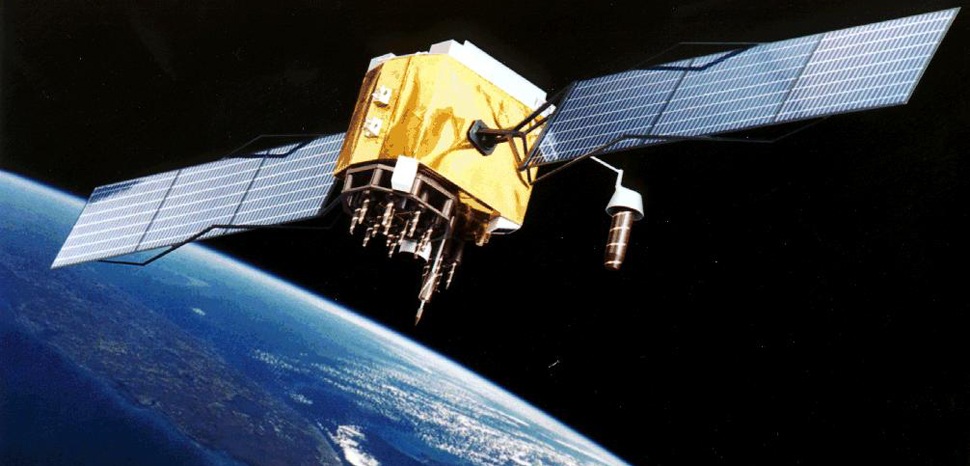
This revolutionary method of encrypted communication has been successfully tested by China in 2018 via the Quantum Experiments at Space Scale (QUESS) program, which employed the Micius (Mozi) satellite to successfully enable a video call between Beijing and Vienna. This fist-time event caused a sensation around the world, not only as a scientific breakthrough but also because of its security implications – even more because it suggests that China is ahead of all other powers in the critical domain of quantum technology.
The effects on intelligence
If quantum encryption lives up to its billing and is fully developed along with the necessary support infrastructure, the technology will be a game-changer in the field of intelligence-gathering.
Technically known as signal intelligence (SIGINT), the interception and decryption of messages is a major source of information used by governments to collect data on rivals and allies alike. As an example, the US National Security Agency (NSA), which is responsible for SIGINT, is currently America’s largest intelligence organization and its world-spanning activities were revealed in 2013 following the disclosure of classified documents by former CIA employee Edward Snowden. But the introduction of quantum secure keys would hugely complicate its task, as traditional interception would become virtually impossible, leaving SIGINT agencies no other choice but to focus on less secure channels (which would reasonably be used for low-importance exchanges) or to obtain the messages from alternative sources – both of which are also slower solutions. Without this invaluable source, information collection could be severely undermined, and with it the overall quality of intelligence analyses upon which governments and military planners (should) rely on to determine the state’s foreign and security policies.
This would inevitably push rivals to seek alternative sources of intelligence to circumvent the quantum encryption wall. While all techniques would be exploited, the most likely consequence would be a revival of the human factor into intelligence collection. The recruitment and management of undercover agents among officials working in key agencies (like foreign ministries or military headquarters) has always played a key and irreplaceable role; but it has partially lost its importance in the past few decades of mass communication due to the (over)reliance on intercepts. But this domain (known as human intelligence, or HUMINT) will re-emerge as a fundamental resource if quantum encryption scales back the role of SIGINT. As a matter of fact, other methods like imagery intelligence (IMINT) or measurement and signature intelligence (MASINT) are greatly useful for assessing the target’s capabilities, but they are of little use for inferring intentions – which is paramount in intelligence analysis – whereas HUMINT can provide extremely valuable information in this regard.
Yet this will not be sufficient to completely compensate for the loss of intercepted messages, as recruiting a covert agent is a long, complex, and risky endeavour. Moreover, the consequences on state behaviour will largely be influenced by whether quantum encryption will be used by one or both powers involved in the mutual intelligence competition.
The strategic impact of quantum encryption
The first scenario to consider is the asymmetric one, where a state uses quantum encryption and another does not. This would put the former one step ahead of its rival: it would be able to conduct its most secret activities (diplomacy, intelligence gathering, development of new weapons systems, military operations and even surprise attacks) with much less concern of being discovered, possibly to the point of becoming emboldened into committing risky actions. If this state were also capable of intercepting and cracking the other’s communications, then it would possess a decisive advantage allowing it to outmaneuver its opponent, who – unable to intercept the quantum-encoded messages – would be working with far less information to evaluate the intentions of the first state, possibly leading to serious misinterpretations and miscalculations. This could be particularly problematic in the event of a crisis, where urgency requires a rapid and accurate assessment of the situation.
If both states were to use this new technology, the result would be a strange stalemate where both sides would be bolstered by their own information security but uncertain over the other’s intentions. In this context, the risk of erroneous interpretations becomes even greater as it involves both parties; and the intelligence advantage will belong to the power capable of better exploiting other techniques (notably HUMINT).
Yet, the consequences are not limited to intelligence operations, but also extend to the military level. First, quantum encryption will make it harder for the opponent’s military planners to prepare for an armed confrontation due to less available information. But this will also mean that the infrastructure supporting quantum communications will become a primary objective for any attack (and probably in an initial strike) in an attempt to deprive the enemy of its advantage. Here, much depends on how the network will be built. Satellites appear to be the best option; not only because they enable long-range transmissions, but also because they potentially allow to send messages to distant naval forces. The alternative is to build a network of quantum repeaters, but this presents multiple problems: It is limited to ground transmissions and the destruction of a single station would break the chain thus making communications impossible. Moreover, ensuring adequate protection of the whole grid would be complicated and expensive. Therefore, this solution is probably adequate only for relatively small but advanced states; whereas vast countries will opt for satellites. Yet, while shooting down an orbiting object is not easy, defending it is even more challenging and powers like the US, China and Russia have successfully tested anti-satellite (ASAT) weapons. As a result, quantum communication satellites will likely be destroyed early after hostilities commence, meaning that (unless effective solutions to protect satellites are developed) the military value of this new technology will be limited to intelligence-gathering in peacetime and in the preparatory phase to war.
The aforementioned QUESS project suggests that China is currently leading the way in quantum encryption, but the United States is doing its best to catch up. Washington has been interested in the application of quantum technologies (not limited to encryption) since the mid-90s, and began providing funding for research in the field in the FY2008 budget. Quantum information science was included in the broader National Strategic Computing Initiative in 2015 and the Trump administration created a specific committee responsible for it in August 2019. Other actors involved in quantum technology are the EU, the UK, and Canada. Still, the United States and China remain the main players and it is possible that they will both develop quantum encryption in the coming years, thus reaching the kind of stalemate described above. How this would affect international stability is uncertain, as much depends on how successful other forms of intelligence are; but in case of a crisis the mutual impossibility to recur to SIGINT for determining the opponent’s stance may result in dangerous miscalculations. Considering the mounting tensions and the number of potential flashpoints (Taiwan, the Senkaku/Diaoyu, the South China Sea, to name a few), this is a risk worthy of serious consideration, as history shows time and time again that intelligence failures can change the destiny of entire nations.