Despite some improvement in crime statistics over the past year, Venezuela remains one of the most dangerous countries in the world.
In 2018, the national homicide rate was 81.4 violent deaths per 100,000 people. 2019 saw a significant improvement, with the rate dropping to 60.3. However, NGOs attribute this dip not to an improvement in the underlying factors fueling the violence – notably the withering of economic exchange and state institutions – but rather their near-complete collapse. In other words, although diminishing opportunities for crime (predatory criminals have fewer wealthy shops, banks, or individuals to target) and massive emigration outflows (some four million people have fled the country through to mid-2019) have reduced national crime statistics in absolute terms, the country’s law-and-order outlook remains just as precarious as it has been in recent history, if not worse.
By way of comparison, El Salvador – another oft-cited example of state collapse – posted a homicide rate of 48 murders per 100,000 people in 2019. Other regional comparisons include Honduras (42), Jamaica (47 in 2018), Brazil (19), Mexico (22), and Colombia (25).
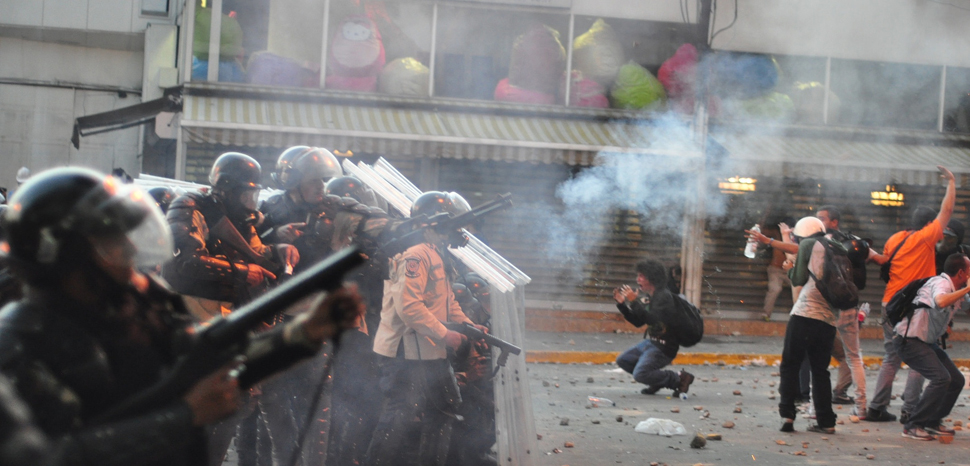
In its 2019 annual report, the Observatorio Venezolano de Violencia (OVV) breaks down the nature of the killings. Of 16,506 total deaths in 2019, 6,588 were committed by criminals/organized crime networks/gangs; 5,286 were the result of ‘resistance to authority’ (ie, excessive force by state security and paramilitary forces and extrajudicial killings); and a further 4,632 deaths that occurred under unclear circumstances.
A portion of these ‘resistance to authority’ homicides are perpetrated by ‘collectivos’ – a loose term used to describe pro-government armed paramilitary groups. The collectivos are a vestige of the Chavez regime, which sought to secure its Bolivarian Revolution via paramilitary outfits whose primary loyalty lay with the revolution (read: the PSUV party), not the state. The result was a proliferation of parallel and overlapping security services, all with their own lines of command and party/individual/state loyalties. Amid the ongoing economic crisis, these paramilitary organizations have only become more important while their state counterparts like the National Bolivarian Armed Forces have waned. And since many of the collectivos engage in either survival-based criminality or political score-settling on behalf of their controllers, they have become nearly indistinguishable from other organized crime networks operating in the country. They have also frequently served as a conduit for drug money being funelled into the pockets of state and party officials. However, it should be noted that although the collectivos were created by the PSUV party, they are not necessarily always beholden to it, and there have been cases of paramilitaries clashing openly with party and state figures.