The United States and Canada maintain a high degree of integration in the mining and metals sector. In 2023, Canada accounted for $47 billion of US mineral imports, making it the country’s largest supplier of mineral inputs, including aluminum, nickel, uranium, copper, and steel. The two countries are also each other’s largest export markets for mining-related goods. This level of cross-border trade has historically supported shared industrial capacity, consistent supply, and stable pricing across a range of sectors from defense to clean energy.
Since January 2025, the return of Donald Trump to the presidency has introduced policy changes that are reshaping this relationship. In February, the administration imposed a 25 percent tariff on Canadian metals and minerals. These steps were paired with efforts to accelerate domestic mining activity through the Defense Production Act and loosened permitting requirements, including for deep sea mining.
Meanwhile, Mark Carney’s election as Canada’s new prime minister signals a shift toward a more state-directed and climate-focused economic model that highlights mining as a critical source of employment and a key ingredient of the country’s industrial policy, where the Justin Trudeau era has received a mixed record on deregulation and cited ESG (Environmental, Social, and Governance) principles to thwart new projects in the extractive industries.
What is taking shape is a departure from the integrated mining framework that has supported North American economic coordination for decades. Tariffs, regulatory divergence, and retaliatory measures are introducing the possibility of a broader decoupling of ownership, investment, and operations between the two countries.
Operational and Financial Risk
The current dispute is not limited to trade volumes. It involves a dense network of shared industrial processes, overlapping investment portfolios, and long-term project dependencies. Many mineral products move between the two countries multiple times before reaching final use. Supply chains in sectors such as aerospace, automotive, and battery manufacturing rely on joint processing and refinement infrastructure that is not easily replaced in the timeline of a 4-year presidential term.
Canadian companies play a central role in the US mining sector beyond export supply. Hundreds of Canadian firms hold active mining interests in the United States, particularly among early-stage projects that were held up by environmental and political opposition. In several cases, the investment and operational capacity of Canadian firms have enabled projects to move forward where US firms lacked sufficient interest, scale, or technical expertise.
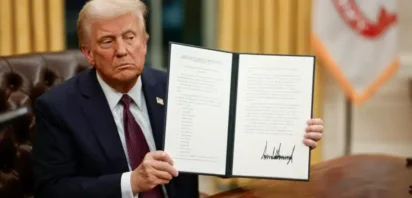
In America’s leading mining states, namely Arizona and Nevada, Canadian junior miners are well represented in emerging mining projects that were hobbled for decades by judicial process and political opposition. In an Executive Order signed by Trump that fast-tracked 10 mining projects, at least two include Canadian companies in major equity positions, specifically the South West Arkansas Project, a joint-venture involving Canadian company Standard Lithium Ltd. and the McDermitt Exploration Project associated with US Critical Metals Corporation, which despite its name, is a Canadian entity.
An additional six projects on the list are American-owned with the remaining two operated by a UK-Australian joint venture and another by a subsidiary of German multinational giant Bayer AG.
This exposure is not reciprocated by US foreign direct investment in Canada’s mining sector. American mining companies are far less involved in active development or operation north of the border. As a result, Canadian companies are more directly vulnerable to any change in US policy or contracting criteria. Exploration and development projects with uncertain eligibility for future federal support may struggle to raise additional capital or meet permitting milestones. If Canadian firms reduce or exit their US portfolios, it is not guaranteed that domestic operators can or will fill the gap at the same speed or with the same level of capital readiness. The disruption would be most acute in early-stage development, where Canadian capital is most active and where Trump’s recent deregulatory pace is most effective.
The policy divergence between Washington and Ottawa may deepen under the leadership of Prime Minister Mark Carney. His campaign has outlined plans to streamline approvals for mining projects through a federal “one project, one review” office and to invest in infrastructure that connects critical mineral sites to supply chains. Canada’s strategy for economic resilience includes a $2 billion response fund to reduce reliance on US demand and protect Canadian jobs, alongside measures to expand Canada’s access and market share in Asia and Europe. While these efforts may bolster Canada’s capacity to attract investment, they also reflect a broader pivot toward trade diversification and strategic autonomy in critical minerals, trends that may accelerate bilateral decoupling if US tariff policy remains unchanged.
Strategic Costs of Decoupling
The breakdown of investment and operational coordination between the United States and Canada presents risks that extend beyond trade. For decades, mineral integration has supported economic and strategic priorities across defense, energy, and industry. Recent policy shifts are weakening the reliability of this framework. Tariffs on Canadian mineral imports could raise procurement costs for US buyers by over $11 billion annually. Nickel, aluminum, and uranium are essential to manufacturing batteries, power systems, and military hardware. Price increases would strain production across multiple sectors.
The lack of substitutes adds to the challenge. Canada supplies irreplaceable volumes of several of the minerals included on the US Geological Survey’s List of Critical Minerals. As one example of this dependency, US-mined nickel is refined exclusively in Canada before returning to US supply chains. Replacing these flows would take years and require significant investment in new processing capacity not to mention diminished profit margins from increased input costs.
Decoupling would also carry downstream effects. Manufacturers across North America could face higher input costs, project delays, and reduced global competitiveness. Without policy coordination between the U.S. and Canada, uncertainty around sourcing and pricing may discourage long-term investment in clean energy, defense, and advanced manufacturing.
Openings for Third-Country Competitors
Unlike many Canadian mining firms, which are primarily listed on the Toronto Stock Exchange, multinational players like BHP and Rio Tinto also trade on the New York Stock Exchange. This presence offers greater visibility within US financial markets and, potentially, more political weight in a US administration that often views stock performance as a proxy for policy success. Firms with NYSE listings may benefit from stronger market recognition and appear more aligned with domestic economic narratives, even when they are foreign-owned. Canadian juniors and mid-tier firms, by contrast, may operate below this threshold of visibility. Other European firms including Glencore and Antofagasta are active in copper and cobalt markets and have the financial heft to take over smaller-sized, distressed, or inactive assets.
While broader national security reviews may still apply, these companies may encounter fewer direct trade frictions and less exposure to retaliatory measures. BHP and Rio Tinto have already received critical policy support for Arizona’s long-dormant Resolution Copper project, a joint-venture between the two companies.
There is also the risk that third-country firms will optimize for short-term profit over long-term strategic alignment. While Canadian and US firms have historically operated under shared policy expectations and comparable regulatory frameworks, new entrants may not prioritize those standards unless compelled to do so. This could reduce accountability in permitting, oversight, and public engagement, further complicating domestic mining policy and raising concerns among host communities and policymakers alike.
In the absence of a coherent North American minerals strategy, the current breakdown in bilateral coordination increases the probability that the mining industry will proceed under a more fragmented market exacerbated by the competing risks of protectionism and supply crunches.