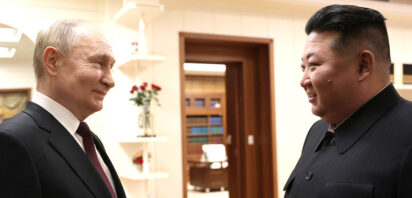
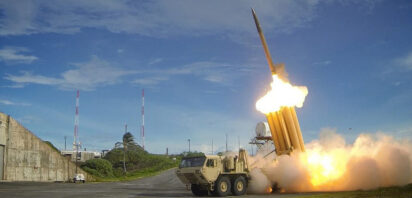
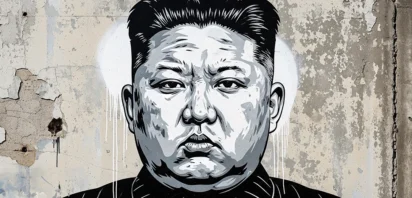
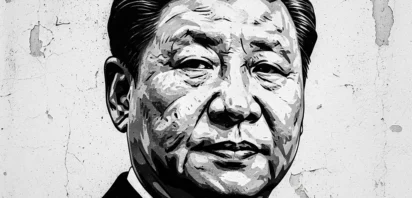
North Korea’s shifting strategies – from evading sanctions and laundering money to advancing its weapons programs – are becoming increasingly intertwined with its deepening ties to China and Russia. This growing alignment not only intensifies the threat but also poses a significant, coordinated challenge to global security. Ties between the three countries have strengthened significantly, driven by mutual opposition to Western influence, resistance to international sanctions, and Russia’s war in Ukraine, creating a tighter, albeit complex, strategic alignment. This closer alignment is already resonating in regional security dynamics and is both reflective of and contributing to the wider breakdown of the global order.
The China-North Korea Relationship
China and North Korea have longstanding economic and security ties, including a mutual defense treaty signed in 1961. In 2021, the two countries renewed their mutual defense pact for another twenty years.
China is North Korea’s main trading partner. According to China’s General Administration of Customs, trade between the two nations rose 22% to $418.7 million in January and February. The Sino-Korean Friendship Bridge linking Dandong, China to Sinuiju, North Korea serves as the primary trade artery. It is the principal gateway for humanitarian aid, raw materials, and goods flowing into North Korea. The New Yalu River Bridge is designed to eventually replace it but has remained largely unused due to unfinished infrastructure on the North Korean side, however, it is anticipated to become operational by the end of 2026. Once completed, it will bolster China-North Korea economic ties, facilitating sanctions evasion by increasing truck trade.
Although China has officially supported UN sanctions since 2006, it remains the largest facilitator of Pyongyang’s efforts to obtain foreign currency in violation of international law. This is motivated by a desire on the part of Beijing to prevent the collapse of the North Korean regime and manage its nuclear status as a reality rather than an issue to be eliminated. Although China has claimed it wants to preserve stability on the Korean Peninsula, various sources suggest it acts as a “decisive enabler” of North Korean sanctions evasion allowing it to fund its weapons programs.
Vectors of Chinese Support
- Front Companies and Illicit Financial Networks: Chinese entities, particularly in border cities like Dandong, heavily accelerate North Korean sanctions evasion by managing front companies, and laundering money through Chinese banks. These networks frequently rely on Chinese nationals as intermediaries, falsify shipping documents, and utilizing shell companies, often registered in Hong Kong, to facilitate the transfer of illicit funds and goods tied to North Korean trade.