The Chinese media proclaimed that 80% of the hardware in last week’s parade had never been seen before, and on display were anti-ship missiles, fourth-generation fighters, unmanned drones, and inter-continental ballistic missiles.
China’s official military budget stands at $131.57 billion, well under the $575 billion spent by the United States every year. But there is an important distinction to be made between the two. Unlike the U.S., which plans and equips itself for a variety of contingencies, from counterterrorism operations to the worldwide power projection of carrier strike groups (CSG), China has a far more narrow focus in its military planning: anti-access, or keeping conventional US military power out of its immediate region. This has allowed Beijing to make the most of a smaller budget and achieve parity if not superiority in specific fields that could prove decisive in the event of a future conflict.
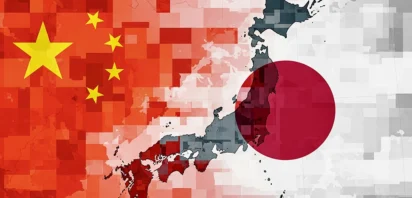
The territory Beijing is focusing on is divided into two priority areas: the first island chain (including the East China Sea and the South China Sea, pushing out as far as Japan’s Kyushu Island in the north and the coast of Malaysia to the south) and the second island chain (which pushes out past the Philippines and into the Pacific Ocean towards Guam). Major strides have been made in the past decade in thwarting the dominance of US naval power in the first island chain (impacting US allies South Korea, Japan, Taiwan, and the safety of US military bases in Okinawa). This is simply because greater proximity to the Chinese mainland allows for easy basing of missile batteries, fighter squadrons, radar installations, and the wide variety of supporting sensors needed to guide the sophisticated anti-ship platforms that can threaten US CSGs. The second island chain is another story. Here the PLA is lacking in a territorial foothold with which to base supporting infrastructure, leaving its area-denial capabilities lacking. Still, as we saw in last week’s parade, the PLA Navy is committed to expanding its ability to take the fight beyond the first island chain and to US bases in Guam.
What We Saw
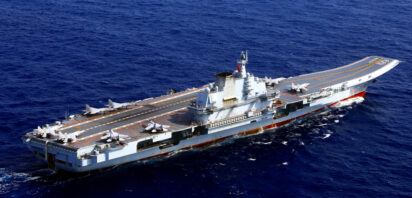
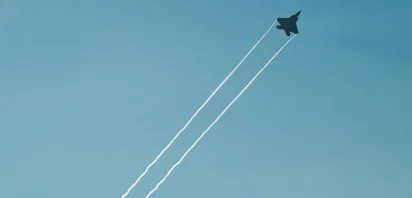
In terms of manned air power there were no real surprises. The J-11B (air superiority), J-15 (carrier-based), and J-10 (multi-role) were all present. The H-SK medium-range bomber was also displayed, which in itself is not remarkable. Of note however is the fact that the H-SK can now be outfitted with YJ-12 anti-ship ballistic missiles, further pushing out the line of defense from Chinese shores. This also comes after news that the YJ-18 supersonic anti-ship ballistic missile (similar to the Russian 3M-54 Klub, or ‘Sizzler’) will soon be launchable from China’s fleet of submarines. Both would represent a new capacity within the second island chain, threatening US naval vessels moving towards the first island chain in the event of a conflict.