The Middle East is home to an intricate web of proxy militias, frequently aligned based on sectarian or ethnic affiliations and supported by a range of regional and international actors. The motivations driving these groups often extend beyond sectarian or ethnic boundaries. Their struggles may revolve around securing political power, asserting influence, or gaining access to vital resources. On one hand, the involvement of external powers in these conflicts has heightened regional tensions and exacerbated humanitarian crises. However, on the other hand, external powers have also intervened with the aim of restoring order or enhancing the security landscape, with one recent example being the United States and its partners intervening to halt the advance of the Islamic State in Iraq and Syria.
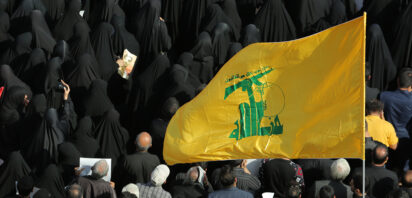
Arguably, the United States and Iran could be considered the most significant players in proxy wars in the Middle East. Iran backs some of the more prominent proxies, namely Hamas, Hezbollah, and the Houthis. These three groups are effectively shaping the trajectory of Middle East diplomatic and security dynamics. In every conflict where Iranian-backed proxies are active, US-backed proxies are fighting them. The recent Hamas attack on Israel has escalated tensions, prompting countries to take sides. The taking of sides also results in the deployment of proxies. And while Saudi Arabia, Turkey, and other nations support proxies in various conflicts, Russia, with its much broader scope of policy interests, is arguably the third most prominent sponsor in the region.
Most other countries employing proxies have done so primarily in response to the US-Iran conflict, which effectively frames the competition among other players.
The US-Iran-Russia Triangle
The United States, Iran, and Russia are all motivated by a blend of ideological, strategic, diplomatic, security, and economic factors, along with a shared history and animosity. Americans still remember the 1979 Islamic Revolution when the US embassy in Tehran was seized and diplomats held hostage for 444 days. Iran’s Islamic government is wary of US involvement in the region due to the CIA-backed overthrow of Prime Minister Mohammad Mossadegh in 1953. And for more than 40, after the end of World War II, the Cold War between the United States and Russia, and the threat of nuclear war between the two, utterly dominated global politics.