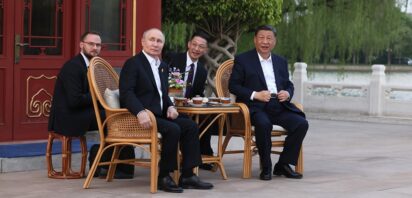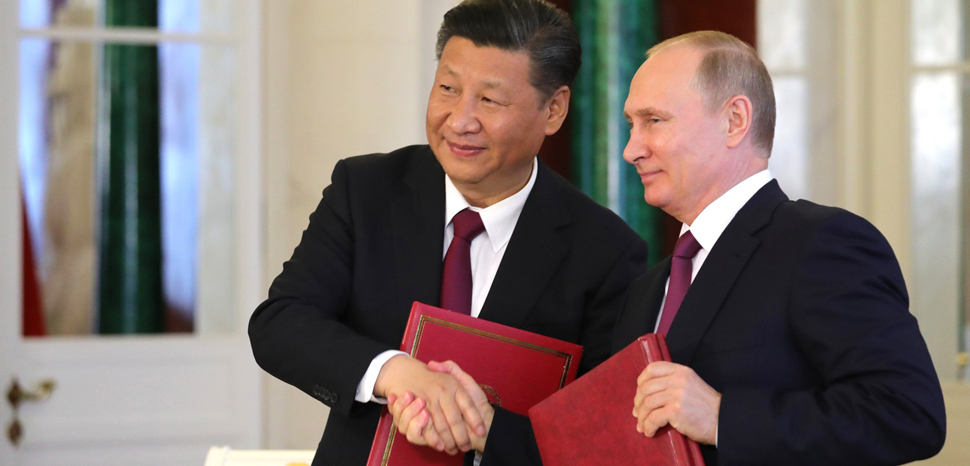
China and Russia are often represented by media and political discourse as two natural allies whose ties are becoming closer with each passing year. Many commentators believe this trend will continue, perhaps even culminating in the two powers forming a “Eurasian Bloc” to challenge the current world order centered on the United States. It is undeniable that Russia and China have many common geopolitical, strategic, and economic interests, which have fueled their close cooperation and will not be disappearing anytime soon. However, the tenure of their friendship over the past decade should not be taken as a given. The multiple reasons for cooperation notwithstanding, there are also factors that threaten to hamstring any future partnership between Moscow and Beijing, possibly to the point of putting bilateral realtions on a more contentious footing.
Background
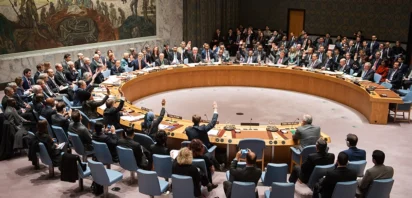
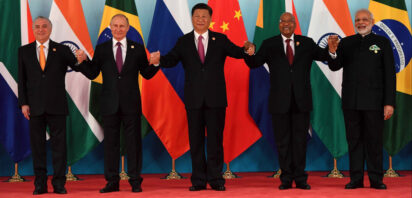
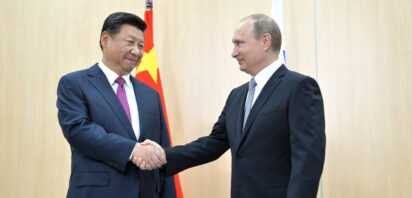
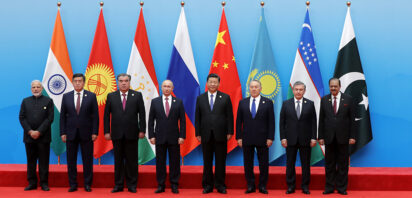
Russia and China have been developing their ties in multiple domains. Politically, apart from having established close bilateral relations, they have acted together at the multilateral level in various important forums. They are both members of the Shanghai Cooperation Organization (SCO), a Eurasian regional body which also includes India, Pakistan, and others. They are also the two leading powers of the informal BRICS group, alongside Brazil, India and South Africa. Being both permanent members of the UN Security Council, they often support each other’s interests.
In strategic terms, the two powers are deepening their cooperation on security issues and have performed multiple joint military exercises over the years. The Chinese armed forces make large use of Russian (derived) hardware. Notable examples include the two aircraft carriers Liaoning and Shandong, based on the Russian Kuznetsov class; the diesel/electric Kilo-class attack submarines; and the Shenyang J-11 and J-15 fighters, derived from the Russian Su-27 and Su-33 respectively.
Geopolitical and geoeconomic issues also play an important role in the Sino-Russian relations. A notable development in this sense is the gradual opening of the Northern Sea Route (NSR) through the Arctic due to global warming. China sees this as another opportunity to reach Europe in the broader context of its “One Belt, One Road” initiative (OBOR), to the point that some scholars have suggested the project will ultimately be called “One Belt, One Road, One Circle” (the Polar one). Baked into the logic of OBOR is the fact that Beijing is seeking to increase its presence in areas traditionally exclusive to Moscow’s sphere of influence, notably Central Asia. This, obviously, could create tensions between the two powers. A similar basis for cooperation (but also of future conflict) exists in Siberia: Russia seeks investments to develop the area and untap its huge hydrocarbon and mineral reserves, whereas the PRC wants to access these primary resources to feed its economy and develop alternative energy supplies to the Middle East, both due to its instability and because importing from there leaves China vulnerable to interruption on the high seas.