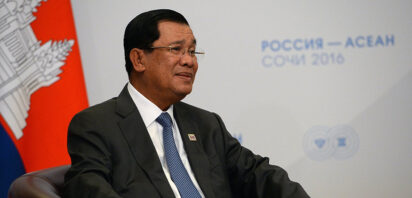
The 37th ASEAN Summit, held in Hanoi in mid-November with leaders in virtual attendance, marked the end of an unprecedented year for regional diplomacy amid the COVID-19 pandemic. Vietnam made a success of its year as ASEAN chair, despite the global situation threatening to diminish its agenda. Meetings went ahead as planned, with online diplomacy proving remarkably productive—at November’s summit, at least 80 documents were signed, notably the Regional Comprehensive Economic Partnership (RCEP) trade deal.
Vietnam also sought to leverage its once-in-a-decade opportunity as ASEAN chair—a position which rotates between the member states on an annual basis—to shape the regional agenda. As arguably China’s most vocal critic in the South China Sea, Vietnam succeeded in achieving a more unified ASEAN position than in previous years, based on support for international law and multilateral talks. The baton of ASEAN chair is now passed to Brunei—a quieter party in the South China Sea dispute. What challenges lie in store for the bloc in 2021?
Outlook
Navigating great power rivalry
Intensifying rivalry between the United States and China is the most pressing challenge for ASEAN states to navigate in 2021. This was referenced by Vietnam’s Prime Minister Nguyen Xuan Phuc at the closing ceremony of the recent summit, when he warned that regional peace and security were “under greater threat” as a consequence of the “unpredictable conduct of states, major power rivalries and frictions,” adding that Southeast Asian nations had so far avoided being “drawn into the maelstroms” of competition between the US and China.
Avoiding choosing one side over the other will be a significant challenge for ASEAN, as it looks to preserve its desired centrality in regional affairs and uphold multilateralism. While ASEAN has walked this tightrope skillfully as a bloc, there are concerns that Brunei as chair could display greater deference toward China. The sultanate is a major recipient of Chinese investment for infrastructure—with the 30km Temburong Bridge, which opened in March, being the keynote project—and oil refineries which underpin Brunei’s economy.
Vietnam, in contrast—historically wary of China, having fought a border war in 1979—has shunned large-scale Chinese finance in recent years and sought closer ties with the US, despite their equally frosty past. Finding a balance in its relations with both powers is key to ASEAN’s stability and regional security, argued Vietnam’s premier Nguyen Xuan Phuc at the November meeting, where he called on “powerful countries to have positive relationships, healthy competition” and “respect the bloc’s centrality,” without mentioning the US or China by name. Yet ASEAN must also harness its influence to facilitate such a positive outcome.