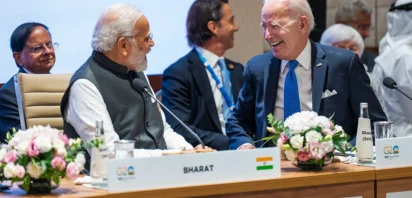
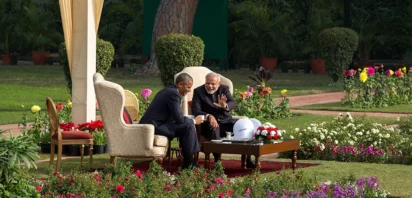
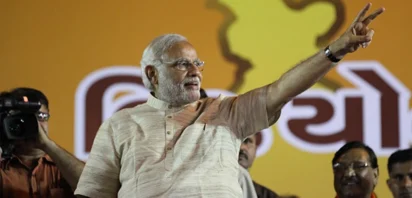
Indian Prime Minister Narendra Modi spent the past few days visiting each of the Central Asian republics, the first top-level visit of its kind in recent Indian history.
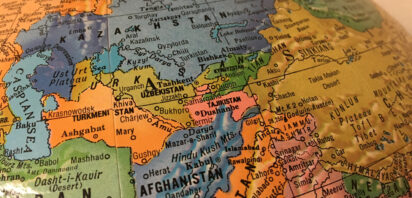
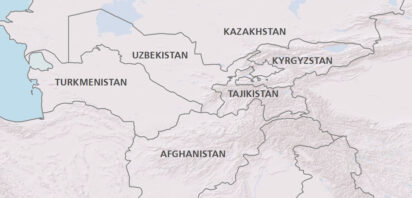
He first touched down in Uzbekistan, then headed to Kazakhstan before visiting Turkmenistan. A short trip to Kyrgyzstan followed, before Modi wrapped up the trip on July 13 in Tajikistan.
Negotiations in each country had a different focus. In Uzbekistan, talks centered on the 2013 bilateral agreement between the countries wherein Uzbekistan had pledged to provide uranium for India’s power needs. The countries outlined steps they could take to realize the agreement, Narendra’s camp said.
In Kazakhstan, five agreements were signed when Modi met Kazakh President Nursultan Nazarbayev. The agreements saw the creation of a contract between Kazakh nuclear producer KazAtomprom and the Nuclear Power Corp. of India, as well as agreements on military cooperation and a commitment to stamp out terrorism and extremism.
In Kazakhstan’s southern neighbor Kyrgyzstan, Modi oversaw the launching of a tele-medicine link with India as well as the start of the second phase of the Kyrgyz-Indian Mountain Bio-Medical Research Centre. Modi and Kyrgyz President Almazbek Atambayev inked an agreement for their militaries to cooperate in exercises on an annual basis.
Modi next headed to Turkmenistan, where he discussed the need for the early implementation of the Turkmenistan-Afghanistan-Pakistan-India (TAPI) pipeline with Turkmen ruler Gurbanguly Berdimuhamedov. Modi also stressed India’s interest in continuing to invest in the underdeveloped, natural resource-dependent state for the long term.