The Eastern Democratic Republic of the Congo (DRC) is experiencing one of the most severe security and humanitarian crises of the 21st century. The renewal of armed operations by M23 rebels, an outfit allegedly supported by Rwanda, has significantly shifted power in North and South Kivu provinces, where armed parties now possess nearly a fifth of Congo region. In a nation that’s home to the largest deposits of coltan in the world along with huge deposits of gold, the management of tactical mining strips is a key element in perpetuation of violence.
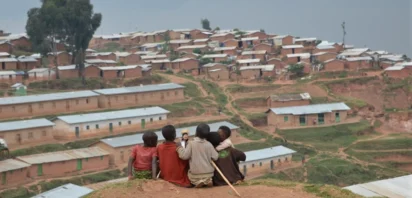
Over 7.3 million people in Congo are internally displaced, and sexual violence, even against children, remains rampant. The destruction of infrastructure and reduced access to the humanitarian assistance serves to further intensify civilian vulnerability in the region.
Ceasefire talks have been pushed by Qatar with the help of the United States, however, despite some success, breaches are still evident and there are still scores to settle. Only a stability based on higher levels of diplomatic enforcement, better civilian protections, and ground-level economic reforms can make war less profitable.
Background
Instability in Eastern DRC is rooted in decades of militarized competition over mineral-rich territories and geopolitical influence. After the formal end of the Second Congo War in 2003, numerous armed groups entrenched themselves in profitable mining zones where state presence is limited.
UN reporting highlights how militias finance their operations through illicit trade networks involving gold, tin, tungsten and coltan smuggling. Despite vast mineral wealth, governance remains weak, and rural border areas often operate outside Kinshasa’s control. Since 2010, the UN peacekeeping mission MONUSCO has been active, but it remains hobbled by public mistrust and a mandate that repeatedly fails to stem the worst of the violence.
Recent Developments
Military Outlook
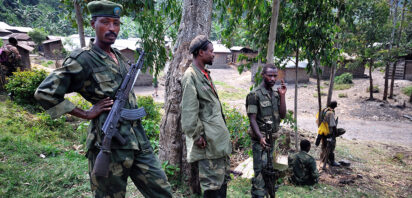
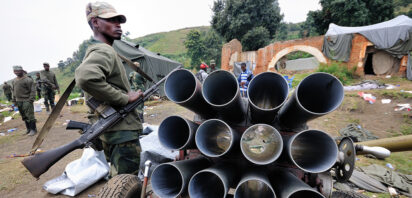
In January 2025, the M23 armed group attacked in force and conquered Goma, the capital of North Kivu. In February its territorial footprint grew after taking Bukavu, the capital of South Kivu, further strengthening the group’s control over key trade routes. The conflict subsequently escalated further in Masisi and Lubero Territories, where over 100, 000 civilians were displaced by the intensified fighting. Talks were organized in March, when Congolese President Felix Tshisekedi and Rwandese President Paul Kagame met in Qatar to hammer out an immediate ceasefire. The process was strengthened by three-way treaty signing in Washington in April, which undertook both sides to respect sovereignty and commence a process of Qatar-mediated peace negotiations. Nonetheless, despite these diplomatic engagements, armed operations are still being recorded in North Kivu, South Kivu, and Ituri, highlighting the widening gap between high-level agreements and the actual security situation on the ground.
Civilian Impact
Civilian deaths are on the rise, with the DRC now home to one of the largest internally displaced populations in the world at 7.3 million. Violence has escalated in North Kivu in particular, leaving more than 140,000 people homeless in January alone. This comes in addition to the 738,000 civilians who were displaced over the first quarter of 2024, illustrating how insecurity in conflict-affected regions remains persistent.
The humanitarian outlook was further strained by severe flooding in Tanganyika Province in April 2025, which caused another 10,000 people to fall into crisis. Displacement sites continue to be overcrowded and under-served and increasing the probability of cholera, respiratory infections, and malnutrition. Cases of sexual violence related to conflicts, including child sexual violence, have increased dramatically; armed groups still employ sexual violence to terrorize societies and dominate territories. Critical infrastructure (schools and health centers) has been ruined or deserted, and populations are being left without basic services throughout the region.
International Response
International involvement has been ramping up alongside the severity of the security crisis, though it hasn’t translated into improvements on the ground. There remains an immense need to provide humanitarian assistance to communities whose lives have been disrupted by war. UN agencies are still providing aid where they still have access, such as in recent convoys for displaced families in Goma and Bukavu. Nevertheless, insecurity often inhibits movement, leaving large numbers of people without support.
The UN peacekeeping mission, MONUSCO, is still active in various regions where M23 operates, though locals have dwindling faith in the effectiveness of the deployment. The World Bank calculates that now almost 20 percent of Congolese land is controlled by armed groups, a bitter sign of the weakening state power and MONUSCO’s inability to reverse the trend.
Diplomatically, Qatar has mediated the conflict with the help of the United States, establishing an official structure of dialogue between Kinshasa and Kigali. Nevertheless, there is still no clarity on accountability of ceasefire violations and external assistance to armed groups still aids in lack of trust. Humanitarian benefits and political bargains may turn out to be temporary unless international intervention can stabilize the region and allow for long-term political cohesion.
Economic Impact
The GDP of the DRC decreased by 8.6 percent in 2023 and 6.5 percent in 2024, and is expected to decline further in 2025 due to instability in the mining areas that feed state coffers. World Bank predicts a fairly slight recovery by 2027, which means that the weakened economic performance will persist unless ground-level conditions improve.
Across the DRC’s informal and illegal mining networks, controlling extraction and trade is lucrative business. Armed groups are permitted to make a profit out of the smuggling of gold, coltan, tin and tungsten usually via cross-border trade into neighboring countries. This parallel war economy denies the Congolese government much-needed revenues to govern, build and maintain infrastructure, and fund the security services. Concurrently, populations who remain in militia-held areas lack access to essential services, job markets and legal businesses, which further impacts tax revenues and perpetuates a cycle of poverty.
Risk Factors
Prospects for the shaky ceasefire process are questionable because trilateral mediation has yet to provide any verifiable de-escalation mechanisms. Any failure in these negotiations risks an all-out war, further undermining the integrity of local diplomacy. The ceasefire violations being witnessed in North Kivu indicate that political settlements are not yet translated into the control of military actors. In the meantime, the 2023 elections were still marred by fraud allegations and the upcoming vote in 2026 is going to be critical, potentially leading to political instability.
The increase in the territory under M23 and the continued activity of several militias create the potential of the conflict’s expansion into the neighboring provinces. These are mineral-rich lands where rivalries often devolve into inter-militia conflicts, fueling a cycle of violence. The situation along the DRC’s external borders is also unstable, and tensions with Rwanda and Uganda increase the risk of accidental or intentional triggering incidents on the border. Finally, there is persistent insecurity in places where international forces operate, reflected in numerous attacks on peacekeepers and humanitarian workers.
Demands for humanitarian assistance are increasing faster than the provision can be made. The prolonged conflict poses a risk of plunging some regions into famine conditions, given the fact that the number of displaced individuals is more than 7.3 million. Sexual and gender related violence is on the rise especially amongst women and children and frequent flooding and lack of proper infrastructure in camps expose people to cholera and malaria. Reduced accessibility to aid organizations, donor burnout, and underfunded relief budgets threaten a serious crisis of protection that pushes desperate citizens to armed groups for survival, to the ultimate detriment of future peacebuilding opportunities.
Looking Ahead
Eastern Congo is one at a crossroad. Armed competition over critical minerals, poor state authority, and unaddressed foreign intervention are further extending the instability. Although diplomacy has provided an avenue for negotiating deals, gains will be fleeting in the absence of increased international coordination and accountability. Until then, local and geopolitical tensions risk of a ripple effect across the entire Great Lakes region. Sustainable peace needs to be long term commitment that goes beyond ceasefire pledges: a viable mixture of political pressure, civilian security, and economic reform that puts the Congolese people first.
The views expressed in this article belong to the author(s) alone and do not necessarily reflect those of Geopoliticalmonitor.com.