India is one of the world’s fastest-growing economies and it is projected to reach great power status in the coming decades. Yet India’s road to international prominence is paved with several challenges that it must overcome to realize its aspirations. Among them is ensuring adequate water supply to its huge and continuously-expanding population. This problem – epitomized by the Chennai water crisis – is a real threat to India’s rise, as persistent water shortages risk undermining the country’s economic development and even sparking domestic and international conflicts over increasingly scarce resources.
Background
Chennai Water Crisis
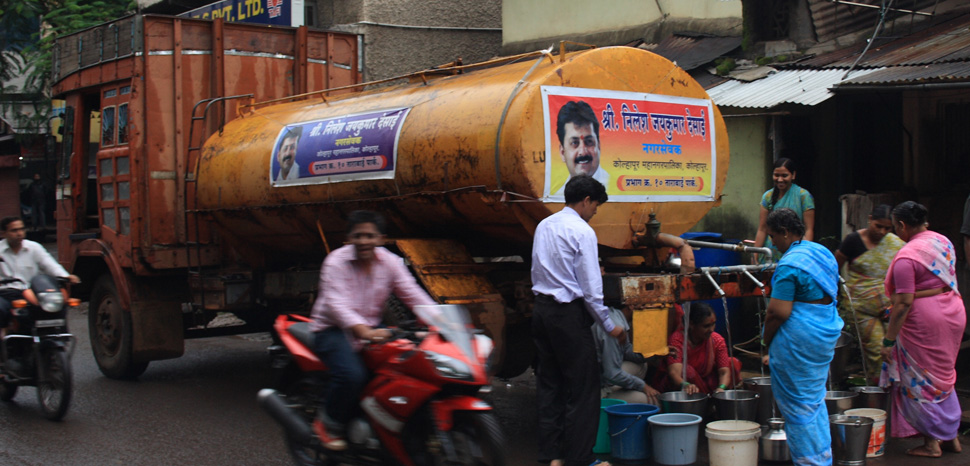
The problem of water security in India has recently hit the international news due to the severe water crisis affecting the city of Chennai (previously known as Madras) in the southeastern state of Tamil Nadu. After several rainless weeks, the city’s four main reserves ran dry, forcing the authorities and ordinary citizens to take emergency measures. Many inhabitants temporarily left the city and moved to other states; many firms asked their employees to work from home; restaurants and hotels remained closed; schools were shut; and air conditioning in public areas such as the metro was switched off. The government sent trucks to distribute water to the population, forcing citizens to queue for hours in order to get their ration. The critical situation even resulted in clashes: in one instance, a man stabbed his neighbor during a fight over water-sharing. Finally, rain returned to Chennai, but only in the form of a 30 minutes-long shower.
The origin of the crisis can be traced back to decades of poor urban planning which, somehow ironically, left Chennai vulnerable to both floods and droughts. As a matter of fact, its water management infrastructure has been pushed aside in favor of residential and industrial areas. The city is located in a geographic region characterized by monsoons, which usually arrive in October-November and represent the main source of water. However, the monsoon is very unpredictable (and climate change is disrupting it even further), meaning that it is essential to have adequate infrastructure to divert water in case of excessive rainfalls and to store it for use during droughts. As strange as it may seem, pre-modern Tamil Nadu had a better water management infrastructure than today. There were numerous small reservoirs and large open fields that absorbed rain and transferred it into underground wells. But the situation gradually changed since the British rule (Raj) in the 17th century. As the region became gradually industrialized and Chennai expanded, only large reservoirs located in the growing urban area survived. Houses, manufacturing centers, transportation networks, and power plants were built upon the existing open spaces. This urbanization and industrialization process surely made Chennai richer and more productive, but dramatically increased the stress on the local water resources. Moreover, water from neighboring villages was diverted to the city, thus causing shortages in the countryside as well. In the long run, this left Chennai in its present state of water insecurity.
Water (In)security in India
Water scarcity is a problem that is not limited to Tamil Nadu state, as it affects large swathes of India. In the decades to come, the problem could become a national issue that risks thwarting India’s economic rise. A report published in 2016 already raised the alarm over the water crisis in the country. According to the available data, the areas experiencing “critical” groundwater stress or overexploitation are concentrated in the south and in the densely-populated northwest of India. Droughts are becoming more common, and even states that generally experience water surpluses are being impacted by acute scarcity. This in turn has raised awareness about the problem and has prompted the authorities to act, but solving the issue will require ambitious and long-term measures. If the current trend persists, India will have to face national water scarcity by 2050, when its population is projected to surpass China’s and reach 1.6 billion people.