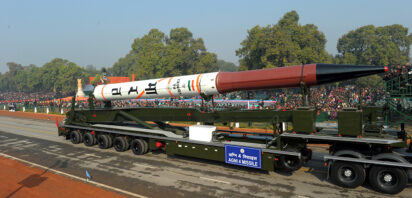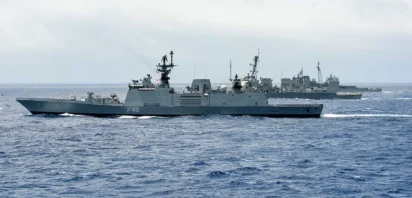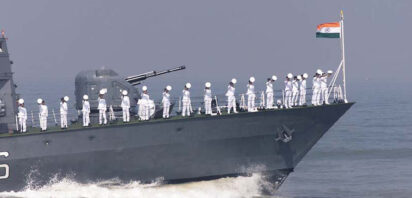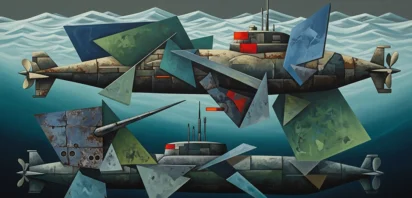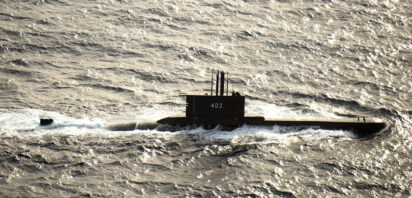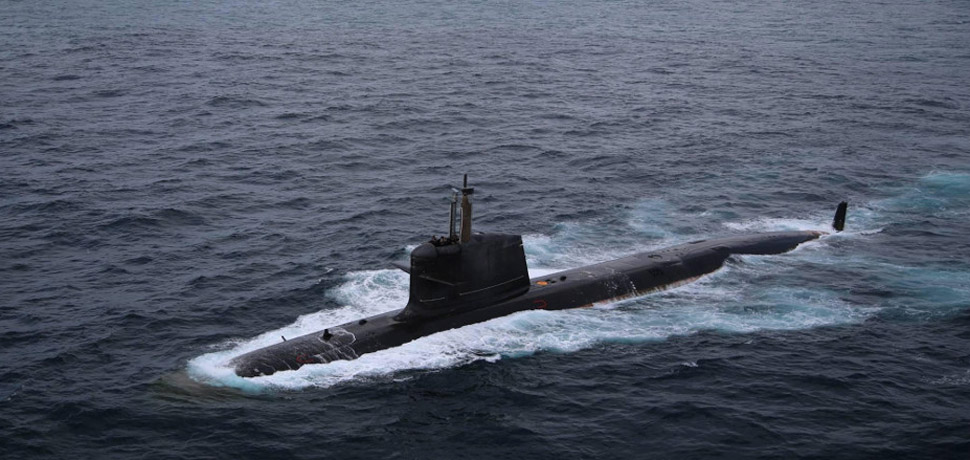
The INS Arihant is the first operational nuclear-powered ballistic missile submarine (SSBN) of the Indian Navy. Commissioned in 2016, the unit completed its first deterrent patrol in November 2018. But while it surely represents a considerable step forward for India, the Arihant is affected by important design flaws that limit its strategic value as a credible means of nuclear deterrence.
Background
The origins of India’s nuclear submarine program
New Delhi’s quest for a nuclear-propelled naval unit dates back to 1966, when the government ordered a feasibility study on a nuclear reactor capable of powering a ship. The program took a prominent military dimension following the 1971 Bangladesh war, when the United States sent an aircraft carrier to support Pakistan (which ruled over East Pakistan, the precursor to Bangladesh). This prompted India to develop a nuclear-powered attack submarine (SSN). Thanks to the virtually unlimited endurance inherent to nuclear propulsion, an SSN would have been capable of hunting enemy vessels far from India’s coasts, thus increasing the risk of intervention for any great power willing to meddle in South Asian affairs. With this objective in mind, India launched the Advanced Technology Vessel (ATV) program in the mid0-1970s and sought the assistance of the USSR. These initiatives produced two projects. The first was codenamed Project S-1, and resulted in India leasing a Soviet Charlie-class missile-armed nuclear submarine in 1988. The second was Project S-2, which revolved around the ATV program to build an indigenous SSN. But in spite of Soviet help at the later stages, the ATV failed to deliver a viable reactor, and New Delhi ultimately opted to directly purchasing a reactor design from Moscow in 1998. In the wake of Pakistan’s nuclear test in the same year, India decided to diversify its nuclear arsenal. The objective of Project S-2 was changed to the development of an SSBN, which ultimately resulted in the Arihant. However, this entailed certain trade-offs that profoundly affected the unit’s design.
Arihant’s specifications (and limitations)
The Arihant bears scars from the long and complicated history of the S-2 Project. While the unit has been developed and built in India, its design is largely based upon Soviet SSBMs: some sources mention the Charlie class, others the Akula class (Project 971 / Shchuka), and sometimes they report both of them. In any case, these units have been operated by the Indian Navy under the same name (INS Chakra). The former was the boat leased by the USSR in the 1988-1991 period, the latter is still in service under a lease contract lasting until 2022. These two submarines have been a precious source of technical know-how regarding nuclear-propelled units, both in terms of design and of training for Indian crews.