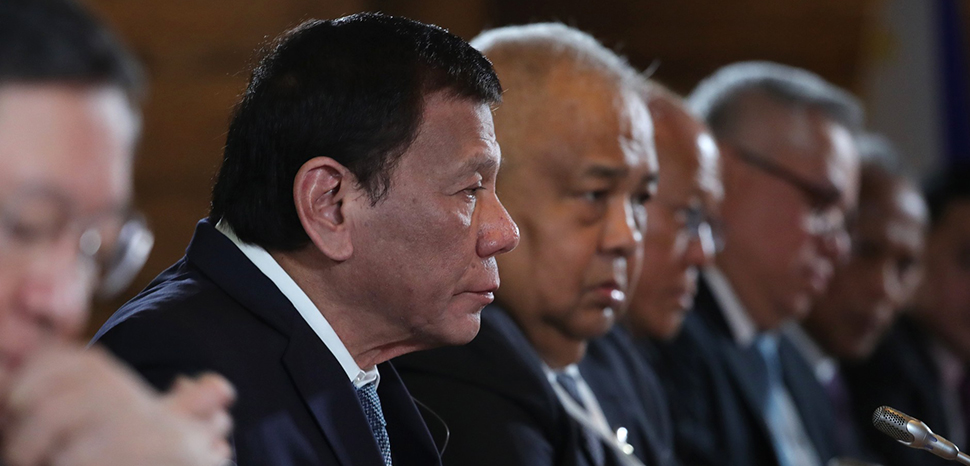
On 28 October, Philippine president Rodrigo Duterte signed a law postponing the first parliamentary elections in the Bangsamoro Autonomous Region in Muslim Mindanao (BARMM) from 2022 to 2025. The bill had been approved by lawmakers in the Senate and House of Representatives in September, after a year of campaigning from the Bangsamoro Transition Authority (BTA)—fronted by the former rebels of the Moro Islamic Liberation Front (MILF)—to extend their mandate to govern. Interim Chief Minister Al Haj Murad Ebrahim, in power since the region was formed in 2019, had argued that more time was needed to strengthen democratic institutions after setbacks amid the COVID-19 pandemic.
Yet delaying the elections is a risky move in a region plagued by separatist violence for generations. The process of decommissioning MILF rebels and their weapons is not yet complete, whilst Islamist militant groups remain a threat, despite being on the back foot and confined to operating in remote marshlands and outlying islands—for now at least. It is within this fragile peace, that the BTA strives to develop accountable governance and nurture a thriving democratic culture in the BARMM, while avoiding the failings of a past experiment in self-governance—the now-defunct Autonomous Region in Muslim Mindanao (ARMM), which from 1989–2019 was sunk by corruption and mismanagement.
Elections delayed
An extension to the Bangsamoro transition, initially set to end with elections in May 2022—at which time the BTA’s mandate would expire, and elected lawmakers would take office—was first proposed a year ago, with President Duterte supporting Ebrahim’s proposal to move the polls to 2025. Despite initial legislative progress and the passing of priority laws on forming a civil service and administering the BARMM, responding to COVID-19 came to dominate the BTA’s agenda and led to louder calls for an extension as the passage of other key laws on elections, revenue, and local politics were delayed.
Any extension required approval by Manila. After being debated for months by three committees of the Philippine House of Representatives—on Suffrage and Electoral Reforms, Muslim Affairs, and on Peace, Reconciliation, and Unity—the law to extend the Bangsamoro transition passed in the Senate on 6 September and in the House on 15 September, where 187 lawmakers voted in favor, with none against and no abstentions. The bill amended Republic Act 11054, known as the Bangsamoro Organic Law (BOL), the legislation which had encoded the peace deal with the MILF and created the BARMM.