US Secretary of State Mike Pompeo has announced that a strategic dialogue will be initiated with the Iraqi government beginning in June. Though the new talks will outline economic cooperation between the two countries, the front-and-center issue will be the future of the 5,200 US troops that remain in Iraq. These troops have become a strategic liability in recent months, evident in their repeated targeting by Iran-backed militias and, in early January, a direct missile strike in retaliation for the US killing of General Qasem Soleimani.
Analysis
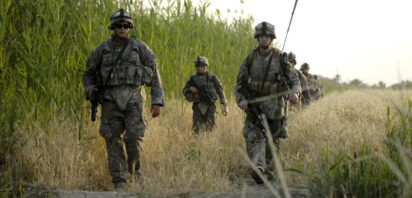
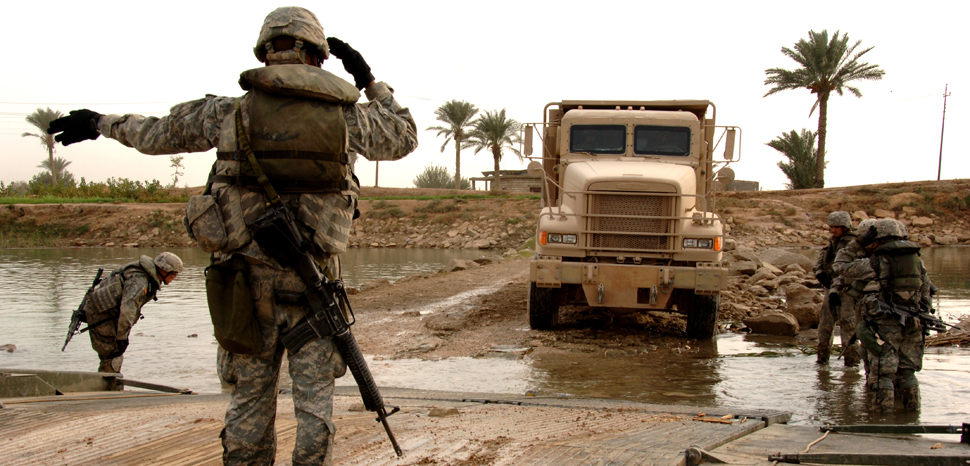
The United States maintains a deployment of around 5,200 troops in Iraq as part of the global coalition against Islamic State. This is a mere fraction of the 170,000 that were deployed there during the height of the ‘surge’ in November 2007. These remaining troops are slowly being consolidated into fewer locations after a spike in US-Iran tensions toward the end of the year raised fears over the safety of those who were stationed in smaller and further-afield forward bases.
In terms of a possible withdrawal, there are both push and pull forces at work.
On the US side, there are worries that the deployment is too small to be effective in an offensive sense; yet just small enough to represent an appealing target for militant groups seeking to attack US interests. Put another way: they are a strategic liability, and a costly one at that. Lately these concerns are being realized with troubling regularity. For example, the December 27 attack on the K-1 air base that killed a US military contractor, which eventually precipitated an Iranian missile strike on a separate US base in Iraq. More recently, two US soldiers and one British soldier were killed in a March attack on Camp Taji near Baghdad. Though no official claim of responsibility was made, the attack was attributed to the Iran-linked militia Kata’ib Hizbollah.
On the Iraqi side, a growing chorus of voices are calling for US troops to be pulled out of the country. The idea of a US military presence has never been popular with Shiite parties that maintain close links with Iran; however, the assassination of Qasem Soleimani – which took place at Baghdad International Airport – imbued these concerns with an aura of nationalist credibility, as the incident was widely viewed as a grievous breach of Iraqi sovereignty. The highest-profile supporter of a pullout is the current prime minister designate Adnan al-Zurfi, a figure who is otherwise viewed as being close to Washington. Zurfi flatly declared “We don’t need a foreign army in Iraq” in an interview last week, and has indicated that the government has already received pledges on a drawdown of half of all US troops by the end of the year.
Normally it would appear that we’re headed for a significant reduction by the end of the year. However, there are two wrinkles here worth noting:
The first is that a group of Pentagon insiders is clamoring for more, not fewer troops in Iraq, according to a recent article in the New York Times. These additional troops would be used to take on the largest Iran-backed Kata’ib Hizbollah militia, and the military planning for such a scenario is reportedly already underway.
The second is the current state of Iraqi politics: sectarian, polarized, and rapidly deteriorating. In truth, the same could be said before COVID-19 even hit, when widespread protests against political and economic mismanagement had effectively paralyzed the country. But COVID-19 and the simultaneous collapse in oil prices have removed the possibility of any salvation from oil exports, speak nothing of the public health challenges involved in fighting the epidemic itself. The scale of the challenges that Baghdad now faces are such that state collapse into sectarian enclaves is a real possibility. Should this dire scenario come to pass, a major beneficiary would of course be Islamic State, which once again would arguably necessitate some level of US military presence in the region.