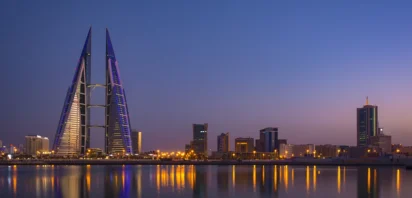
Despite its small size, the island Kingdom of Bahrain is an important hub of geopolitical intrigue. Situated in the Persian Gulf between Saudi Arabia and Iran, it overlooks the region’s main shipping route for oil and natural gas. It serves as the permanent headquarters for the US Fifth Fleet, and is a major ally of both Washington and Riyadh. Its high Shi’a population makes it of interest to Iran, but the Sunni ruling family is backed by Saudi Arabia and the other Gulf states. Finally, it has been wracked by anti-government “Arab Spring” unrest since 2011, drawing questions about the future of this Western ally and banking hub of the Islamic world.
Timeline
1800s – Great Britain is the dominant power in the Gulf area, signs treaties with Bahrain securing its interests and pledging to support the Al Khalifa family as Bahrain’s rulers.
1913 – Bahrain is granted further independence as a political entity, though it remains under British rule.
1927 – Iran announces its claim to Bahrain, which is resisted by the British.
1931 – Oil is discovered in Bahrain.
1944 – Following participation in WWII and suffering attacks from Italy, social and political unrest spread in Bahrain, prompting an exodus of the country’s Jewish population.
1950s – Violent uprisings and factionalism continue to grow, leading to calls for reform and democracy.
1965 – Bahrain is disrupted by a major uprising against British rule, or intifada, throughout the entire month of March.
1971 – Bahrain declares full independence, joins the Arab League.
1973-1975 – Bahrain receives a new constitution, but it is quickly dissolved and the country is governed instead under emergency laws.