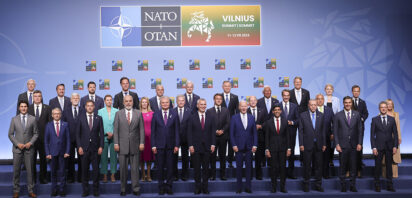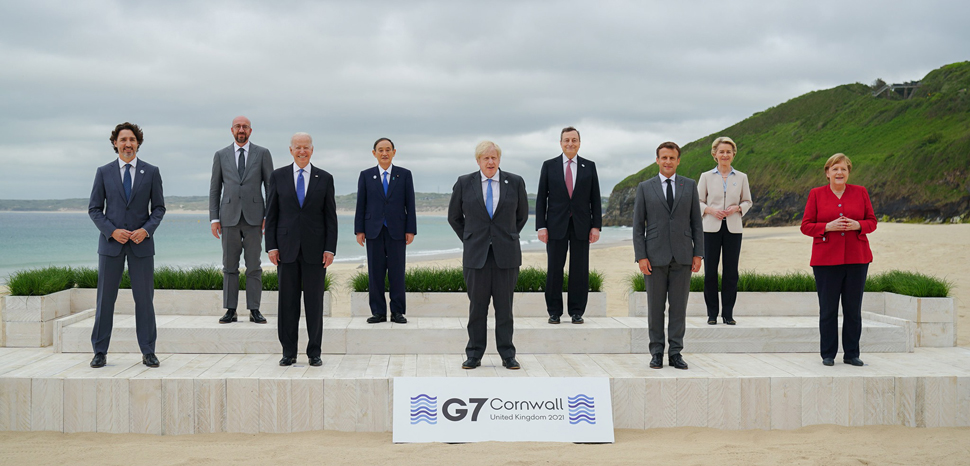
A three-day G7 summit was convened on June 11 in Cornwall, United Kingdom. It represented the first in-person meeting of G7 heads-of-government since COVID-19 emerged last year, and the summit was significant for other reasons as well. For one it represented the first high-profile opportunity for President Biden to stem the bleed in trans-Atlantic relations, which had withered for four years under the Trump administration. The summit was also an opportunity roll out the central plank of President Biden’s China policy, which stresses group action among like-minded democracies as a way to counter bilateral intimidation by Beijing. Cornwall was billed as a coming out party for a revamped G7, one imbued with a new sense of democratic purpose and new actionable imperatives in hitherto national purviews like tech, climate, and tax regulation.
Did the reality match up to the hype?
Background
A revamped Atlantic Charter for an evolving global landscape
President Biden and Prime Minister Johnson held one-on-one talks on Friday which culminated in the unveiling of a revised Atlantic Charter. The original Charter, signed in 1941 just months before the United States entered World War II, laid out the principals that would come to characterize the post-war global order, such as self-determination, banning territorial expansion by conquest, liberalized free trade, freedom of the seas, etc.
Though the UK-USA relationship is far less important in relative terms now than it was in 1941, thus reducing their combined ability to bend the nature of the global order to their combined will, the new text still makes for interesting reading in that it broadly reflects what the Biden administration’s foreign policy hopes to achieve. For example, the very first article – “we resolve to defend the principles, values, and institutions of democracy and open societies, which drive our own national strength and our alliances (emphasis added) – stresses the link between internal democracy and external cooperation, which the United States has been promoting as its new strategic mantra.
The document makes direct reference to the security concerns du jour in the democratic world, such as: “opposing interference through disinformation or other malign forces, including in elections… commitment to debt transparency… [defending] key principles such as freedom of navigation and overflight… and building an inclusive, fair, climate-friendly, sustainable, rules-based global economy for the 21st century.” Notably, the fourth article links the alliance’s democratic health to maintaining a qualitative edge in R&D: “We resolve to harness and protect our innovative edge in science and technology to support our shared security and deliver jobs at home… to promote the development and deployment of new standards and technologies to support democratic values.”
Most of these pledges are responding to the challenge posed by international authoritarianism, as represented by China and, to a lesser degree Russia, and this revised Atlantic Charter can be taken as a blueprint for what the Biden administration would like to achieve among allies in the wider democratic world.
Pledge to distribute COVID-19 vaccines to developing countries
The summit’s final draft communique pledged the bloc to delivering over one billion doses of vaccine to poor countries by the end of 2021. In addition, G7 countries will increase health sector manufacturing capacity, improve early-warning systems, and support vaccine development worldwide.