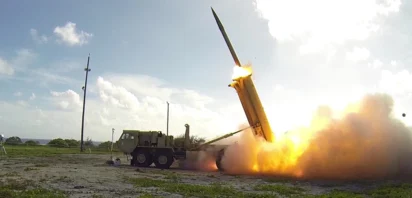
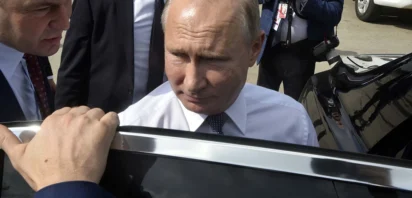
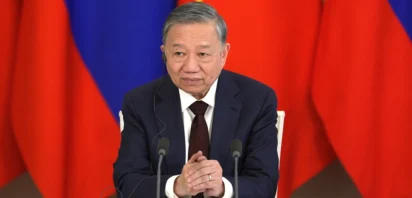
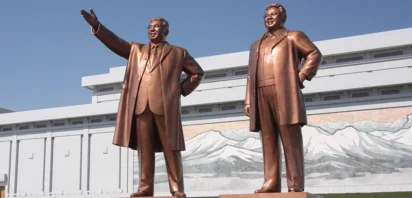
On June 19, Russia and North Korea signed a comprehensive strategic partnership pact which includes a mutual defense clause promising immediate military aid against third-party attacks. The pact involves significant military cooperation, with North Korea supplying artillery shells, ammunition, and ballistic missiles crucial for Russia’s ongoing war in Ukraine.
Deepening military cooperation between Russia and North Korea poses multiple threats to global and, specifically, US interests. With the DPRK already expressing unconditional support for Russia’s war in Ukraine, the alliance facilitates the flow of North Korean ammunition and military technology to bolster Russia’s war efforts. The provision of munitions directly imperils Ukraine, escalates threats across Europe, and complicates Western strategies by potentially prolonging the conflict. Additionally, the alliance undermines international sanctions, making it harder to isolate these regimes economically and politically. This partnership has the potential to embolden other authoritarian nations, contributing to greater regional instability in East Asia and beyond.
There is also a stark technological dimension here, and in extremis there’s the prospect of North Korea acquiring advanced nuclear weapons technology from Russia, posing a direct threat to South Korea and potentially to the U.S. homeland. Given Russia’s dependence on DPRK munitions, Kim Jong Un hypothetically wields a stronger negotiating position than Putin, potentially leading Moscow to provide advanced telemetry, nuclear submarine technology, military satellite capabilities, and/or advanced intercontinental ballistic missile (ICBM) technology to North Korea. With the DPRK already believed to possess 50 nuclear bombs and enough raw materials for 70 or 80, coupled with Putin’s veto of a UN resolution in March aimed at reinstating a watchdog for monitoring DPRK nuclear proliferation, the nuclear threat from North Korea is poised to escalate significantly. Enhanced DPRK military capabilities could further destabilize the Korean Peninsula and the broader region, increasing the risk of military confrontations.
Three’s a Crowd for China?
China’s role in this new partnership is complex. Traditionally a close ally and patron of North Korea, and recently deepening its alliance with Russia, China now finds itself somewhat sidelined by their direct cooperation. This shift could reduce China’s influence over both countries, as North Korea diversifies its alliances and Russia seeks alternative global partners outside of the Western orbit. Despite this, China is set to maintain a cautious stance, balancing its regional interests without openly challenging the evolving Russo-North Korean dynamic.
Simultaneously, the agreement serves China’s interests by strengthening a growing axis of cooperation against Western powers. While North Korea already has a mutual defense pact with China, the addition of one with Russia enhances this axis. Although Iran is not directly involved, this partnership supports the strategic goals of all four powers. Historically, Iran and North Korea have collaborated on missile technology, and closer Russo-North Korean ties could indirectly benefit Iran by fostering a more united front against Western influence.