The Pak-Afghan border skirmishes on the volatile Durand line in early October represent one of the most active confrontations between the two neighbors since the Taliban returned to power in 2022. What started as a border conflict has evolved into a question about the long-standing Pak-Afghan policy, as well as a potential trigger of future instability across the region. Pakistan’s strategic depth has now become its most lethal liability. It has become painfully clear since the recent attacks.
For nearly two decades, the Pakistani policy on Afghanistan was based on the strategic depth, i.e., maintaining a friendly or at least amenable regime in Kabul to cushion the western frontier of Pakistan. The doctrine was based on two key concerns: the threat of militant Islamist organizations, such as Tehrik-e-Taliban Pakistan (TTP), and Indo-Pak rivalry. An amicable or compliant Afghan Taliban was meant to contain both. In the 1990s, Islamabad viewed the Taliban as a means to achieve both objectives, even extending political and diplomatic support to ensure a congenial neighbor. Pakistan continued to maintain ties with the Afghan Taliban after 9/11, while aligning with Washington’s war on terror.
The Taliban regime that came back to power in 2021 turned out to be far more aggressive than expected. The new regime in Kabul has lost the stigma of being a client force and, instead, has been emboldened by its victory over the Western powers, becoming an active defender of Afghanistan’s sovereignty. Despite Islamabad’s pressing for action against the TTP, Kabul terms it an internal issue of Pakistan. Deep ethnic and ideological links between the Afghan Taliban and the TTP have rendered meaningful cooperation.
The situation was further heightened by Pakistan’s fencing of the Durand Line, an act to protect its border, but one that Kabul views as a one-sided institutionalization of a colonial-era cleavage separating Pashtun tribes. The result is a growing mistrust in bilateral relations. Pakistan feels that Afghanistan is a refuge for militants that attack its territory, and the Taliban denies Pakistan’s claims to its sovereignty. Pakistan’s long-cherished notion of strategic depth has now devolved into a strategic deadlock, with both parties increasingly viewing each other as threats rather than allies.
Recent Pak-Afghan Clashes in Perspective
Recent Pak-Afghan clashes underscore this deepening rift between the two sides. Firstly, the scale and intensity are unprecedented, with prolonged combat, artillery exchanges, and reported airstrikes replacing the minor skirmishes of the past, resulting in civil trade routes like Torkham and Chaman being shut down, crippling cross-border commerce. The timing further magnified tensions, coming just after Kabul’s foreign minister visits India and Islamabad’s diplomatic outreach to China and the Gulf states. Meanwhile, both sides are fighting a fierce narrative war: the Taliban framed the clashes as a defense of sovereignty, while Pakistan portrayed them as a response to terror sanctuaries, reflecting hardened narratives and shrinking space for reconciliation.
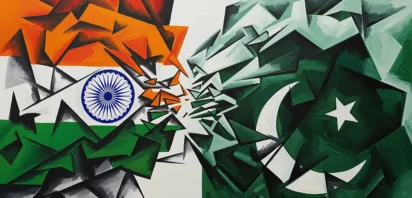
The estrangement between Pakistan and the Afghan Taliban reverberates beyond these local border disputes; it is a failure of historic strategic beliefs. The doctrine of strategic depth in Islamabad over the decades has relied on a compliant Taliban that would serve its security interests. Nevertheless, the Taliban of today is an aggressive sovereign force, which is ideologically motivated and is developing new regional ties with India. The shift has resulted in Pakistan ending up with a rebellious neighbor instead of a reliable ally.
Shifting regional dynamics are further complicating the relationship. The US withdrawal, the Taliban’s quest for legitimacy, and India’s resurgence have all significantly altered the balance of power in the region. The unresolved Durand Line issue is also a source of tension, as the Taliban’s refusal to accept the Durand Line fuels nationalist grievance.
The deteriorating outlook in Pak-Afghan relations will resonate across the region. An unstable Durand Line poses a threat to China’s Belt and Road Initiative, especially the CPEC, which traverses the area near the Afghan border, with a potential spillover into restive Xinjiang Province. The standoff also provides a window of opportunity for Kabul to engage more with India, a contingency that Pakistan has actively worked to prevent. To Iran and Gulf powers, a new war would upset trade routes, create and disrupt refugee flows, and burden the already weak humanitarian resources operating in the area.
The clashes compound an already bleak domestic outlook in Pakistan, where the western border has once again become a frontline. The loss of civilian lives, militant infiltration, and economic damage have disturbing effects on the public, and pressure to change the current policy in Afghanistan is becoming increasingly vocal in Islamabad’s policy sectors, with a desire to focus on security and diplomacy rather than regaining leverage.
Looking Ahead
In light of these challenges, Islamabad should pursue a policy reset based on three key pillars. First, it should strengthen governance, intelligence coordination, and development within border provinces to reduce militant recruitment and restore public confidence. Second, it should pursue conditional engagement with Kabul, where trade, aid, and border cooperation are contingent on verifiable counterterrorist measures, dismantling TTP networks, and tightening border controls rather than just empty promises. And third, Islamabad should turn to regional diplomacy platforms and its relationships with China, Iran, and the Gulf states to develop a coordinated regional position on militant sanctuaries operating in Afghanistan. It is more likely that collective pressure, rather than unilateral retaliation, will alter the Taliban’s calculus.
It’s time Islamabad realizes that the days of relying on a bribable government in Kabul have passed, and that any future security doctrine for Pakistan must focus on secure borders, defined sovereignty, and diversified diplomatic relations. Only then, after strategic depth is substituted with strategic realism, can Pakistan transform the Durand Line from a line of conflict to a line of stability.
The views expressed in this article belong to the author(s) alone and do not necessarily reflect those of Geopoliticalmonitor.com.