For more than six decades, few aspects of European integration have proven as transformational – or as politically consequential – as the steady expansion of the European Union’s (EU) borders. Each successive wave of increasing the EU’s geographical reach has fostered political stability across a continent whose post-Cold War optimism was tempered by the violent disintegration of the former Yugoslavia at the end of the century.
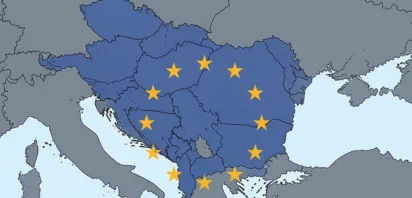
Even though the Union later anchored many Eastern European countries to its institutional framework, ‘enlargement fatigue’ eventually set in, with only Romania, Bulgaria, and Croatia joining the club in the span of the last couple of decades. Perhaps nowhere is this frustration more evident than in the Western Balkans, as its accession aspirants continue to face a process that feels increasingly drawn-out and politically uncertain.
In her 2023 State of the Union address, European Commission President Ursula von der Leyen called for a more strategic approach to the matter, as she described enlargement as a “geopolitical imperative,” underscoring the widely recognized necessity to strengthen the EU’s presence in the Western Balkans. The latter comes as no surprise, considering other geopolitical actors might be looking to fill a strategic void in the region.
The October 2023 Enlargement Package reiterated this stance, emphasizing that the EU must be politically ready for new members by 2030. However, it also underlines that candidate countries must match that readiness with concrete, measurable reforms across the institutional spectrum. It clearly communicates that conditionality remains essential; that progress must be merit-based; and that credible advancements in the rule of law, democratic governance, and fundamental rights remain of imperative significance.
This reinforces a recognized consensus– that fast-tracking such a process for geopolitical reasons alone carries its own risks and broader consequences. If not approached sensibly, it could end up undermining the credibility enlargement has built over the last decades.
Albania: An EU Accession Story
Against this backdrop, one particular country has emerged as both a hopeful case and a cautionary tale. A candidate state since 2014, Albania formally began accession negotiations in July 2022. Since then, it has opened five clusters and 28 chapters (policy areas grouped for negotiation), including key sectors such as the judiciary, fundamental rights, and foreign and economic relations.
Despite successful first steps, the persistent tension between geopolitics and conditionality threatens to derail Albania’s accession process. On the one hand, the country has repeatedly proven itself a loyal partner to the EU, having undeniably contributed to regional stability – for instance, through its continuous participation in regional initiatives and NATO operations.
On the other hand, it still draws international attention as a state in which democratic institutions are not immune to political tests, where judicial reforms are ongoing, and where tensions between strategic ambition and legal commitments continue to fester.
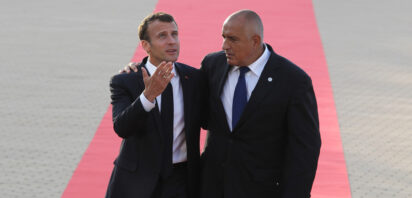
Edi Rama, the country’s prime minister, has positioned EU accession as the cornerstone of his agenda. Following re-election in May 2025, he reaffirmed his desire for Albania to join the EU, aiming for a horizon of 2030. Rama’s political dominance, as his Socialist Party now holds a commanding majority in parliament, offers a promising opportunity to advance his key policy priorities in line with the country’s accession aspirations.
The European Council, in its conclusions from the June 2024 Western Balkans Summit, welcomed that commitment, while placing a particular note on the importance of maintaining reform momentum, while the European Commission’s 2023 Albania Report commended progress in the judiciary, particularly the vetting of judges and the prosecution of high-level corruption cases by the newly established Special Anti-Corruption Structure.
Progress Under Pressure
Yet these recent developments have also raised concerns about democratic checks and balances. That same report highlighted ongoing issues such as corruption, lack of transparency, and both state and private interference in the media sector. Additionally, during the last parliamentary election, Organization for Security and Co-operation in Europe / Office for Democratic Institutions and Human Rights (OSCE/ODIHR) observers reported that the campaign environment was “highly polarized,” and state resources were increasingly being used to advantage the ruling party.
Rama’s model has sparked criticism in foreign policy circles as well, as Albania’s 2023 bilateral agreement with Italy to host migrant processing centers on its territory has been viewed as nothing short of controversial, facing wide legal and ethical scrutiny. The Council of Europe’s Commissioner for Human Rights recently criticized the deal, warning it could undermine international asylum obligations at a time when Albania’s Constitutional Court suspended its own implementation earlier this year, citing the need for a legal assessment. From Tirana’s perspective, the agreement might constitute a gesture of strategic partnership and alignment with an influential EU member state. However, even if striking bilateral victories and winning over allies in the Union showcases political grit and a desire for membership, it also illustrates the risks of allowing regional affairs and geopolitics to overtake normative commitments.
Balancing Urgency and Integrity
An alternative perspective exists, as some argue that accelerating Albania’s accession alongside other states in the region would demonstrate the Union’s strategic resolve. However, others worry that lowering standards might lead to further democratic backsliding in the EU. This would not only undermine the credibility of enlargement but also entrench governance weaknesses that could prove difficult to reverse once inside the EU. Not to mention, it could also send the wrong message to other aspiring members, such as Ukraine, Moldova, and Georgia, that geopolitical alignment outweighs institutional readiness.
To ensure the integrity of the process, the EU should maintain consistency in its application of conditionality. This includes ongoing scrutiny of electoral processes, judicial independence, media pluralism, and the fight against corruption. Methods such as the Instrument for Pre-Accession Assistance (IPA III) and the Western Balkans Reform and Growth Facility offer opportunities for greater engagement without compromising standards.
Albania and the wider region’s path and aspirations are without a shadow of a doubt real and legitimate. Admittedly, while stalling that process might create a window of opportunity for other regional and geopolitical players to exercise their own leverage and influence over the Western Balkans, as monumental a step as joining the EU should remain a matter of readiness rather than expediency. Glancing into the future, geopolitics and enlargement might not be mutually exclusive if balanced carefully. Yet allowing the former to override the latter risks turning accession into a short-term strategy rather than a long-term solution.
The views expressed in this article belong to the author(s) alone and do not necessarily reflect those of Geopoliticalmonitor.com.