Geopolitics Weekly contextualizes emerging geopolitical trends around the world, distilling the cacophony of global events into one easy reader. It lands in the inbox of Geopolitical Monitor subscribers every week.
Europe
The Trump Show Rolls Out in US-Russia Alaska Summit
What Happened
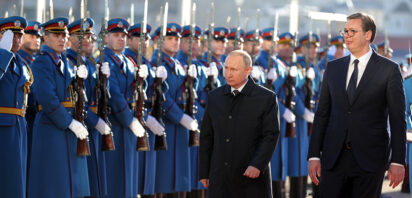
President Trump met Vladimir Putin for a brief summit on Friday – the first time that the Russian president had been on US soil for non-UN related activities since 2007. The meeting ended without a deal, though Trump touted ‘great progress’ made toward a ceasefire. President Zelensky was originally scheduled to negotiate with Trump alone at the White House on Monday. However, following a meeting of the ‘coalition of the willing’ – Macron, Merz, Starmer, Tusk, von der Leyen, and others – on Sunday, the decision was made to attend the Trump meeting alongside other European leaders.
Why It Matters
- The Trump Show in Alaska. The US president’s television background was on display in the summit’s pageantry: the leaders stood on a giant Alaska 2025 sign; they took questions against a backdrop of ‘Pursuing Peace’; the runway was lined with F-22s; and President Putin got to ride in ‘Beast,’ the president’s armored limousine. The bright lights weren’t lost on Putin, who took the opportunity to stoke President Trump’s ego for the cameras, saying he wouldn’t have dared invade Ukraine had Trump won the 2020 presidential election. Yet geopolitics is not television, and despite what may on the glitzy surface appear to have been a draw, Putin comes away the clear winner. He gets the internal and external legitimation he wants and, critically, he gets it without making any concessions on Russia’s maximalist war aims. This was the 2007 Munich speech coming full circle, where the optics scream post-Soviet Russia’s re-emergence as a peer superpower. The only thing that Trump gets is the one thing he doesn’t really need: more publicity.
- Reality Bites. We know why Trump opted for the summit: he considers himself a master deal-maker (he declared as much in a fundraising email sent out on Saturday). But there was a discernible waning of enthusiasm in the press appearances following the actual negotiations, talks that were apparently cut short. The reason is no mystery. Given Russia’s recent advances on the battlefield, there’s no incentive to make any concessions, especially if the US side is not serious about wielding the stick by either putting additional pressure on the Russian economy or escalating its support of Kyiv. In this context, President Trump is someone who can be managed by the Kremlin and strung along with promises of an eventual ceasefire. Such an approach won’t work on the Europeans; however, the Europeans continue to lack the material and military weight to step in and supplant the American role in Ukraine (speak nothing of the intra-EU politics involved in coming to the decision). Here it’s noteworthy that Putin specifically called out potential ‘backroom dealings’ by the Europeans as imperiling the ‘great progress’ made with Trump in an attempt to sow trans-Atlantic discord before the Europeans get to have their say.