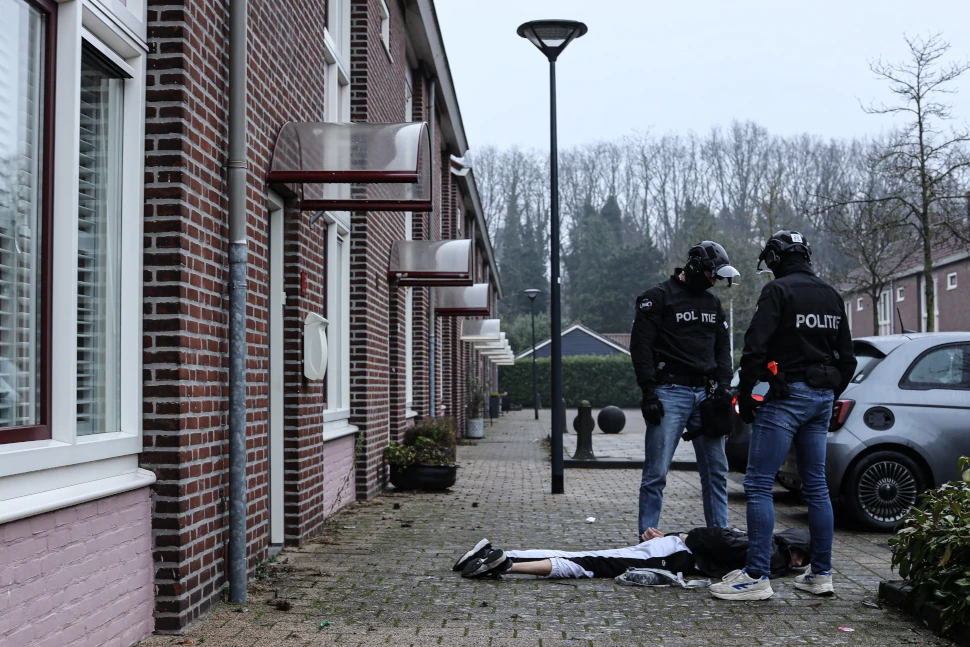
In this exclusive interview with the Geopoliticalmonitor, photographer Jonathan Alpeyrie discusses the security dynamics and social costs of cocaine trafficking in Holland, building on previous work covering the drug war in the United States and El Salvador. The above photo was taken by Alpeyrie on assignment and published with his permission. Some statistics in the interview are sourced from conversations with members of the Dutch police and security services.
Cocaine seizures in Holland were up around 17% in 2023, before dropping by 40% in 2024. What are some of the forces at work behind the ebb and flow of cocaine trafficking? What has changed in recent years?
In 2020, Western and Central Europe comprised of about 21% of the overall global demand for cocaine. Cocaine is now the second most consumed illicit drug on the old continent, right behind cannabis. This astounding comeback of the white powder is partially explained due to changing tastes among drug consumers, but also a weak European response to combating what has become a strategic issue. Europe has become an attractive destination for drug traffickers seeking further profits and lower risks. This is due to a higher market price and shorter prison sentences for possession and consumption than in the United States.
The market price differences can be quite stark. While cocaine costs approximately $28,000 a kilo in the U.S., the price per kilo in Europe exceeds $40,000 in places like Spain and France, and as much as $219,000 in Estonia.
Furthermore, Europe’s efforts to stem the flow of cocaine across its borders are further impeded by a weak security and financial response. By way of comparison, the United States spends about $17.4 billion dollars to fight drug trafficking, while Europe spends barely $4 billion. At this relatively low level of spending, it is estimated that the European authorities interdict no more than 12% of the cocaine coming through European ports.
How are traffickers getting the cocaine into Holland?
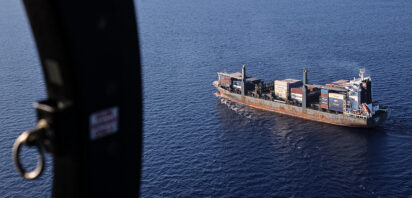
Almost 100% of the drugs coming into Holland arrive by shipping containers on commercial tankers from the South American continent, namely Brazil, Ecuador, Venezuela, and the Caribbean.
With decades of deepening commercial links between nations around the globe, the international drug trade was able to capitalize on this trend, using tankers to get their product into Europe. As much as 98% of cocaine getting into the United States originates in Colombia; cocaine seized in Europe on the other hand has a more complex breakdown: an estimated 67% comes from Colombia, 27% from Peru, and 5% from Bolivia.
The Caribbean has emerged as a key middleman regarding these drug flows into Europe. Due to its limited resources, typically high levels of corruption, and low interdiction capacity – along with its proximity with Venezuela – the Caribbean have become an attractive option for drug traffickers looking to expand their business. Typically they will move their product by island hopping in the Lesser Antilles, with Hispaniola, Dominican Republic, and Haiti as the main stops. In this they typically employ fast boats and submarines, leaving their product on beaches before being transported into ports and hidden inside containers bound for Europe.
Where does the cocaine go after entering through Holland?
It appears as though about 85% of the cocaine which enters Holland, overwhelmingly through the ports of Rotterdam and to a much lesser extent the port of Vlissingen, is meant for export into Brussels, where the drugs are gathered, cut, and again funneled into the European market, France being the biggest consumer of cocaine on the old continent. The remaining 15% goes toward domestic consumption.
Once the drugs leave the ports, they are transported by highway to the Belgium border connecting southern Dutch towns like Rosendaal, Tilburg, or Bergen op Zoom, to mention just a few, and onward to Brussels, where the infamous Mocro Mafia, originally out of Morocco, takes care of all aspects of the logistics and sale.
The powerful Mocro mafia has managed to establish itself as the main player in the international cocaine trade in Europe via corruption at its two main harbors, Antwerp and Rotterdam – paying off dockers and other workers to look away as tons of cocaine are removed from the containers and transported away.
According to the Institute of Security Studies, there are intercepted audio exchanges where Mocro Maffia members boast about bribing customs officers in the Port of Dakar, which is used as a transit point. Likewise, dockers in Antwerp and Rotterdam are allegedly paid up to €100 000 to relocate containers to avoid police and customs control. These damning admissions reflect the high degree to which criminal elements have infiltrated the system.
What are some of the social and political impacts of the cocaine trade in Holland?
The social and political implications for Holland are grievous, as the Dutch authorities are struggling to cope with the increase of violence and sophisticated organization shown by the criminal gangs and cartels involved in the drug trade. For instance, the Mocro Maffia uses intense violence to impose its rule, killing anyone that stands in their way, including judges and lawyers. Derk Wiersum, an Amsterdam lawyer specializing in organized crime and drug trafficking networks, and journalist Peter R de Vries were both assassinated by the Maffia in 2019 and 2021. The blatant show of strength proves that the most violent and organized criminal elements are not intimidated by the government and its representatives. In fact, in September 2021, the Dutch security services claimed that even Prime Minister Mark Rutte was under threat by Mocro. Likewise, Dutch crown Prince’s Catharina-Amalia is still under protection following kidnapping threats linked to the group.
These drug-related social contradictions in Holland are reaching a crescendo, and they need to be addressed with force if the Dutch government wishes to dampen the drug trade within its territory.
What has the policy response been from the Dutch authorities? Has it worked?
In terms of police work and the quality of the various police forces defending Dutch sovereignty, the task is an uphill battle which needs to be won by the men on the ground risking their lives and families. Yet these forces combating the drug trade in all its facets are not being helped by the current legal apparatus and political sentiments within the various party coalitions ruling the country.
Indeed, in its present state, Dutch law is not up to the task of responding to the surge of criminal activity on its territory. For example, last year, three men were arrested in Rotterdam with three tons of cocaine, hidden inside a container from Brazil. Yet the three men received very light prison sentences compared to the amount of drugs they were smuggling: just three years each.
The police need to be given a freer hand in dealing with criminal elements operating in Holland, by giving harsher prison sentences and confiscating all assets connected to criminality. Until this happens, cartels and gangs like the Moroccan Mocro will continue to gain power and will increase the pressure on local populations, not only in in Northwest Europe, but also in West Africa and South America, where the group has established strong links with other criminal organizations operating on these continents.
The views expressed in this article belong to the author(s) alone and do not necessarily reflect those of Geopoliticalmonitor.com.