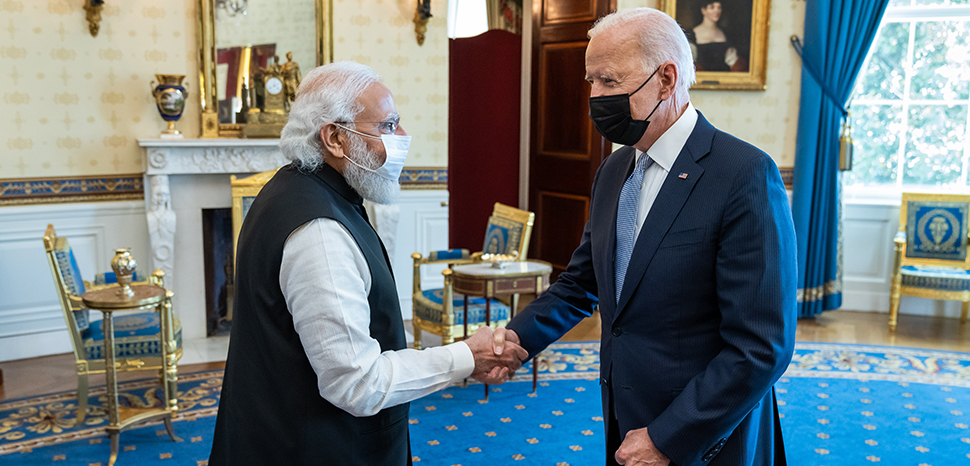
The US-India relationship, historically based on shared democratic values and strategic alignment, has evolved considerably over the years. The progression from President Clinton’s diplomatic outreach in the 1990s to the strategic partnership declared under President Bush in 2005 has reflected the growing significance of this relationship. In the present geopolitical context, this association has gained critical importance, mainly due to the increasing influence of China and the resulting shifts in the balance of power in the Indo-Pacific region.
Recent developments further underscore this dynamic. The two nations have shown an unprecedented commitment to strategic cooperation by signing a series of defense and technology agreements.
Recent advancements in defense cooperation
The recent delegation-level meeting between India’s Defense Minister Rajnath Singh and US Defense Secretary Lloyd Austin led to an ambitious defense-industrial cooperation roadmap, underpinning the future of their defense relationship.
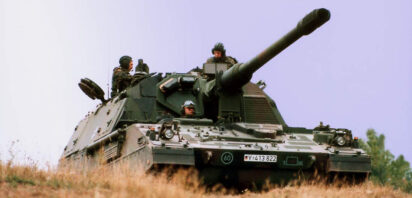
A key highlight is a deal to co-produce fighter jet engines, expected to be signed during Prime Minister Narendra Modi’s forthcoming visit to Washington this month. This agreement will likely result in a joint venture between US-based General Electric and India’s state-owned Hindustan Aeronautics Limited to produce turbofan engines in India. Subsequently, these engines will be integrated into India’s Tejas Mark-2 fighters, significantly boosting India’s indigenous defense capabilities. The roadmap also covers potential projects such as the co-production of armored fighting vehicles, long-range artillery, armed drones, and Intelligence, Surveillance, and Reconnaissance (ISR) systems.
These agreements indicate a shift for New Delhi from merely buying to co-producing, with a focus on loosening Washington’s traditional approach to provisions concerning technology transfer. As part of its “Make in India” campaign, the Modi government set a goal to triple its defense exports by 2025. This transformation ensures a more robust and self-reliant defense setup for India while simultaneously opening new markets and partnerships for US defense companies.
In the broader geopolitical context, the growing defense ties between India and the US are reinforced by their shared views on the Indo-Pacific region. Both nations have been increasingly alarmed by China’s posturing in the Indo-Pacific region and incursions along the contested Indo-China border. The strengthening of US-Indo defense ties signals an intention to counter Chinese assertiveness and protect the freedom of navigation in international waters. Their collaborative efforts are further solidified by the Quad, a security grouping comprising the US, India, Australia, and Japan.
India’s internal security needs
Furthermore, India faces several internal security challenges, ranging from endemic armed movements in Kashmir and throughout India’s “Red Corridor” to recent internal disturbances in Punjab and Manipur. Compounding these risks are the geopolitical implications of the Taliban’s victory in Afghanistan, and the protracted civil war in Myanmar, both of which could significantly complicate India’s security situation for years to come. Pakistan, long accused by India of fanning separatist movements in both Kashmir and Punjab, finds itself in a position to shift more of its covert support towards these groups. With its strategic interests in the region and long-standing disputes with India, China has been accused of supporting separatist groups in the northeast by providing weapons to groups operating along India’s border with Myanmar. The United States, with its advanced military hardware and defense technology, could play a pivotal role in addressing these concerns.