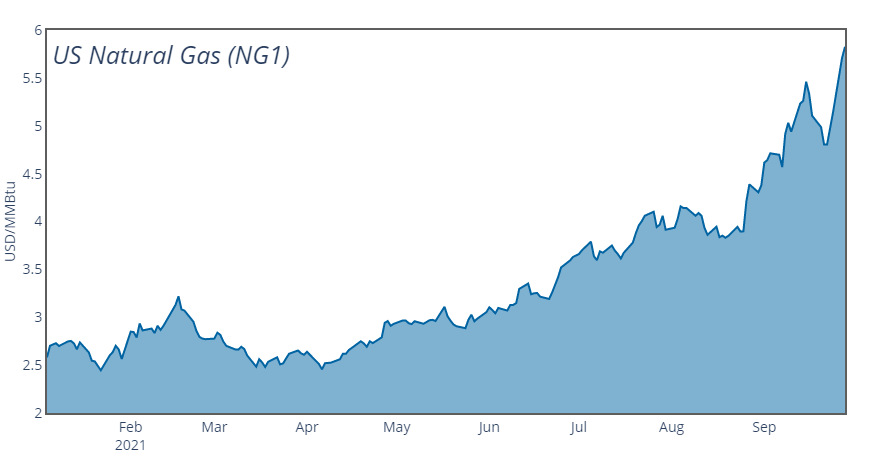
Energy markets around the world are embroiled in two distinct-yet-interconnected crises, impacting consumer budgets and invoking the specter of power rationing on multiple continents. Soaring energy prices add to the growing list of inflationary pressures facing the global economy, a list that already includes wage growth, supply shortages, and logistical logjams. Moreover, there’s a risk of inclement winter weather exacerbating energy supply issues, particularly with regard to Europe.
Analysis
In many ways, the current energy crunch is a crisis long foretold as the natural result of the global economic upheavals wrought by COVID-19.
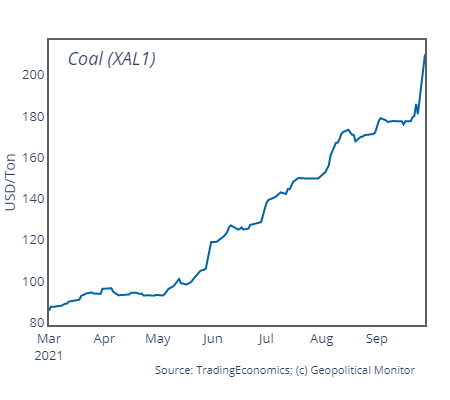
Energy shocks are manifesting on several fronts. One is the the run-up in natural gas prices in Europe and Asia, which was covered in a situation report earlier in September. The report outlines how natural gas supply out of Russia dipped in July right as economic activity on the continent sputtered back to life, leaving European stockpiles dangerously low ahead of the winter season. LNG exports from the United States, which could have otherwise alleviated European supply pressures, have increasingly been routed to Asia where energy demand has boomed on the back of a sweltering hot summer. LNG demand has been particularly acute in China, which has been pivoting away from the coal-based plants, which constituted around 60% of the country’s electricity generation portfolio in 2019. The pivot is the result of both environmental policy goals (carbon targets) and geopolitical ones (banning Australian coal imports amid an ongoing China-Australia trade war).
China is now in the grips of a full-on electricity crunch and rotating blackouts are increasingly common in the industrial heartland. These are no small disruptions; according to Goldman Sachs, the cuts are impacting as much as 44% of China’s industrial activity, leading the bank to slash its growth prediction from 8.2% to 7.8% this year. In some areas, electricity disruptions are expected to persist well into 2022.
How bad could the situation get when the weather turns? According to analysis from Citigroup Inc., prices in Europe could spike to as high as $100 MMBtu in the event of a harsh winter season (August saw average prices of around $15.5 MMBtu in Europe). China’s electricity crunch could follow a similar track. In both contexts, there will be a clear incentive to shelf climate goals and ramp up coal generation, particularly if the worst-case forecasts come to pass. However, it won’t be as simple as previous experience. Global coal prices are also booming (up 40% in China this month alone and up 300% in Europe over the course of the year), and there’s no relief in sight on the supply side as major players in the private and public sectors are hesitant to invest in new mining or power generation owing to climate concerns.