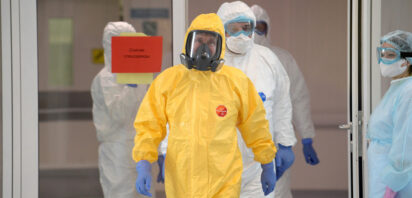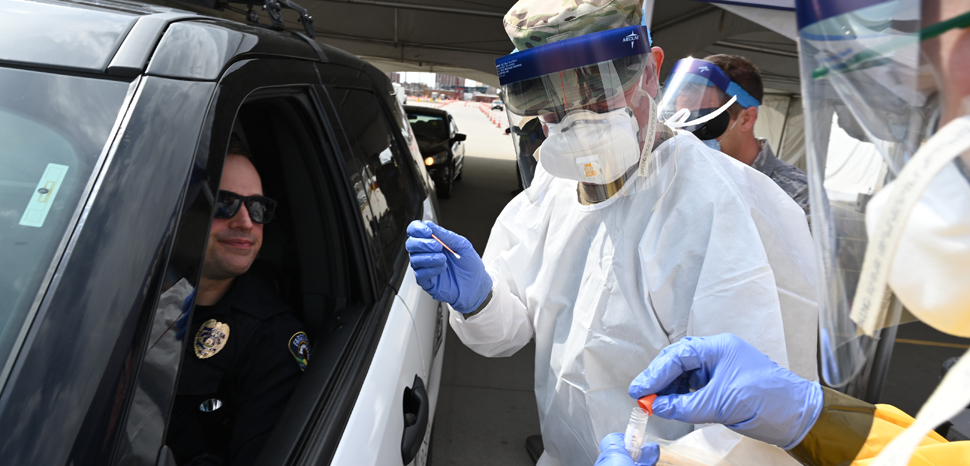
The first cases of coronavirus made emerged in the United States in January and began picking up after March. As a result of the increasing caseload, various rules and regulations were put in place in different states to encourage social distancing, ranging from closing down schools and parks to enforcing strict “shelter in place” rules. The state of California passed directives to keep individuals at home in mid-March and by March 30th, 30 other states had followed suit. Unfortunately, the government’s efforts have not been nearly enough to combat the rapid spread of COVID-19. Unlike European countries such as France, the US fight against COVID-19 has been disadvantaged throughout due to slow adoption of quarantine and mitigating measures, lack of adequate COVID-19 testing, overwhelmed hotlines, and a general lack of public health officials. Even as late as May, only 2.74 percent of the US population had been tested due to lack testing centres and equipment. Outside of well-controlled state outbreaks like New York, most of the United States is seeing a steep rise in inflection rates. As confirmed by the CDC, the U.S. now holds the record for the most confirmed COVID-19 cases and deaths, with about 2,982,900 total cases and 131,065 total deaths as of July 9th, 2020.
Despite rising cases of COVID-19 in multiple states and warnings of a second wave, sectors like retail and gyms have reopened with social distancing restrictions as US governors attempt to respond to their crippled state economies and anxious public. Since consumption makes up to 70 percent of US GDP, the lowering of consumer activity with social distancing policies has caused huge ripples in the economy. The entertainment and recreation sector are completely paused, and disrupted global supply has resulted in manufacturing sector layoffs. The US Congress has passed massive stimulus bills for business and other sorts of aid for the general public to ease unemployment effects. The relief measures amount to more than $3.5 trillion, or 14 percent of US GDP in 2019, and is divided into increase in unemployment insurance benefits ($1200 stimulus checks), $500 billion in bailout funds for large companies, and $350 billion in bailouts for small businesses. Various experts predict that the funding will not be enough to completely return the US economy to normalcy given the ongoing severity of the outbreak and social upheaval in the country. The coronavirus crisis has highlighted issues of economic and social inequality within the United States, which will be discussed below:
Economic Implications
So long as the pandemic continues unabated, the main economic concerns are supply chain disruptions, decreased consumption, economic uncertainty, and increased unemployment. With Chinese factories shut down and supply chains disrupted, many US firms in the technology and automobile industry have been unable to finish production of consumer goods. Besides the good and services sector, companies related to the process of oil production and refinement are also predicted to incur $86 billion worth of debt by 2024. Although the US economy does not depend on oil production for economic growth, the oil industry still directly and indirectly employ 10 million people including everyone from equipment manufacturers to the hedge funds providing the money and the steel companies producing pipelines.
In April, the unemployment rate hit a record high of 14.7 percent with the actual rate being higher as there are millions of unofficially unemployed people in the United States. In comparison, the unemployment rate was 24.9 percent in 1933 during the Great Depression. The government is providing about 13 weeks of $1200 dollar checks to workers, which is quite generous considering the average US household spends around 750 dollars per month. Besides household aid, federal student loans and small business loans are granted grace periods until October. In addition, the interest rates of the central bank have been lowered to almost zero to ease the burden of amassing debts. Unfortunately, the direct payments and other compensation schemes can only cushion the short-term economic effects and the effect varies based which US state the individual resides in. The main problem with rising unemployment rates is the United States’ high employment turnover rate. Due to COVID-19, it is very possible that the current shock will disrupt employment in certain sectors which are vulnerable to high turnover rates like fast food employment. New low-cost training programs, inclusive expansion of online infrastructure, and digital commuting will increase following the pandemic. At the same time, the demand for nonstandard and precarious employment like part-time, multiple employment and gig workers, will be minimized. There are also the unavoidable effects of uncertainty, which decreases overall spending and investment in the US economy. Fortunately, the US may be seen as a low-risk and attractive investment opportunity in comparison to developing countries that suffered more from the COVID-19 crisis. The key here is the prevention of layoffs in order to decrease the pace of job losses and avert the possibility of a deflationary spiral.