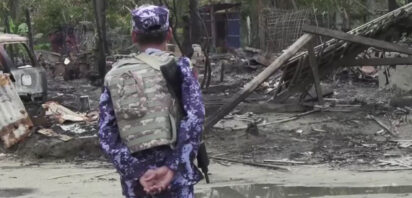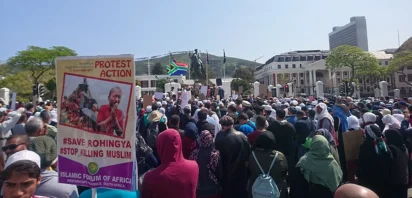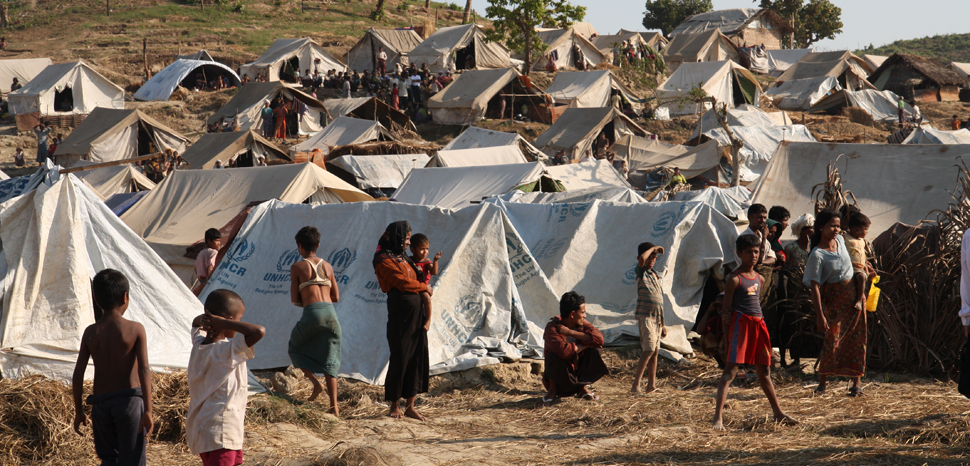
Since the crackdown on the Rohingya in mid-2017, Rakhine State, along the border with Bangladesh in Myanmar’s volatile west, has been the epicenter of violence in a nation where multiple civil wars have raged since the 1940s. While more than 700,000 Rohingya refugees have remained encamped in squalid conditions across the border, the military – known as the Tatmadaw – has taken the fight to a band of Arakanese Buddhist militants active in the area, known as the Arakan Army (AA), bringing further bloodshed to Rakhine. Yet in August, a spate of insurgent attacks 600 km to the northeast re-opened a dormant front on Myanmar’s battlefield, threatening to alter the dynamics of the conflict.
On 15 August, three allied ethnic armed groups – the AA, along with the Ta’ang National Liberation Army (TNLA) and the Myanmar National Democratic Alliance Army (MNDAA) – launched a series of coordinated attacks in the Mandalay and Shan regions. In the township of Naung Cho, the groups’ fighters – collectively known as the Northern Alliance, or Brotherhood Alliance – attacked a railway bridge, killing seven Tatmadaw troops and three policemen. Elsewhere, a military training academy and several toll gates were attacked, while at least four strategic bridges were destroyed with IEDs.
The unexpected attacks drew an immediate response from the army and sparked weeks of intense fighting, triggering the most widespread violence witnessed since the height of the Rohingya crisis.
Yet the sudden deterioration in security also pushed the two main perpetrators – the Northern Alliance and the government – to come to the negotiating table. Two rounds of informal talks were held in late-August and mid-September, leading the Northern Alliance to declare a unilateral truce until 31 December. Yet despite the positive rhetoric accompanying the ceasefire, the AA, TNLA and MNDAA have continued to launch attacks, prompting the military to respond furiously and call an end to its own unilateral ceasefire on 21 September, which had been routinely extended throughout the year.
Meanwhile, ten ethnic armed groups which had previously signed the collective Nationwide Ceasefire Agreement (NCA) with the government, initiated in 2015, met government negotiators in September with the aim of reviving the stalled national-level peace process. After a two-day meeting in Yangon, the signatories reportedly agreed to hold a fourth union-level Panglong Peace Conference early next year. If the summit goes ahead in early-2020 as hoped, it would signal the resumption of formal talks for the first time since 2018 and likely achieve more than was possible in recent informal discussions.
Yet with fighting ongoing and the Tatmadaw’s unilateral ceasefire now called-off, will recent signs of momentum in talks be sustained? And what are the chances of formal negotiations being revived next year?
Myanmar’s divided peace process
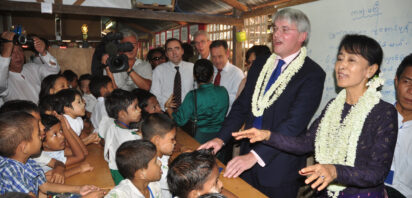
The election of Aung San Suu Kyi’s National League for Democracy (NLD) in 2015 brought fresh hope of a resolution to the decades-old ethnic conflicts which have raged since Myanmar’s independence from Britain in 1948. The NLD hoped to build on the pre-existing NCA, signed in October of that year, by holding a series of 21st century Panglong Peace Conferences, named after a peace summit held in the mid-20th century by Aung San Suu Kyi’s father, Aung San.
Yet overall, the situation has worsened.