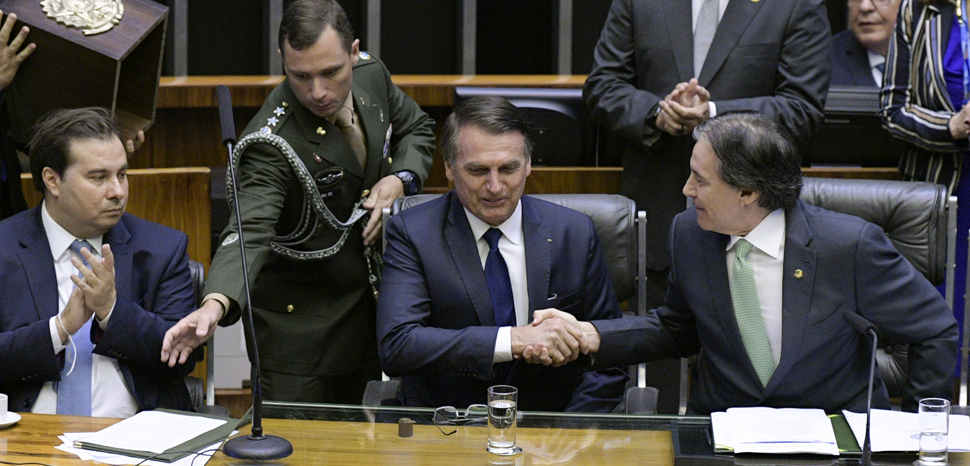
Jair Bolsonaro was elected president decisively in 2018, taking 55% of the vote in the final run-off against Fernando Haddad. The victory represented a sharp, right-wing turn from the Brazilian electorate after decades of Workers’ Party rule.
Now Bolsonaro is doing what every newly elected politicians does: taking advantage of the honeymoon period, when his political capital is at its peak, to tackle some of the most contentious issues on his agenda. And no issue is thornier than the overhaul of Brazil’s failing pension system.
Getting it done won’t be easy. Though President Bolsonaro enjoys a broadly supportive Congress, pension reform is political kryptonite in Brazil, as elsewhere.
One way or another, the pension fight will set the tone for the Bolsonaro era.
Impact
Brazil’s pension system is teetering on the brink of bankruptcy.
The crux of the problem is Brazil’s expanding life expectancy. The number of young, working age citizens continues to shrink relative to retirees, a cohort that has ballooned over the past 30 years. In 1988, there were six people aged over 65 for every 100 working-age people. By 2015, the number of elderly had reached 12. By 2050, it’s expected to exceed 30.
Compounding the issue is the fact that retirement terms in Brazil are exceedingly generous. Many workers retire at 55 and are still able to pull 70% of their previous salary for the rest of their lives.
Withdrawals have begun to eclipse deposits to such a degree that some are predicting the pension system will go bankrupt as early as 2021. These outlays now represent over a third of Brazilian government spending. In times of economic difficulty, the government is forced to borrow money in order to keep pace with them. The past five years of ever-increasing reliance on foreign borrowing is case in point.