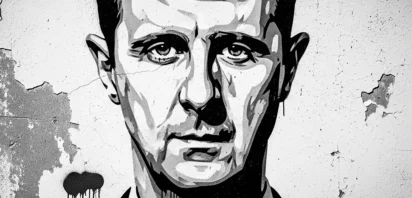
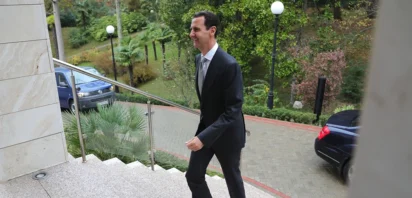
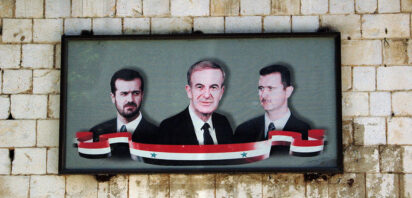
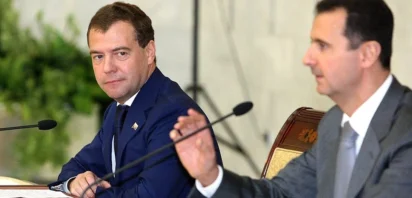
In a country that for over three years has been immersed in a civil war at the regional level, no one doubts that the winner of the Syrian election will be Bashar al-Assad, who after 14 years in power is only now facing his first actual contest. In the past he was chosen and confirmed by a referendum; this time, breaking a 40-year-old ‘precedent,’ there was more than one name on the ballot. Bashar faced challengers Hassan al-Nouri, a Sunni Muslim businessman, and Maher al-Hajjar, a Sunni lawyer. Certainly, the campaign was disproportionately slanted in favor of al-Assad: posters of the incumbent president were pasted everywhere while it was very difficult to find any pictures of the other two candidates.
Despite – or perhaps because of – the surreal context in which the election took place, the turnout was good in some Syrian cities and in countries where there are many Syrian refugees such as Lebanon, where people had to wait in long lines to vote and Beirut residents complained of massive traffic jams as Syrians living in the Lebanese capital headed out en masse. Some especially narcissistic voters pricked their own finger to smear their vote for al-Assad in their own blood.
Over 15 million people voted in Syria alone; of course not all Syrians could participate. Rebel groups have called the election “a farce,” rejecting it in whole. Chief among them was the largely secular opposition represented by the Syrian National Council (SNC). The non-violent ‘underground’ in the country also called for a boycott the vote, which will only serve to strengthen al-Assad’s power. France, Britain, and Germany did not back the voting in a show of support for the SNC. Refugees were asked to vote as well, though most are spread across Turkey (700,000), Lebanon (over 1 million), Jordan (600,000), and Iraq (220,000). Of these, voting was allowed to take place in Jordan and Lebanon.
Al-Assad’s inevitable victory will strengthen his legitimacy with those who continue to support him, while making any talk of a ‘transition’ more complex. UN and Arab League peace talks had stressed the opposition’s demand that al-Assad step down from the presidency as a condition of the transition. After this vote, such dialogue will become less likely, because al-Assad will be in a position to claim that he has won a popular mandate; this will only intensify the military option.
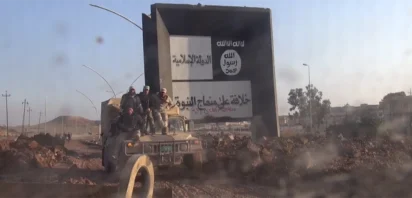
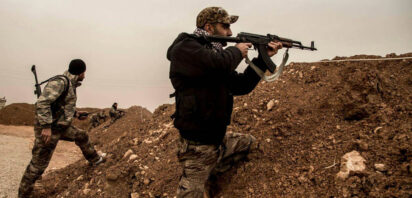
The Syrian president is gambling that foreign powers regret their previous efforts to arm the opposition, leaving the regular Syrian armed forces in a better position to continue fighting for the long haul. In recent months, government troops have racked up several victories, while the opposition has become increasingly divided between Islamists and the secular bloc. The only city where there was no voting is Raqqa in the north-east, which is still completely occupied by forces of the ‘Islamic State of Iraq and the Levant’ (ISIL or ISIS). Indeed, ISIS and its brand of opposition has left al-Assad with more rather than less room to recover territory and even support from towns occupied by the radical Islamists. Indeed, in Raqqa, a mid-size city in north-central Syria, the jihadists from ISIS have crucified and executed Christians and Muslims alike to spread fear in their effort to consolidate control of Syrian territories. The level of cruelty was even enough to disgust al-Qaida leader Ayman al-Zawahiri, who reacted through a video message demanding ISIS “return to Iraq” in order to focus on the struggle there.