A reoccurring theme in US President Biden’s statements on China is the need to adopt a united front against Beijing’s perceived domestic transgressions and its attempts to isolate and punish individual democratic countries that step out of line. The logic goes that the combined moral and economic weight of the democratic world can create costs for such behavior and alter Beijing’s policy calculus. However, given China’s heft as the world’s second-largest economy – and its status as largest bilateral trading partner for many of the democratic countries involved – achieving this united front will not be an easy task.
In the decision of various Western countries to impose sanctions on China over human rights abuses in Xinjiang, we now have an early indication of the challenges in store for the Biden administration.
Analysis
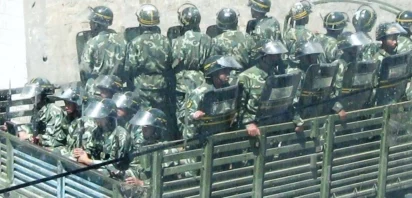
Last week, the governments of the United States, United Kingdom, Canada, and the EU joined together in imposing asset freezes and travel bans on four officials in Xinjiang – Zhu Hailun, Wang Junzheng, Chen Mingguo, and Wang Mingshan – and the Xinjiang Production and Construction Corps (XPCC), a paramilitary organization responsible for expanding agricultural output and maintaining public order. This latter duty now seems to involve the operation of a network of internment camps targeting Uighurs and other ethnic minorities throughout the region.
If this week’s Xinjiang sanctions are the grand sum of Western unity, there’s reason to worry about the long-term viability of Biden doctrine.
For one, the scale, severity, and intent of China’s human right violations in Xinjiang represents more of a clear-cut case of moral outrage as we’re likely to see. Other issues that the democratic world and China diverge on – for example, Hong Kong’s political system and the security risks posed by Huawei or ZTE – are far more nuanced and open to interpretation than the systemic incarceration of over a million people on the basis of their ethnicity or religious beliefs.
What kind of coalition has this moral outrage given rise to? Not a very large one. Both New Zealand and Australia are notably absent from the joint sanctioning effort, though both governments issued statements noting their ‘grave concern’ about ‘credible reports’ of human rights violations, calling for China to grant access to UN experts.