Every informed observer of world affairs has lived through this moment: you’re explaining some international crisis to someone, and they cut straight to it — “OK, but why, really?” Why did NATO push eastward for thirty years? Why is China building ports in countries most people can’t find on a map? Why did that vote at the Security Council go the way it did? The honest answer is almost never satisfying, because it starts with, “It all depends on how you look at it.”
The temptation, naturally, is to tell a story because stories have villains and victims, causes and turning points, and make for a clean copy. But a good story and a solid explanation are not the same thing, and mistaking one for the other is probably the most common error in public debate about foreign policy.
What actually separates someone who understands international affairs from someone who merely follows them is theoretical grounding. Not in the dry, academic sense—but in the sense of having a framework that forces you to ask structural questions rather than moral ones. It’s not: Is this country’s behavior acceptable? But more: What logic is driving it, and have we seen this pattern before?
The Problem with Watching News without a Map
Most coverage of international events is essentially moral commentary: a country acts “aggressively” or “defensively,” a leader is “rational” or “erratic,” a conflict is “unprovoked” or “justified.” If these labels tell you how the pundit feels about what happened, they rarely tell you why it happened, or what comes next.
Think of it the way a doctor approaches a patient. When someone walks in with a rash, the first question isn’t whether the rash is fair or unfair, it’s about the category of condition it suggests. From there, you run tests, check for patterns, form a hypothesis then reach a diagnosis. International relations (IR) theorists do something similar—just with considerably more disagreement and considerably fewer clean answers.
The main schools—realism, liberalism, constructivism, and the critical theories—are not ideological camps you join and defend forever, they’re more like different questions you can ask about the same event. Change the question and the same facts tell a different story. You already do this without realizing it. When you read about a country imposing sanctions and wonder: What do they actually gain from this?—that’s realism. When you wonder: Will this make them cooperate or dig in?—that’s liberalism. When you ask: Why does this country see itself as a victim even when it has the upper hand?—that’s constructivism. Theory doesn’t replace your intuition; it just gives it a name and a framework to test it against.
That said, none of this means theory gives you answers. No framework predicted the collapse of the Soviet Union, the September 11 attacks, or the Brexit vote. On that score, the critics are right, and most theorists will admit it. Think of it less as a crystal ball and more as a way of slowing down—of asking the right questions before everyone else has already made up their mind. When a country makes a move that looks inexplicable, that’s exactly when it helps to have a framework. Otherwise, you’re just reacting to whoever told the story first.
Realism: The Oldest Argument in the Room
Realism’s core claim sounds almost too simple to take seriously: states look out for themselves, full stop. There is no world government above them, no neutral arbiter, no guarantee that anyone will come to your rescue if things go wrong. So every state, whatever it says publicly, is fundamentally in the business of surviving and accumulating enough power to keep surviving.
What makes this useful is how much it strips away. You don’t need to know a government’s ideology, its domestic politics, or its stated values. You need to know where it sits in the international pecking order, and what threats it perceives. The rest follows with uncomfortable predictability.
This is why realists were among the few voices who warned long before 2022 that NATO’s eastward expansion would eventually produce a violent Russian response. The argument was not that Putin was right, or even rational in any sympathetic sense. It was simply that great powers don’t tolerate military alliances massing on their borders—and they never have. Strip out the moral argument, and the behavior looks predictable.
The weakness is real, though. Realism is much better at explaining conflict than at explaining its absence. Why did France and Germany—two countries that had torn each other apart three times in seventy years—end up co-managing the same central bank? Why did the United States build a strategic partnership with Vietnam, the country it had spent twenty years bombing? Why has Switzerland sat untouched at the center of Europe for two centuries, with no meaningful army to speak of? That’s where realism runs out of road; something else must be going on.
Liberalism: A Bet that Interdependence Changes the Math
Liberal IR theory accepts that states are self-interested. What it pushes back on is the idea that self-interest inevitably leads to conflict. If you build enough mutual dependency—trade, institutions, shared rules—the cost of aggression starts to outweigh the benefit. States don’t stop wanting to dominate each other; they just do the math differently.
The World Trade Organization, the International Monetary Fund, the European Union—these aren’t idealistic projects, they’re architectures of mutual hostage taking. Violate the rules and you lose market access, get cut off from credit, find yourself frozen out of the systems you depend on. The EU is the most successful example: a continent that spent centuries in near-constant warfare now argues over product labeling standards instead.
Liberal theory also makes a specific empirical claim that has held up surprisingly well, known as the “democratic peace” hypothesis. Liberal democracies, the data suggest, almost never go to war with each other. Not because they’re more virtuous—history offers plenty of evidence to the contrary—but because their leaders answer to voters who foot the bill; because open governments are harder to misread; and because shared rules give both sides somewhere to go other than the battlefield.
Where liberalism runs out of steam is in the gaps—when institutions are absent, weak, or simply ignored when the stakes get high enough. The Security Council’s veto structure guarantees that any war involving a permanent member can never be formally condemned by the body built to prevent it—as the invasion of Iraq in 2003 demonstrated, launched without a UN mandate by the countries most capable of blocking one. Norms fare no better: chemical weapons were used repeatedly in Syria, documented, condemned in every international forum available, and never decisively sanctioned. And economic interdependence, the liberal theory’s strongest card, turned out to be no guarantee either. Russia and Europe spent decades building one of the most integrated energy relationships in the world. It didn’t prevent the invasion of Ukraine in 2022—it just made the fallout more expensive for everyone.
Constructivism: What You Think You Are Shapes What You Do
Constructivism starts from a different place entirely. Realism and liberalism both treat state interests as fixed inputs—the starting point of any analysis. Constructivism asks where those interests come from in the first place.
The answer, constructivists argue, is that interests are built through interaction, identity, history, and shared ideas. They’re not given; they’re made. This sounds abstract until you apply it to something concrete.
Take nuclear weapons, for instance: Britain has them, North Korea has them too. And yet the United States responds to these two facts in completely different ways—not because British warheads are physically different from North Korean ones, but because Washington and London share a history, an alliance structure, a set of mutual expectations. The weapons are the same; however, the meaning is entirely different. As Alexander Wendt put it in what became the most cited line in IR constructivism: “Anarchy is what states make of it.”
The most striking case study may be South Africa’s decision to voluntarily dismantle its nuclear arsenal in the early 1990s—still the only time any country has done this. Realism can’t explain it: a state that builds nuclear weapons at enormous cost, thus holding a genuine military advantage over its neighbors, is supposed to keep them. Liberalism has a partial answer: by 1991, the apartheid regime was crumbling, sanctions were biting, and the ANC’s rise made reintegration into the international community both inevitable and urgent. Giving up the weapons was the price of readmission, so South Africa did the math and found that belonging was worth more than deterrence. But constructivism gets to something deeper—the ANC government needed to project a new identity onto the world stage. Bombs built by an apartheid regime to protect white minority rule were simply incompatible with the democratic, post-colonial state South Africa was trying to become. The identity shifted; the weapons had to go.
This is why constructivism pays so much attention to language. When a state gets labeled a “rogue state,” or an order gets called “rules-based,” these are not neutral descriptions. They are moves in a political game—ones that shape perception, constrain behavior, and distribute legitimacy. Naming, in international politics, is itself a form of power.
Critical Theories: Who Built the System, and for Whom?
A loose cluster of approaches—Marxist, feminist, post-colonial, poststructuralist—share a single core suspicion that the mainstream frameworks ask the wrong questions, or at least not all the right ones. Realism, liberalism, and constructivism all start from the existing international order and try to explain how states navigate it. Critical theories step back and ask who designed that order, whose interests it was designed to serve, and who it systematically leaves out.
Post-colonial thinkers start from an uncomfortable observation: the rules of the international game were written by the people who won it. The sovereign territorial state—the basic unit that all of IR theory takes for granted—is not a universal form of political organization that has emerged naturally across the world. It’s a European invention, one that was exported through conquest, imposed on societies that had their own ways of organizing power, and then locked in place through events like the 1884 Berlin Conference, where representatives of fourteen European powers and the United States formalized the carve-up of an entire continent without a single African voice in the room. The borders that now divide Africa, the Middle East, and South Asia were drawn by bureaucrats in distant capitals who had never set foot in the territories they were partitioning—often cutting straight through communities, languages, and trade networks that had existed for centuries. The conflicts those borders produce today are not historical accidents, but the predictable consequence of a system designed elsewhere, for other people’s purposes.
Feminist IR theory makes a parallel methodological point: the state imagined by mainstream IR—rational, strategic, security-maximizing—maps suspiciously well onto a particular model of masculinity. Women’s experiences during and after armed conflict, their roles in peace negotiations (often minimized), the gendered impact of sanctions and displacement—these are largely invisible in traditional frameworks. That’s not just a political complaint; it’s an analytical failure. If you systematically exclude half the population affected by international events, your model of those events is going to be wrong in predictable ways.
You Don’t Need to Choose One
The temptation, once you’ve learned these frameworks, is to pick your favorite and stick with it. Realists are often proud of their toughness, liberals of their optimism, constructivists of their sophistication. This is the wrong lesson.
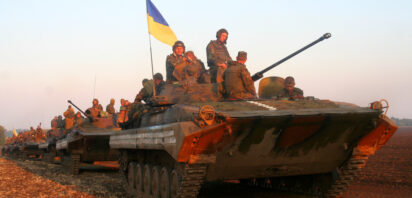
Think about the 2022 Russian invasion of Ukraine. Realism gives you the structural backdrop, the perceived encirclement, a buffer state drifting into an adversarial alliance, a great power deciding that the long-term cost of doing nothing outweighed the immediate cost of acting. Liberalism explains the economic response, why sanctions bit as hard as they did, why the Western coalition stayed more coherent than anyone expected. Constructivism unpacks the identity collision at the heart of it—Putin’s insistence that Russians and Ukrainians are one people, against a Ukrainian national consciousness that had been sharpening for decades, specifically in reaction to Russian pressure. And critical theory asks the questions that don’t fit into any of the above: Whose lives are paying for this war? And: Whose interests were served by thirty years of diplomatic choices—NATO expansion, broken promises, ignored warnings—that made it more likely?
If no single framework answers all of these, together they get you somewhere closer to the truth.
The world doesn’t run on a single logic, it never did. The best we can do—as a journalist, a policymaker, a citizen trying to make sense of the news—is stay alert to which logic is operating in which situation and resist the pull of any narrative that makes it all look simple. It refers to the ability to endure uncertainty without discomfort. It involves asking questions such as: Which framework am I using right now? And: What is it making me miss? It also involves acknowledging that the same event can be interpreted in multiple ways, such as a security calculation, an institutional failure, an identity conflict, and a colonial legacy.
Understanding it requires considering all these perspectives simultaneously, without reducing them to a single narrative. That’s harder than picking a side. It’s also the only intellectually honest position available.