What happens when the climate itself becomes a theatre of geopolitical competition? As climate instability deepens and rivalry between major powers intensifies, environmental systems are becoming entangled with security, strategy, and geopolitical influence. Food security, water scarcity, migration pressures, and resource competition are no longer simply environmental concerns. They are increasingly shaping the international order. Against this backdrop, the prospect of deliberately intervening in the Earth’s climate system is attracting growing political and strategic attention.
Geoengineering – the deliberate large-scale manipulation of the Earth’s climate and weather systems through technologies such as solar radiation management, carbon dioxide removal, and cloud seeding – is no longer discussed solely as a scientific or environmental tool. It is increasingly viewed as a geopolitical one. These technologies may help slow warming, stabilize food and water systems, and avert catastrophic climate tipping points. But they also carry potential strategic risks. In an international system already shaped by rivalry over energy, trade, cyberspace, and outer space, the atmosphere may become the next domain of strategic contestation.
Without credible international governance, geoengineering could deepen mistrust between states, encourage unilateral climate intervention, and create new forms of coercive leverage. Actions intended to benefit one country could disrupt rainfall, agriculture, or water security elsewhere, fueling accusations of environmental manipulation and hostile intent. Even the perception that states can influence weather patterns for strategic gain may accelerate the securitization of climate politics. Who decides when planetary intervention is justified? Who bears responsibility for unintended consequences? And what happens when states begin to treat the atmosphere not as a shared global commons, but as a strategic asset to be controlled?
The Promise of Geoengineering
Geoengineering encompasses a range of proposed technologies designed to deliberately intervene in the Earth’s climate system. These include solar radiation management (SRM), which reflects a portion of sunlight back into space to cool the planet, carbon dioxide removal (CDR), which extracts CO₂ from the atmosphere, and smaller-scale weather modification techniques such as cloud seeding. Together, these technologies could present a profound duality: the capacity to stabilize climate risks while simultaneously creating new geopolitical and environmental uncertainties.
Interest in geoengineering has expanded markedly since the mid-2000s, increasingly gaining traction after the 2015 Paris Agreement as a potential climate “Plan B” should emissions reductions prove insufficient. Although contested, a growing body of research suggests that solar geoengineering could offset a significant share of warming and reduce climate-related harms. Among the most discussed approaches is SRM, particularly Stratospheric Aerosol Injection (SAI), which disperses reflective particles into the upper atmosphere to mimic the cooling effects of volcanic eruptions. By temporarily lowering global temperatures, SRM could slow ice-sheet loss, reduce sea-level rise, and lessen the severity of extreme weather events, including heatwaves and hurricanes. These effects could lower infrastructure losses, reduce heat-related mortality, and protect ecosystems vulnerable to thermal stress, such as coral reefs.
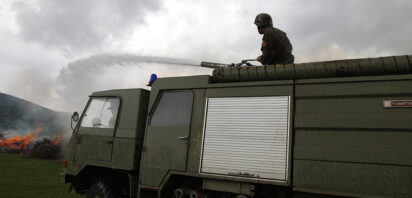
At a local level, weather modification is already in use. Cloud seeding, deploying silver iodide or hygroscopic materials to induce precipitation, is practiced by dozens of countries. Historical examples include the United States’ covert Operation Popeye during the Vietnam War, which sought to prolong the monsoon season and disrupt enemy supply routes, and reported Chinese weather modification efforts ahead of the 2008 Beijing Olympics. As water scarcity intensifies, regional rainfall control may help secure reservoirs, stabilize agriculture, reduce climate-induced food insecurity, and potentially limit the spread of vector-borne diseases. For drought-prone or desertifying states, geoengineering may increasingly be viewed as a strategic necessity.
The Perils: From Climate Conflict to Weather Warfare
Geoengineering carries ecological, political, and strategic risks. Climate interventions designed to cool the planet could produce unintended regional disruptions, while a sudden halt to a program masking high greenhouse gas concentrations – a “termination shock” caused by sabotage, war, or economic collapse – could trigger rapid warming with devastating ecological consequences. Because most geoengineering technologies remain minimally tested, their full risks remain uncertain. Critics also warn that the mere prospect of climate engineering may weaken planned emissions reductions by encouraging reliance on speculative technological fixes. As futurist Jamais Cascio argues, geoengineering’s “differential impact and relatively low cost” make international conflict over its use difficult to avoid, particularly if states begin to view “the planet itself” as a strategic instrument. Even proponents acknowledge that planetary-scale interventions would require governance frameworks comparable to those surrounding nuclear weapons.
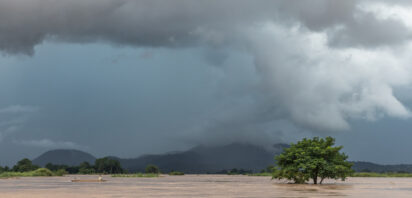
Crucially, weather modification is unlikely to remain geographically contained. Efforts to secure rainfall in one state could alter precipitation elsewhere, fueling accusations of environmental coercion. In hydro-politically sensitive regions such as the Nile Basin or the Mekong River, cloud seeding or atmospheric manipulation could easily be interpreted as hostile. Solar geoengineering may generate similar tensions in strategically important regions such as the Arctic, where states could accuse rivals of influencing ice melt, shipping routes, fisheries, or access to untapped resources. China’s expanding weather modification programs, including over the Tibetan Plateau, have already raised concerns among neighboring states over shared river systems and monsoon patterns, while recurring tensions between India and Pakistan demonstrate how quickly ecological stress can become securitized.
Geoengineering may also deepen inequality. Wealthier states would possess disproportionate capacity to develop and deploy climate interventions, potentially shaping atmospheric systems to advance their own interests while poorer, climate-vulnerable countries bear the consequences without meaningful input. More troubling still is the possibility of deliberate weaponization. States could seek to intensify droughts, redirect storms, or undermine agricultural productivity in rival countries. Whether such capabilities are feasible remains uncertain, but the strategic logic alone is destabilizing. The most dangerous aspect of weather warfare is its ambiguity: because hurricanes, droughts, and floods occur naturally, proving deliberate manipulation would be exceptionally difficult, creating plausible deniability and potentially lowering the threshold for covert confrontation.
Geoengineering therefore risks transforming the climate itself into an arena of geopolitical competition. The atmosphere, sunlight, and weather systems could become objects of strategic control, concentrating power in technologically advanced states while raising profound questions about sovereignty, accountability, and global justice.
Securitization of Geoengineering
Recent tensions in the Middle East illustrate how rapidly climate politics can become securitized. In one widely publicized regional episode, a member of parliament raised allegations of ‘cloud theft,’ reflecting suspicions that rival states may be manipulating rainfall for strategic gain. Whether scientifically credible is almost secondary, what matters is that weather and climate are increasingly interpreted through the language of security, suspicion, and hostile intent.
Since geoengineering directly links human decision-making to climatic outcomes, environmental disruptions are more likely to be perceived as deliberate political acts. Even benign projects could be viewed as hostile if neighboring states experience droughts, floods, or failed monsoons, lowering the threshold for blame and fueling mistrust despite scientific uncertainty. These risks are intensified by the dual-use nature of geoengineering technologies. Techniques designed to cool the planet or alter precipitation may also carry military implications, despite the ENMOD Convention prohibition on hostile environmental modification. Yet perception may matter more than capability: once states believe rivals can manipulate weather systems, the atmosphere itself becomes securitized. Climate politics may then shift from cooperative mitigation toward strategic vulnerability, national defense, and geopolitical rivalry.
Five Dimensions of Security and Orbital Security
Unilateral geoengineering or overt weather warfare would trigger cascading disruptions across all five dimensions of my global security and stability framework: human, national, transnational, environmental, and transcultural. Manipulating climate systems would not merely alter weather patterns, it could undermine food security, water access, public health, and livelihoods on a massive scale. States affected by droughts, floods, or altered monsoons may interpret such disruptions as hostile acts, deepening mistrust and increasing risks of retaliation. Unilateral climate intervention could also erode confidence in global governance, weaken fragile norms of collective planetary stewardship, and intensify rivalries among major powers. Environmentally, destabilized ecosystems could generate irreversible consequences for oceans, agriculture, and biodiversity, while worsening migration pressures, resource competition, and social fragmentation, thereby undermining transcultural security, the peaceful coexistence of cultures and societies.
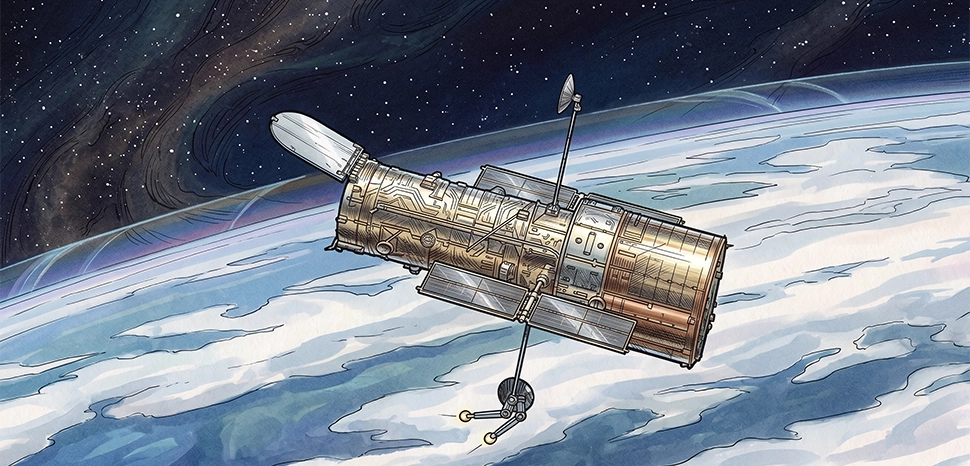
Even outer space would not remain insulated from large-scale geoengineering, which increasingly depends on satellite networks, atmospheric monitoring, and potentially space-based climate intervention systems. States could target climate-monitoring satellites or accuse rivals of weaponizing orbital infrastructure for environmental manipulation. The result could be a destabilizing convergence of climate conflict and space competition, threatening both international security and the fragile norms governing humanity’s shared use of outer space.
The Governance Gap
Existing international law remains poorly equipped to govern geoengineering technologies whose effects transcend borders and may alter planetary systems. No clear consensus exists on deployment thresholds, liability, verification, or decision-making, creating a governance vacuum vulnerable to unilateral action, strategic coercion, and geopolitical rivalry. This gap is especially dangerous for vulnerable states. Many countries in the Global South, already disproportionately exposed to climate disruption, lack the political influence, technological capacity, and economic leverage to shape emerging geoengineering norms. As a result, they risk becoming passive recipients of decisions made elsewhere, including interventions that could reshape regional weather systems, agriculture, or water security without their consent.
The challenge is compounded by assumptions that geoengineering can be governed through idealized global cooperation. Recent transdisciplinary research questions whether states behave as fully rational actors. In practice, states (like individuals) are strongly shaped by self-interest, survival instincts, and shifting moral priorities, particularly under threat. Among the strongest drivers are power, profit, pleasure, pride, and permanency – what I call the NeuroP5. Rooted in human neuropsychology and neurochemistry, these incentives help explain why zero-sum thinking remains entrenched in international relations. Consequently, states are likely to approach geoengineering competitively rather than cooperatively. Climate intervention technologies may be viewed less as global public goods than as tools for securing technological advantage, protecting domestic economies, and shaping regional dependencies.
Professor Nayef Al-Rodhan is a philosopher, neuroscientist, geostrategist and futurologist. He is the Head of the Geopolitics and Global Futures Department, and head of the Outer Space Security Cluster, at the Geneva Centre for Security Policy in Switzerland, and a Member of the Global Future Council on Complex Risks at the World Economic Forum. He is also an Honorary Fellow at Oxford University’s St. Antony’s College and a Senior Research Fellow at the Institute of Philosophy at the University of London.