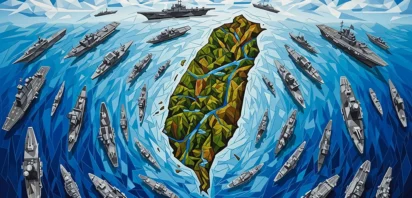
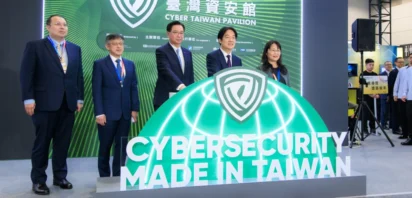
In 2025, Taiwan navigates a geopolitical tightrope, balancing the US policy volatility of Trump’s tariffs against China’s economic coercion, where each trade negotiation signals resilience or risks peril. The fractured trade landscape shaped by Canada’s post-election recalibration under Prime Minister Mark Carney and Trump’s October 20 remarks downplaying Taiwan in Xi talks amplifies uncertainty among allies.
The Canada-Taiwan economic cooperation framework, initiated in early 2025, embodies this tension. Its cautious progression reflects a broader truth: Taiwan’s economic ambitions cannot be divorced from geopolitical realities. This article explores the domestic, foreign, and societal factors shaping Taiwan’s negotiation stance using the stalled Canada pact as a case study. It then draws lessons for resilience in a world divided by strategic rivalry.
Domestic Factors: Internal Divisions and Ambitious Economic Strategies
To understand how Taiwan strikes its balance on the foreign policy front, we must first look inward at how domestic politics shapes Taiwan’s international credibility. Here, sharp divisions between the ruling Democratic Progressive Party (DPP) and the opposition Kuomintang (KMT) continue to complicate trade and economic diplomacy.
KMT-Led Budget Delays and Political Polarization
In October 2025, the KMT intensified its obstruction of critical budgets, including those tied to defense and trade initiatives. A proposed NT$300 billion special budget that was intended to fund the New Southbound Policy, infrastructure, and economic diversification remains stalled. KMT lawmakers argue that Taiwan’s overreliance on Washington weakens bargaining power, citing the 20% tariffs imposed by Trump in August 2025 as evidence.
For international partners like Canada, this domestic friction signals instability. Ottawa, navigating its own debates over immigration and the renegotiation of United States–Mexico–Canada Agreement (CUSMA), prefers predictable counterparts. Legislative gridlock raises concerns that Taiwan may be unable to implement trade commitments fully.
Yet resilience is possible. President Lai has proposed a cross-party task force aimed at fostering consensus on economic strategy. If implemented, such mechanisms could reassure allies, projecting unity and stability. They highlight that Taiwan’s internal divisions, while real, are not insurmountable barriers to credible economic diplomacy.
“Non-Red Supply Chain” Initiative
Taiwan’s “non-Red supply chain” initiative, launched in February 2025, represents a bold attempt to reduce dependence on China. By redirecting trade toward the U.S., Japan, and Southeast Asia, particularly in semiconductors and high-tech manufacturing, Taiwan aims to strengthen both economic resilience and strategic autonomy. The opening of TSMC’s Arizona fab and a new US trade agreement in 2025 exemplify some early successes.
However, the initiative provokes Beijing, which tightened controls on 12 of 17 rare earth elements through October 2025 and imposed chip import restrictions. For partners like Canada, whose trade with China exceeds CAD 100 billion annually, the anti-China framing creates hesitancy. Public emphasis on the “non-Red” strategy, while domestically popular, risks signaling potential conflict or economic instability to foreign partners.
Taiwan can enhance resilience by reframing the initiative as a contribution to global supply chain stability rather than a confrontational stance against China. Think tanks such as Research Institute for Democracy, Society, and Emerging Technology (DSET) have noted that positioning Taiwan as a reliable node in high-tech networks can mitigate fears while reinforcing long-term economic independence.
Yet domestic ambition alone cannot secure Taiwan’s footing. The next challenge lies abroad, where diplomatic outreach collides with the shifting priorities of allies.
Foreign Policy Initiatives
Taiwan’s foreign policy aims to diversify alliances and reduce Chinese leverage, yet the strategies carry complex trade-offs.
Assertive Outreach: Values-Based Diplomacy and the New Southbound Policy
The New Southbound Policy seeks closer ties with Southeast Asian nations and Indo-Pacific democracies, emphasizing shared democratic values and economic cooperation. In 2025, Taiwan deepened its engagement with the Philippines, culminating in a bilateral investment deal that has increased trade by 15%.
Yet assertive outreach carries risks. Neutral countries, such as Indonesia and Malaysia, may perceive Taiwan’s policies as anti-Beijing, complicating potential partnerships. Public framing of the policy as a counterweight to China, particularly in President Lai’s October speeches, can deter countries that prioritize trade stability over ideological alignment.
Canada, while aligned with Taiwan’s democratic values through its Indo-Pacific Strategy, remains cautious. Ottawa fears provoking China, especially after Trump’s October 20 talks hinted at potential concessions that could embolden Beijing’s coercive measures. Taiwan can increase resilience by emphasizing mutual economic benefits, such as critical mineral trade, while reducing rhetoric that could be construed as confrontational.
Over-Reliance on US Alignment
Taiwan’s close alignment with the United States provides access to markets and technology but exposes it to policy volatility. The 20% tariffs on Taiwanese exports to the United States and the stalled trade talks between April and July 2025 resulted in a 10% year-on-year decline in exports. Cancelled diplomatic visits, including a high-profile New York trip in August 2025 due to PRC pressure, further highlight the vulnerability inherent in overreliance.
Canada views Taiwan’s US alignment warily, particularly amid its own (United States–Mexico–Canada Agreement) CUSMA negotiations. A partner subject to external policy shifts is inherently risky. Nonetheless, Taiwan leverages its tech leadership to offset this vulnerability. TSMC’s global fabs in Arizona, Japan, and soon Europe create a form of economic leverage, while multilateral trade frameworks such as Comprehensive and Progressive Agreement for Trans-Pacific Partnership (CPTPP), where Canada is a member, offer diversification that reduces dependency on US policy.
The real test of these strategies lies in practice and nowhere is it clearer than in the fragile but revealing story of the Canada-Taiwan trade pact.
Case Study: Canada’s Unsigned Pact
The Canada–Taiwan economic cooperation framework promised deeper trade ties, semiconductor resilience, and cooperation on AI and energy. Months after Canada’s April 2025 election, the agreement remained unsigned, and Taipei has publicly expressed concern that Ottawa might pause or recalibrate its commitment.
Two-way trade between Canada and Taiwan has already exceeded CAD 10 billion in recent years, and sectoral gains such as sharp increases in Canadian beef shipments to Taiwan in early 2025 illustrate the concrete commercial stakes.
Several dynamics are contributing to the delay: Beijing’s known willingness to use economic pressure creates a background risk; the effects of late-October US–China diplomacy remain unknown; and complex domestic Canadian priorities, including immigration reform, CUSMA discussions and post-election policy reviews appear to have hardened Ottawa’s caution.
Yet despite the uncertainty, diplomatic contacts on October 17 produced “significant strides,” and public debates on social media and in editorial pages have maintained pressure on both governments to finish the deal.
Broader Implications: A Universal Tightrope
Taiwan’s 2025 experience illustrates a broader truth: small and medium powers navigating a polarized world must balance economic ambitions, strategic alliances, and geopolitical tensions with care. Delays in trade agreements, such as the Canada-Taiwan pact, stall economic diversification and weaken semiconductor ecosystems. Yet Taiwan demonstrates that resilience emerges when domestic cohesion, technological leadership, and diplomatic strategy align.
Taiwan’s semiconductor industry underpins global electronics, defense, and AI supply chains. A delayed agreement with Canada is more than a bilateral setback as it affects regional and North American technology networks. TSMC’s Arizona, Japan, and European fabs exemplify how infrastructure can function as both economic asset and geopolitical leverage, offsetting coercion from China.
Diplomatically, the lessons are clear. Softened rhetoric, bipartisan domestic coordination, and engagement in multilateral frameworks like CPTPP stabilize Taiwan’s international standing. Demonstrating reliability reassures cautious partners while signaling competence in a complex regional order.
Taiwan’s tightrope resonates globally. South Korea navigates chip exports carefully, balancing US expectations and China’s market; Australia has adjusted trade and infrastructure strategies under Chinese pressure; and the EU carefully weighs engagement risks. These examples further underscore that middle powers must balance sovereignty, economic growth, and security amid larger competitors.
Taiwan’s incremental successes through tech leadership, diversified alliances, and strategic messaging show that adaptability is critical. By converting vulnerabilities into leverage, Taiwan provides a blueprint for small states operating in asymmetrical geopolitical landscapes.
Yet while diplomats maneuver abroad, the battle for resilience also plays out at home such as on social media, in public debates, and in the hearts of ordinary citizens.
Voices from the Ground: Public Sentiment and Its Influence
Public voices increasingly shape Taiwan’s diplomacy, blending pride with frustration over stalled alliances and unfulfilled promises. In October 2025, Taiwanese officials publicly expressed concern that the proposed economic cooperation framework with Canada might be abandoned, noting Ottawa’s apparent reluctance to finalize the agreement.
Online and civic debates reflect this tug-of-war between hope and anxiety. A broadly-circulated poll by the Asia Pacific Foundation of Canada found that while Canadians viewed Taiwan more favorably than many Asian countries, only 2% said they knew “a lot” about Taiwan as a trade partner. These figures illustrate the challenge Taiwan faces with public enthusiasm at home and meets foreign unfamiliarity abroad.
Taiwanese editorials acknowledge external pressure but emphasize democratic values and trade opportunities, advising greater visibility and clarity in Taiwan’s international engagement. Meanwhile, Taipei’s government has noted the public mood: President Lai Ching-te, in his 10 October 2025 address, referenced “the people’s voice” as integral to shaping Taiwan’s strategic partnerships.
A vocal, engaged society signals reliability to foreign partners. When public urgency aligns with diplomatic strategy, sentiment becomes leverage, demonstrating that Taiwan is more than a policy project: it is a democracy with societal buy-in.
The Path Forward: Building Resilience
Taiwan’s path forward depends on aligning domestic unity, strategic framing, and international engagement. The Canada-Taiwan negotiations have shown how political division, public pressure, and external coercion can stall progress. Converting these pressures into sources of strength is the essence of resilience.
At home, unity must replace gridlock. The partisan battles that delayed trade and defense budgets have weakened Taiwan’s credibility abroad. President Lai’s cross-party economic consultations offer a way to rebuild trust and signal predictability to partners who value stability.
Abroad, Taiwan should frame its trade policies as globally stabilizing rather than adversarial. The “non-Red supply chain” initiative advances self-reliance but risks alienating partners wary of provoking Beijing. Recasting it as a contribution to supply chain security and innovation will make cooperation with Taiwan appear prudent, not provocative.
Multilateral engagement offers the best route to balance. Participation in frameworks like CPTPP can reduce exposure to US policy swings while expanding Taiwan’s diplomatic space. Every agreement that anchors Taiwan within a network of like-minded economies reinforces its independence and relevance.
Public sentiment can amplify, not constrain, diplomacy. Citizen engagement reflects a society that’s invested in its global standing. By channeling that energy into informed advocacy, Taipei can turn civic pressure into soft power.
TSMC’s global footprint embodies how technology strengthens diplomacy. When industrial policy and strategy move in concert, Taiwan becomes not a risk factor but a stabilizer in an uncertain world.
Resilience is not rigidity but rhythm, the capacity to adapt with intent while staying grounded in principle. If Taiwan sustains that rhythm, it will not just survive the tightrope but master it with quiet confidence.