F-35 Joint Strike Fighter News & Analysis

Canada Looks to Join Global Combat Air Program
Canada is reportedly joining the Global Combat Air Program (GCAP) and seeking permanent observer status. The reported status was based on a meeting that took place on March 6 in Tokyo between Japanese Defense Minister Shinjiro Koizumi and Canadian Defense Minister David McGuinty. According to GCAP policy, observer status allows a nation “to obtain information from the three core countries to consider deeper involvement later, which could include manufacturing, procurement or even joining the development phase.” A meeting is planned for June 2026, involving defense ministers from Britain, Italy, and Japan, where an announcement on Canada’s inclusion as an observer is expected. Canada’s participation in GCAP would allow them to potentially procure and develop more advanced aircraft for the Royal Canadian Air Force (RCAF) in the likely case that the RCAF would pursue acquiring GCAP-based aircraft. Ottawa’s participation comes on the heels of tensions over security and trade between Canada and the United States, where a procurement review of Canada’s first batch of F-35A fighters has figured prominently. To this end, joining GCAP as an observer would allow Ottawa to expand its military and defense relations with Tokyo, London, and Rome, thus diversifying security relations while modernizing the RCAF. News of Canada’s planned observer status in GCAP did not come out of the blue. On March 13, Minister of National Defence David McGuinty said that Canada is considering fully joining GCAP when asked by reporters in Ottawa during a press conference. Back in January, Minister McGuinty and Japanese Ambassador to Canada Kanji Yamanouchi signed the Agreement between the Government of Japan and the Government of Canada Concerning the Transfer of Defense Equipment and Technology. The agreement serves as legal bilateral framework for transferring defense equipment and technology in order to “implement projects to be jointly determined, including those contributing to international peace and security.” In a Politico news report from December 2025, Canadian High Commissioner to London Ralph Goodale stated that Canada was trying to find ways to participate and contribute to the GCAP project. He also mentioned that Canada’s potential participation would not replace their planned acquisition of the F-35, but instead would represent a “progression.” Confidential information from the project will also be shared once Canada has been conferred with observer status. As far as Ottawa is concerned, the appeal is clear. Through the signing of agreements and diplomatic engagements, Canada can position itself to become deeply involved in next-generation defense initiatives while maintaining previous commitments to the F-35 program. Even if Canada joins GCAP without becoming a full partner, Canadian defense companies can benefit from the R&D aspect of the program, notably in aerospace engineering. This can even help Canadian companies that manufacture F-35 components, as there are similar economic and industrial benefits to be gained should they manufacture and sell GCAP fighter components for partner nations. In turn, this involvement creates opportunities for the Canadian defense industry to build its reputation over time. Moreover, even a limited presence from Canada can be of benefit to the overall program, as reduced airframe costs can benefit GCAP when GCAP fighters are manufactured and delivered. Lower costs increase the chances of GCAP realizing its full potential. Finally, membership in GCAP allows Canada to enhance interoperability status between the RCAF and allied air forces for joint operations in future conflicts. There are however concerns in Japan that adding new full partners like Canada risks dragging out program timelines. Japanese officials are already worried about GCAP meeting its current 2035 deadline for deploying its first jets. More members means more views that must be aligned regarding how the aircraft should operate. Whatever the ultimate extent of involvement in the program, Canada’s engagement with GCAP represents a strategic step toward diversifying security partners and modernizing the RCAF. It signals new momentum toward replacing the RCAF’s fleet of CF-18s with modern sixth-generation fighter jets amid shifting geopolitical dynamics. In addition, it advances domestic Canadian fighter development and strengthens security ties with Japan, the UK, and Italy, creating new opportunities for the defense industry without jeopardizing previous commitments to acquire the F-35. When Canada is given observer status, it will likely serve as both a test of long-term defense priorities and a signal of intent to play a more active role in next-generation military collaboration.

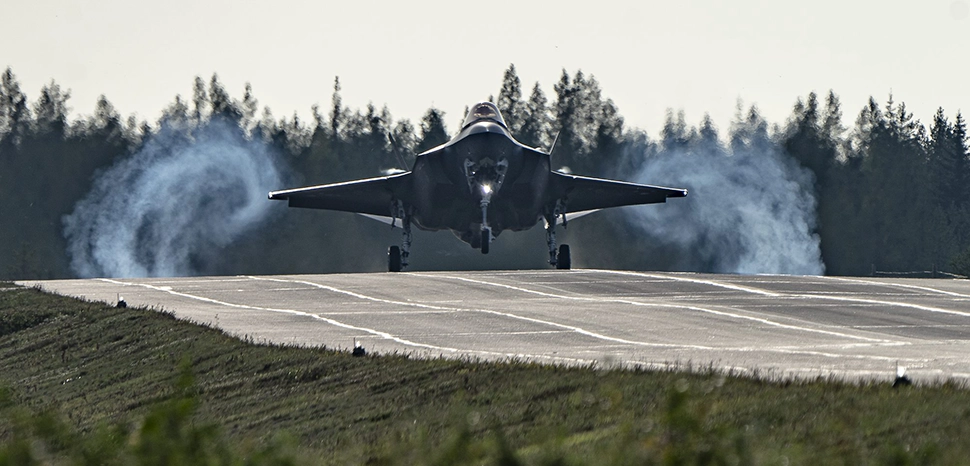
Canada’s reported engagement with the Global Combat Air Program (GCAP) would strike a balance between developing domestic defense industries while keeping F-35 procurement intact.

A Bad Few Months for the F-35
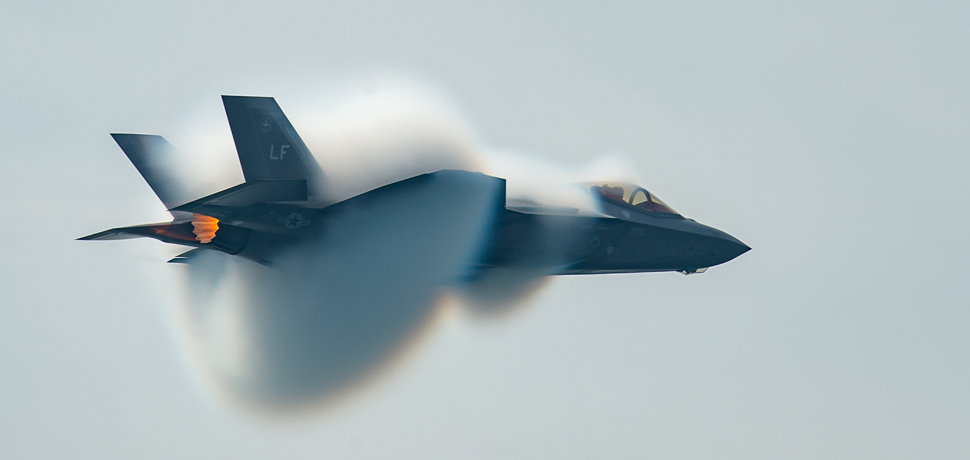
F-35 HFT performs in the Canadian International Air Show, cc Flickr Robert Sullivan, modified, https://creativecommons.org/publicdomain/mark/1.0/

A mysterious crash in Japan and a rebuff from NATO ally Germany are just two of the latest setbacks for the world’s most expensive weapon platform.

The F-35 and Suppression of Enemy Air Defenses (SEAD)

F-35 HFT performs in the Canadian International Air Show, cc Flickr Robert Sullivan, modified, https://creativecommons.org/publicdomain/mark/1.0/

Air force composition is a key question as potential competitors close the capability gap with Western militaries.

More F-35 Joint Strike Fighter Articles