On 25 April, separatists in Papua shot dead Indonesia’s head of intelligence for the restive region. General I Gusti Putu Danny Karya Nugraha was killed during a roadside ambush on his convoy in the remote Puncak regency, making him the most senior military official to be killed in the conflict over Indonesia’s easternmost territory. The West Papua National Liberation Army (TPNPB)—which has battled for independence since Jakarta annexed the region in a flawed referendum in the late-1960s following the end of colonial rule by the Netherlands—claimed responsibility for the attack.
Indonesian president Joko Widodo was quick to respond. In a televised statement on April 26, one day after the ambush, he appeared alongside security chiefs and ordered the police and military to ‘‘pursue and arrest’’ armed rebels in an intensified crackdown. Indonesia has often been accused by human rights activists of employing heavy-handed tactics and discriminating against Papua’s native Melanesian population, who are predominantly Christian—a minority in a Muslim-majority nation. Yet rebels have also been linked to atrocities and have killed teachers and road workers in attacks over the years.
Indonesia deploys troops
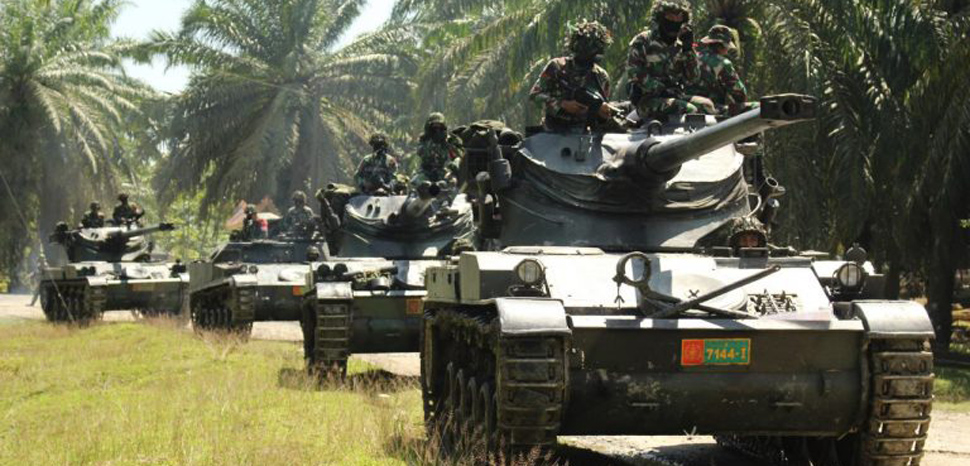
Papuans are now braced for more violence. It was reported in May that Indonesia had deployed an additional 400 troops to Papua, from the battle-hardened 315/Garuda battalion. Its soldiers gained the nickname ‘‘Satan troops’’ after involvement in past conflicts in East Timor, but army spokesman Prantara Santosa has insisted their deployment to Papua is just part of a routine rotation and that the personnel being sent are ‘‘trained infantry troops, not special forces.’’ The military has 7,000 troops in the region, while an additional 1,200 police officers have been deployed since April.
Indonesia’s national police intelligence chief, Paulus Waterpauw, told Reuters in an interview on 21 May that efforts to tackle the insurgency would be co-ordinated through a task force established in 2018, known as Operation Nemangkawi, which aims to ‘‘wipe out’’ armed rebels in Papua’s Central Highlands region—where they are strongest due to knowledge of the remote, mountainous terrain. Since the April ambush, the government has also moved to formally designate Papuan rebel groups as ‘‘terrorists,’’ permitting authorities to detain suspects for up to 21 days without charge. However, it is understood the elite police counter-terrorism unit, Densus 88, has not been deployed to Papua.
Fear of military atrocities
Leaders of the separatist movement fear that a renewed crackdown will be accompanied by human rights abuses. Benny Wenda, a long-time figurehead of the Papuan liberation struggle, living in exile in the United Kingdom, recently described resistance as ‘‘legitimate and necessary,’’ and called for a dialogue to resolve the conflict. In his words, independence advocates consider Indonesia’s rule ‘‘an illegal invasion and occupation’’ and view separatist forces as battling to ‘‘expel an illegal colonizer.’’