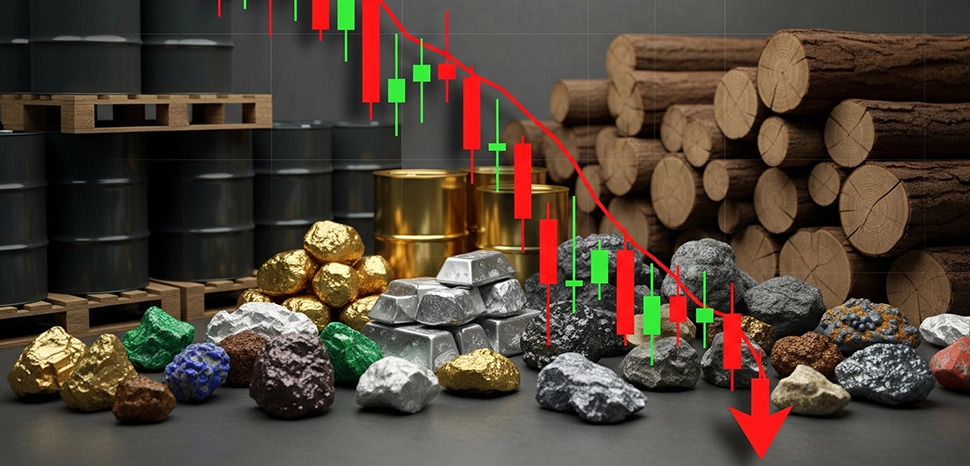
The week began with Citi releasing a report predicting weak global demand for commodities through 2015; some murmurs emerged late Tuesday that China’s economic slowdown might be worse than previously thought; and by Wednesday these murmurs had thickened on the heels of weaker-than-expecting Chinese manufacturing data.
Global commodity prices had already hit a 12-year low during Monday trading, deflated in part by crude oil’s sustained plunge since last November. It would seem that the China-fueled commodity boom which carried prices to new heights through the 2000s is finally over. Now we’re entering a new phase where demand in global commodity markets is more diffuse, not like before when a Chinese buyer could always swoop in and buy up a producer’s remaining inventory. According to the Citi report, the lion’s share of demand for commodities will now come from India, Southeast Asia, the Middle East, Latin America, and Africa – in addition to a China that, though not nearly as insatiable as before, still has a rapacious appetite for various primary resources.
Many analysts agree that the new landscape will have different price impacts depending on the commodity in question. Coal, steel, and iron, will see sustained downside price pressure due to their relatively ample supply within China. Commodities that China is not so well endowed with, such as nickel and chrome, should be better insulated. In terms of industries, the debt-ridden, predominantly state-owned mining and smelting industries in China are primed to suffer some serious contraction, especially since this slowdown also comes amid whispers of a serious push to consolidate underperforming SOEs and trim the fat in China’s state-owned sector.