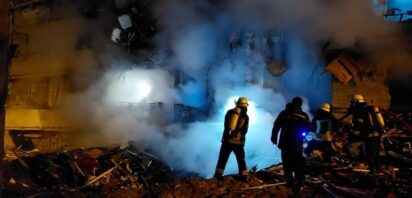
Amid grinding attrition and freezing weather in the Ukraine war, the geopolitical plot continues to thicken in Belarus.

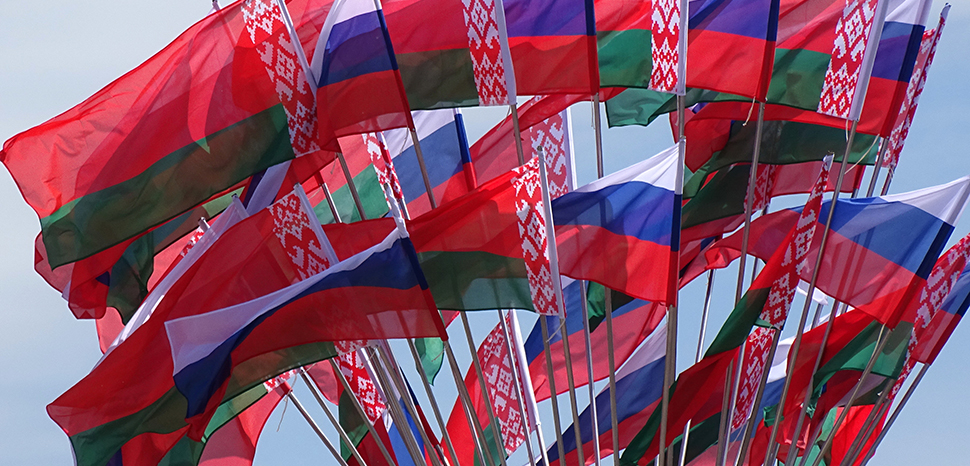
The state has figured prominently in the drama of Russia’s invasion of Ukraine, though not necessarily in the ways that Vladimir Putin might have hoped. Belarusian territory was used to launch the ill-fated northern front meant to capture Kyiv in the early days of the war; it also has continued to house Russian planes and missiles used in strikes against Ukraine. Finally, there have been periodic reports of Belarusian troops fighting alongside both Russian and Ukrainian forces.
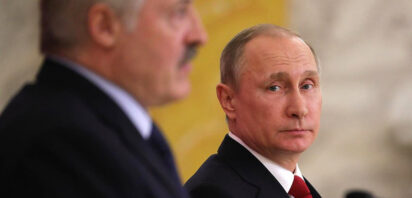
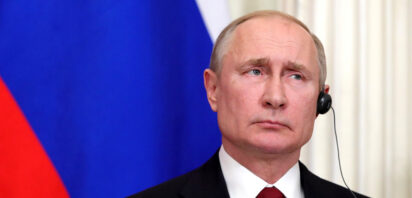
Yet this support falls well short of what Vladimir Putin wanted, namely Belarus’ full involvement in the war under the auspices of the CSTO. Instead, he has had to settle for the mere suggestion of Belarusian involvement in the form of Belarusian (and more recently Russian) troop deployments along Ukraine’s northern border, which serves to divert some of Kyiv’s attention away from the east, but does nothing to alleviate Russia’s losses on the battlefield.

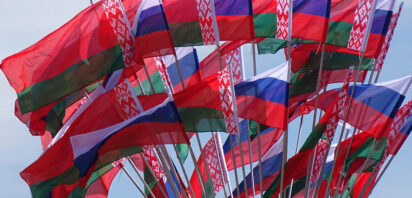
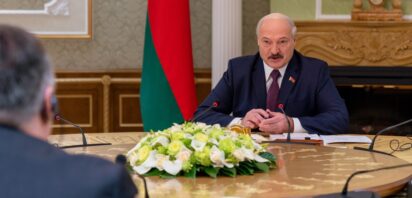
What’s the source of this rift in expectations between Minsk and Moscow? Most likely, President Alexander Lukashenko – the strongman who has ruled the country for its entire post-Soviet history – is simply trying to make it out of this alive.

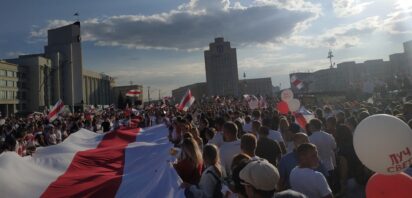
Recall that before a nationwide protest movement gripped Belarus in 2020, Lukashenko had actually been attempting to pivot away from Russia and its plans to further advance the ‘union state’ they share (essentially de facto annexation). The attempt was motivated in large part by public opinion in Belarus; unsurprisingly, the prospect of giving up the country’s hard-won independence was not particularly popular. Yet Lukashenko would eventually be forced to pivot right back toward Moscow after nationwide protests broke out after the heavily stage-managed presidential elections of 2020. The demonstrations effectively closed the book on the possibility of reproachment between Belarus and the West, and made Moscow indispensable as a powerful ally willing to backstop Lukashenko’s continued rule via any means necessary.

Fast-forward to the onset of the Ukraine war and Putin was presumably expecting Lukashenko to pay back the favor, only to come away disappointed. And while it’s impossible to know what’s going on in Lukashenko’s head, there are several logical reasons for him to keep Belarus out of direct involvement in the war.

First and foremost: if joining with the Russian state was unpopular, fighting Ukraine is downright radioactive in terms of public opinion. While polling is sparse and unreliable in an authoritarian country like Belarus, the polls that have been conducted put support for active involvement in Ukraine in the 5-10% range. This suggests an inherent disconnect between the interests of the Lukashenko regime (helping Moscow to ensure its own survival) and the Belarusian people (becoming more involved in a war that has already hurt them economically via Western sanctions). Two, the Belarusian army isn’t particularly large or well-equipped, with a peacetime (professional) force of just 10-15 thousand troops and a small fleet of Soviet-era tanks. The most effective branch is the Special Operations Forces which number around 3-6 thousand and were instrumental in suppressing the 2020-21 protests. This leads into a third point: given the war’s unpopularity and the state of the Belarusian military, it becomes crucial to the regime’s survival that these military resources remain in Belarus, as anything else risks a resumption of the pro-democracy (and now anti-war) movement while the oppressive apparatus of the state is otherwise occupied in Ukraine.

And thus, Lukashenko’s existentialist foreign policy doctrine manifests in the ambivalence that we see now, ambivalence that continues to infuriate his de facto patrons in Moscow. But the extent to which Vladimir Putin is willing to tolerate this lack of loyalty remains to be seen, and the mysterious death of Belarusian Foreign Minister Uladzimir Makei in late November suggests that his patience may be running out. Makei, aged 64, died suddenly and his death was subsequently downplayed by the Belarusian state media, causing many to speculate that he might have been assassinated by Russian security services. Makei was by far the most pro-Western element in the Lukashenko regime. If anyone could have broken the cycle of Belarus’ intensifying dependence on Moscow and bring about reproachment with the West, it was him; in fact, he had already done it once before in the wake of Belarus’ isolation following government crackdowns surrounding the 2010 presidential elections. Adding a further layer to the mystery, Makei was scheduled to attend an Organization for Security and Cooperation in Europe (OSCE) summit just days after his death, which would have represented a rare opportunity to dialogue with Western governments.

Now rumors are starting to circulate that Lukashenko will be next in the crosshairs. According to the Robert Lansing Institute, the Belarusian president has been targeted for assassination in a last-ditch effort to drag Belarus into the war. Though the rumor remains unconfirmed and attributed to anonymous sources within the Russian military, it’s hard to imagine that the desire does not exist to replace Lukashenko with someone who’s a little more pliable with regard to Russian interests. Important questions remain unanswered, however, such as: Would this replacement be able to hold the Belarusian state together given the economic and political forces of entropy in play? And even more importantly: Could this become an example of careful-what-you-wish for in that, by dragging Belarus into the war, Moscow ultimately scores an own-goal by precipitating unfavorable regime change in its own backyard? Moreover, the odds of such an outcome would increase further in the (perhaps likely) event that the Belarus military underperformed on the battlefield, opening the regime up to further criticism.

All options are on the table going forward, as Lukashenko (and his hypothetical replacement) will make their decisions based on personal survival rather than rational statecraft.