In early January, Bolivia’s Minister of Mining Marcelino Quispe López announced that surveying and prospecting for rare earth elements (REEs) in the South American country had yielded promising results. In other words, Bolivia could, in the future, add REE exports to its long list of exported minerals. The other side of the coin is that the country’s dependence on mining will not change anytime soon.
What We Know
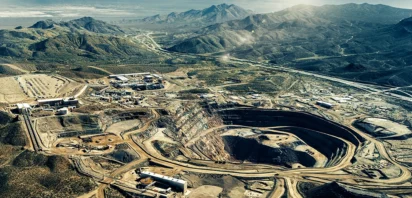
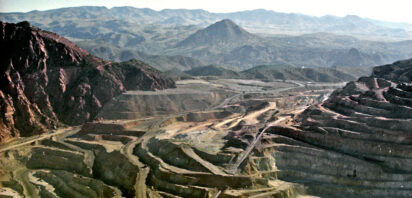
Minister Quispe explained that the Bolivian Mining Corporation (Corporacion Minera de Bolivia: COMIBOL) and the Geological Mining Service (Servicio Geologico Minero: SERGEOMIN) have located REE deposits in Independencia (Cochabamba), San Luis, Cotaje, (Potosí), San Javier and Cerro del Mutún (Santa Cruz). Additional surveying in Cerro Manomo identified 850 REE samples, while Rincón del Tigre had 799 confirmed samples of REEs, both locations are in the Santa Cruz department. The Bolivian La Razon newspaper added that Bolivia has deposits of 17 types of REEs.
“We have two elements, scandium and yttrium, and other elements. We have prospected and explored Cochabamba in the Independencia province: uranium, titanium, and others were identified. Then, in San Luis in Potosí, [prospecting will seek] cobalt and copper,” Minister Quispe said. “Other projects include San Javier, in Santa Cruz, for exploring and prospecting for tantalum and niobium. Also, at Manomó Hill, for uranium and thorium deposits,” added the newspaper Ahora el Pueblo, noting that future exploration will occur in Rincón del Tigre and Mutún for manganese.
Minister Quispe explained that President Luis Arce’s administration wants to achieve sustainable mining by 2050. Moreover, La Paz aims to evolve the mining industry from producing silver, zinc, or gold “to a new horizon of technological minerals and rare earths, whose international demand is growing” due to the global change in energy demand and production. “The Government of Brother President Luis Arce Catacora seeks to [venture] into new mining, according to … global needs with the demand for minerals for technological use,” he said.
An Ongoing Interest
La Paz’s interest in rare earth elements is not new. In 2023, an agency called Management of Technological Minerals and Rare Earths (Gerencia de Minerales Tecnológicos y Tierras Raras), was created, and assigned to COMIBOL, in order to help “the transition in the prospecting, exploration, and exploitation of traditional minerals.” The year before, 2022, La Paz created the Vice-Ministry of Technological Minerals and Metallurgical Mining Productive Development (Viceministerio de Minerales Tecnológicos y Desarrollo Productivo Minero Metalúrgico).
“Santa Cruz has great potential regarding technological minerals and rare earths. Here we have deposits of nickel, cobalt, and tantalum… rare earths that are essential for the development of the digital economy,” said then-Minister Ramiro Villavicencio in early 2023, adding, “the challenge is to start the work so that in 10 or 15 years, we have an industry that accompanies the new advances in science and technology in the world.” In a 25 May interview with the La Razon newspaper, the then-Minister explained, “we have to work on prospecting and exploration, which is the basis for guaranteeing sustainable projects… Entering the production of technological minerals and rare earths will allow us to open new markets today with a very high demand.” Quispe replaced Villavicencio in June 2023, but the government’s strategy and objective remain the same.
More Mining, More Happiness?
Bolivia’s economy is heavily dependent on mining. During January-June 2022, the country’s major exports were natural gas, gold, zinc, soy (and soy byproducts), and silver, in that order. In other words, the country does not export major manufactured goods and relies on natural gas, minerals, and agricultural goods.
As Geopolitical Monitor previously reported, La Paz aims to capitalize on the growing global demand for green energy by expanding its lithium industry. In July 2023, President Arce announced negotiations with the European Union over rare earth elements. “We have opened, with some EU countries, negotiation tables to discuss investments, [for] lithium, and other minerals, like strategic [minerals] and rare earths.” The statement was made before a trip to Brussels, Belgium, to participate in a Summit of the European Union and the Community of Latin American and Caribbean States. “Bolivia is an important source of strategic minerals and rare earths to guarantee this raw material to the world focused on technological development,” President Arce declared.
How the Bolivian government proceeds with REE mining represents a sensitive topic. While there is obvious potential for profit, job creation, and development regarding REE mining, there is a similarly obvious concern over environmental destruction and habitat loss. Bolivia knows this well. As recently as July 2023, around 250 local leaders met with President Arce to stop Chinese companies operating in Bolivia from extracting gold, arguing that these mining projects are poisoning rivers and committing an “ethnocide.”
La Paz’s strategy toward the country’s rare earth elements is not controversy-free, as the creation of the Management of Technological Minerals and Rare Earths was criticized by Dionisio J. Garzon, a former Minister of Mining and a geological engineer. In a 2022 op-ed, Garzon argued that agencies like GEOBOL and SERGEOMIN could carry out these operations. “Creating a new bureaucratic company is increasing the economic burden by putting together new structures and [agencies] instead of using existing institutions, strengthening them, and adapting them to the current challenge,” he explained.
It is also important to mention that Bolivia’s REE deposits have already attracted international attention, as the country has been used as a test bed for new techniques for REE-surveying. University of Oxford researchers tested a new technique at Uturuncu, a dormant volcano in the Bolivian Andes. Lead researcher Dr. Thomas Hudson (Department of Earth Sciences, University of Oxford), said: ‘Uturuncu was an ideal system to test our approach to map liquids and gases because it sits atop the Altiplano-Puna Magma Body, the largest active magma body on Earth.” The findings were published in the journal Geophysical Research Letters.
Bolivia has a well-established international image as a mining powerhouse. The country’s lithium reserves make the country a cornerstone of the South American Lithium Triangle (alongside Argentina and Chile). Presidents change in Bolivia, often via violent means like military coups or popular uprisings, and foreign policy objectives and allies change as well; however, the government, regardless of the administration in charge, remains committed to supporting and protecting its mineral industry.
Minister of Mining Marcelino Quispe López’s early January presentation explained the result of surveying and prospecting across various Bolivian departments for rare earth minerals. The results are positive, and the presentation will likely help attract potential international partners eager to profit from Bolivia’s rare earth elements. Similarly, President Arce’s 2023 visit to Belgium had REE-mining partnerships in mind.
If Bolivia’s previous mining ventures are precedent, when REE mining eventually commences, Bolivia will become a global name in the REE market, just like with lithium. The country’s future REE industry will attract international mining companies, probably Chinese, and there will be new mining and construction jobs. Moreover, there will be pushback by local communities once pollution and habitat loss become unbearable. Protests will happen. Similarly, there will be protests by REE miners who want to continue mining to ensure a paycheck (in November Bolivian gold miners protested in La Paz to mine in a restricted natural park). Ultimately, while Bolivia will expand its list of mining exports, the country will remain one of Latin America’s most underdeveloped nations. Years will pass before REE mining begins; hence, it is too early to predict this new industry’s profitability, however the country’s other experiences with mining operations suggest that rare earth mining will not be a game-changer for the landlocked country.
The views expressed in this article belong to the authors alone and do not necessarily reflect those of Geopoliticalmonitor.com.